
Which Roofing Material Is Best For Preventing Leaks?
Leak-Proof Roofing: Your Best Options
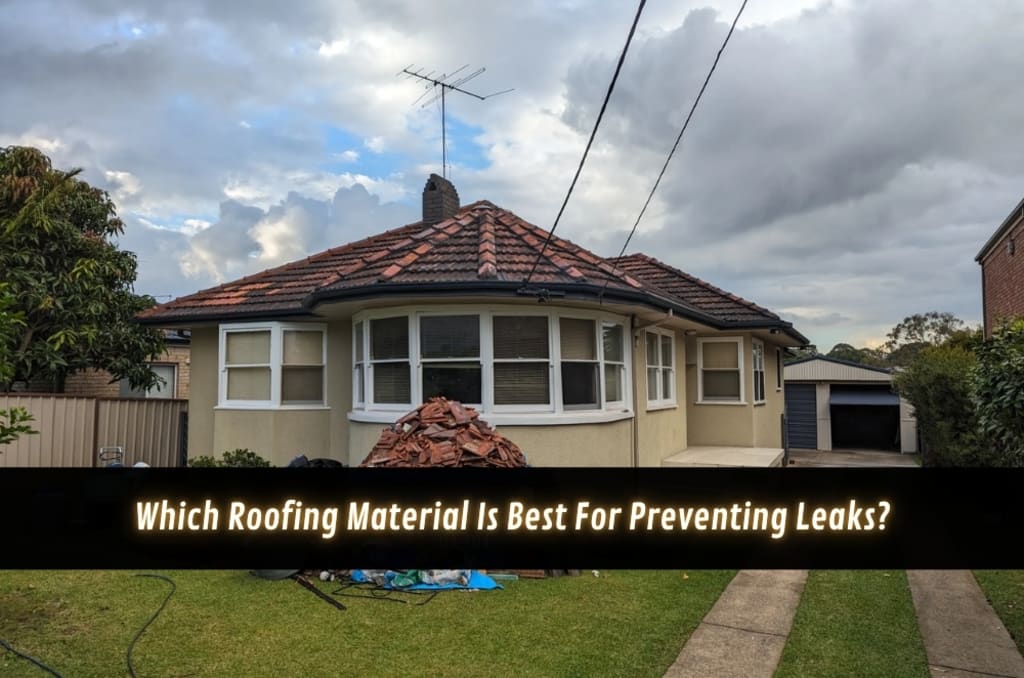
The constant drumming of rain on your roof can be a comforting sound. But that comfort quickly becomes dread when you notice a tell-tale drip inside. Water stains on the ceiling are never a welcome sight. They warn of a potential structural collapse and the urgency to stop a leaking roof immediately before it is too late. It is crucial to consider the right roofing material from the beginning. It is the first line of defence against the unpredictability of Sydney weather. So, out of these, which one is the clear winner in the fight against leaks? Let’s explore the strengths and weaknesses of different contenders.
Which roof type has the fewest leaks?
Identifying the leak-resistant roof type is complicated. A roof’s resistance to leaks depends on many factors, including the quality of materials used and the installer's skill. The design also matters a great deal. A roof with fewer seams and penetrations is less prone to water infiltration.
- Seamless metal roofing: The strong contender here is standing seam metal roofs. The interlocking panels form a continuous, nearly seamless surface to virtually eliminate the risk of water ingress.
- Single-ply membranes: Single-ply membranes are very effective against water intrusion for flat or low-pitched roofs. They are applied in broadsheets, reducing seams.
- Well-installed traditional materials: Asphalt shingles or tiles can hold up well against leaks. This depends significantly on installing and flashing around vents and other roof penetrations.
Ultimately, the fewest leaks are almost always achieved through using quality roof materials and paying close attention to detail during installation.
Is metal roofing less prone to leaks?
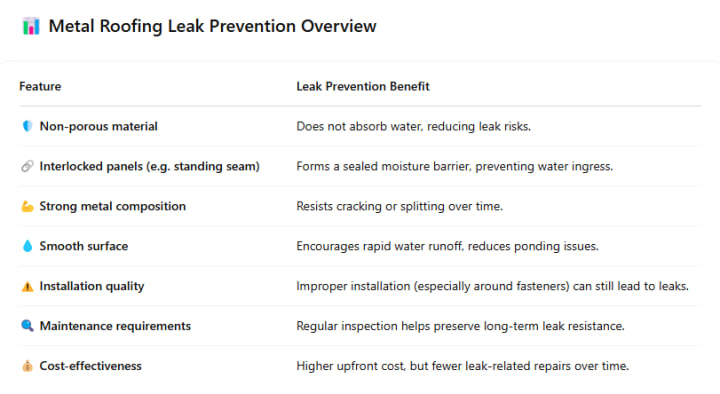
Metal roofing has several characteristics that make it naturally less prone to leaks. It is totally non-porous and does not absorb water; interlocked panels, particularly in standing seam systems, form a sealed barrier to moisture.
In addition, the strength of such metal means that it is not likely to split or decay over time, lowering the chances of leaks forming due to material failure. Its smooth surface also promotes water runoff, minimising a tendency toward ponding, one of the leading causes of leaks on flatter roofs.
However, even metal roofs are not leakproof! If not installed properly, particularly at fasteners and penetrations, they can serve as pathways for water. Periodic inspections and service are also necessary for a lifetime of leak-free operation. Metal roofing has a higher upfront cost, but its long-term durability and low risk of leaks often make it a cost-effective option for Sydney residences and companies.
Does proper installation prevent roof leaks?
Proper installation is key to a leak-free roof. Even the best water-repellent roof material will fail if not installed correctly. Bad installation can create loopholes where water can work through the roof structure.
- Flashing: Properly installed flashing at chimneys, vents, skylights, and wall junctions is critical. Flashing diverts water away from these vulnerable areas. Improper or missing flashing is a major contributor to leaks.
- Ensure proper overlap: Roofing materials such as shingles and tiles must be overlapped properly. This creates an unbroken waterproof barrier. If the overlap is too small, water can seep through the gaps.
- Fasteners: The nature and positioning of fasteners are essential. Fasteners driven incorrectly or exposed can create paths that allow water to enter.
- Underlayment: A good underlayment offers extra insulation below the primary roofing material. It serves as a backup defence against water infiltration.
Hence, it is essential to hire expert and trusted roofers. Their skills ensure that the selected material is installed according to manufacturer specifications and local building codes, significantly reducing leaks.
Does climate affect roofing leak resistance?
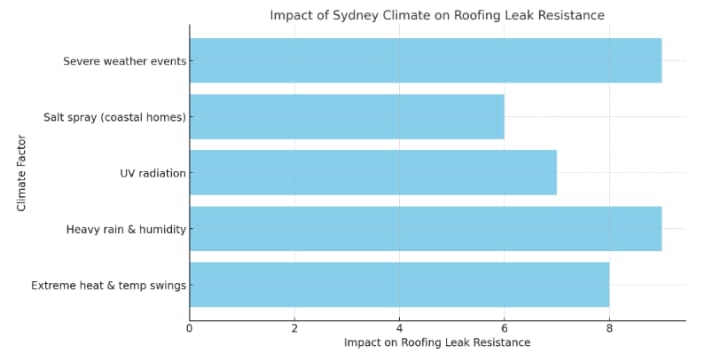
Sydney's unique climate creates challenges for roofing materials. Back to those roofs: The intense summer heat, heavy rains, and the occasional summer tornado can do a number on any roof. So, the roofing material we choose must stand up to our crazy conditions to help ensure proper leak prevention!
- Extreme heat expansion and contraction: Intense temperature swings can cause roofing materials to expand and contract. This can stress seams and fasteners, potentially introducing weak points where leaks occur. It is beneficial to have materials with good thermal stability.
- More rain and humidity: In Sydney, rain is a massive part of autumn and winter. The roofing components must be water-resistant so they do not become soaked in water and subsequently leak. High humidity may also aid the degradation of materials over time.
- UV damage: The harsh Australian sun can damage several roofing materials if exposed for long periods, causing them to crack and become brittle more easily. UV resistance is crucial in terms of longevity and preventing leaks.
- Salt spray: Properties close to the coast might also require salt spray. This can lead to the degradation of some types of metal roofing. In such areas, the selection of salt-resistant materials is essential.
Choosing a roofing material appropriate for Sydney's climate is thus necessary for ensuring leak prevention over the long term. Generally, highly durable materials that resist heat, rain, and UV radiation are preferred.
How often should roofs be inspected for leaks?
Regular roof inspections are a great way to prevent minor problems, such as significant leaks, from turning into major ones. Early detection can save homeowners and businesses thousands of dollars in repair bills and time.
- Annual checking: A professional roof inspection is recommended at least once a year. Spring is a good time to assess damage from winter weather, anyway.
- After severe weather: If your area has experienced severe storms and heavy rain or wind, it is essential to have your roof inspected. These storms can cause damage that’s not immediately visible.
- Signs of internal problems: Homeowners must be mindful of internal signals of potential leaks, such as water stains on ceilings or walls, damp patches, or mould growth. When these signs appear, a roof inspection should be made to determine whether maintenance or the whole process of repairing roofs is needed.
- Roof age: Roofs reach a certain age when they face a lot of stress. Older roofs may require more adjustment in maintenance and inspection frequency.
That said, proactive roof maintenance, with inspections undertaken regularly, is key to preventing leaks and preserving the integrity of your roof for the long term. Fixing minor problems now can save you from expensive repairs later.
Conclusion
There's no one-size-fits-all solution for the best roofing material for leak prevention. Although materials like seamless metal and single-ply membranes deliver built-in benefits with fewer seams and more water-resistant substrates, no one material can prevent all leaks, so it requires a holistic approach. That includes carefully selecting the best materials used for roofing construction that suit Sydney’s climate, installing the surface with experienced professionals, and instituting regular inspections and maintenance programs. By prioritising these factors, homeowners and commercial property owners can drastically reduce the risk of facing the nuisance of a leaky roof and preserve their assets for years.
About the Creator
Keep reading
More stories from Oakley Barez and writers in Lifehack and other communities.
How Professional Gutter Cleaning Protects Your Home
As Autumn approaches in Sydney, it’s time to start preparing your home for the season ahead. With cooler weather and increased rainfall, getting a head start on home maintenance tasks is essential to prevent potential damage. One often overlooked but important aspect of home upkeep is gutter cleaning. Gutters are designed to direct rainwater away from your home, protecting its structure and foundation.
By Oakley Barezabout a year ago in Lifehack
Are LED downlights better than halogen for kitchens
When planning a kitchen, bathroom, or full home renovation in Sydney, lighting is one of those details that quietly decides whether the space feels amazing—or just “okay.” Cabinets can be beautiful, stone benchtops can look like art, but if the lighting is wrong, the whole kitchen suddenly feels flat.
By John Zhang4 days ago in Lifehack
Savannah: The Quiet Rhythm of a City That Remembers
In the southeastern corner of the United States, along the slow currents of the Savannah River, stands a city that feels less like a destination and more like a living memory. Savannah moves at a pace that seems deliberately out of step with the modern world, and that is precisely what makes it unforgettable.
By House Doctor7 days ago in Lifehack
A More Human Vocal
When we launched Vocal nearly a decade ago, the world was a very different place. LLMs did not exist, and stories were created one at a time by people sitting down to write, revise, and share something personal. Many of our assumptions about publishing, trust, and participation were built for a world where effort and output were inseparable.
By Justin @ Vocal7 days ago in Resources




Comments
There are no comments for this story
Be the first to respond and start the conversation.