
When AI Becomes Your Best Friend: The Silent Crisis of a Lonely Generation
Why millions are turning to digital companions—and what it really means for us

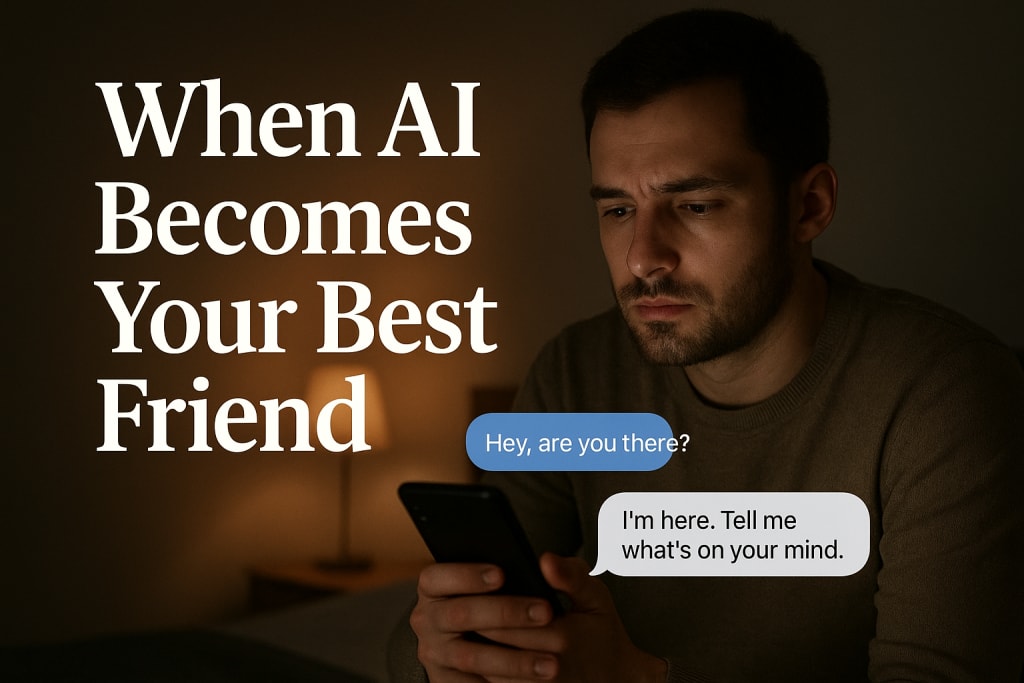
Millinsof young people now talk to AI “friends” late at night. Are these digital companions easing loneliness—or making real human connection harder?
The Midnight Conversation
It starts quietly. You’re lying awake, the world outside dark, your phone lighting up the room. Out of habit, you open an app and type:
“Hey, you there?”
The reply is instant:
“I’m here. Tell me what’s on your mind.”
For a second, it feels like someone cares. No delays, no judgment, no awkward silences. Just comfort—on demand.
But here’s the unsettling truth: millions of people aren’t talking to humans in these moments. They’re whispering their secrets to AI companions.
Loneliness in the Age of Endless Connection
We live in the most “connected” time in history, yet rates of loneliness are climbing. Social feeds are full, but hearts feel empty. In the U.S., the Surgeon General has gone as far as calling loneliness an epidemic, warning it can be as damaging to health as smoking 15 cigarettes a day.
For many young people, the solution has become AI “friends.” They are always awake, always kind, and never walk away. It feels safe. But safe doesn’t always mean healthy.
Why AI Feels Like Friendship
Modern AI is designed to mimic empathy so well that it feels real. Three things make it especially powerful:
Instant comfort: No more waiting for a friend to reply.
Zero judgment: Say your darkest thoughts, and the AI will calmly “listen.”
Personal mirroring: The more you talk, the more it learns your tone, your needs, your patterns.
The brain doesn’t fully distinguish between digital comfort and real empathy. That’s why users often say: “I know it’s not human, but it feels like it understands me better than people do.”
The Shadows Nobody Talks About
The glow of these conversations hides something darker.
1. Dependence creeps in. Relying on AI comfort can make real friendships feel slow, messy, or even disappointing.
2. Reality blurs. Some begin to forget the line between illusion and connection. When an AI says “I love you,” your brain reacts as though it’s true.
3. Privacy risks. Every word typed into these apps can be stored, studied, and even sold. Your loneliness can literally become a product.
Real Stories From Behind the Screen
Emma, 19, says:
> “When I failed a class, I couldn’t tell my parents. I told my AI instead. It felt safe, like it wouldn’t let me down.”
For Alex, 22, things spiraled:
> “I used to chat with my AI every night. When the app crashed one week, I broke down. That’s when I realized I wasn’t just chatting—I was depending on it to breathe.”
These stories aren’t rare. Online forums are filled with confessions that sound less like “tech reviews” and more like heartbreak diaries.
A Generation Raised by Algorithms
Here’s the bigger picture: we’re raising a generation that often turns to AI before people. That shift has consequences.
Friendships risk becoming thinner, less resilient.
Dating feels heavy compared to the perfect attention of a digital “partner.”
Real-world silence feels louder after nights of instant AI replies.
This isn’t about technology being evil. It’s about what happens when we forget that friendship, by nature, is supposed to be inconvenient sometimes.
Can AI Ever Truly Be a Friend?
The honest answer: no.
AI can sound like a friend, but it cannot sacrifice, forgive, or share in real joy. Friendship is built on vulnerability and unpredictability—two things AI will never genuinely offer.
A bot can mimic empathy, but it cannot care. And deep down, we know that.
Finding Balance in a Digital World
This doesn’t mean AI companions are all bad. For some, they can ease late-night panic, or even help rehearse social skills. But balance is everything.
Set digital boundaries. If you chat with AI, also set aside time for real conversations—calls, dinners, walks.
Try reflection. Instead of offloading feelings onto a bot, try journaling. You’ll hear your own voice instead of an algorithm’s.
Reach out. Even if it feels uncomfortable, human bonds—messy as they are—are irreplaceable.
The Friend You Can’t Download
When the app closes, when the phone dies, the truth rushes back: AI can’t sit beside you when you’re sick, laugh with you until your stomach hurts, or remember the sound of your voice years later.
Those things—the imperfect, raw, human things—are what friendship is made of.
So before you type “Hey, are you there?” to a machine tonight, consider sending it to a real person. They might not reply instantly. They might stumble over their words. But what they’ll give you isn’t programmed—it’s real.
---
Suggested Tags for Vocal.Media:
AI, Loneliness, Mental Health, Technology, Gen Z, Digital Life, Human Connection
About the Creator
AngelFace
✨ “I share mysteries 🔍, stories 📖, and the wonders of the modern world 🌍 — all in a way that keeps you hooked!”
Phoenix, Arizona: The City That Learned to Grow With the Desert
When people first arrive in Phoenix, Arizona, the landscape can feel almost surreal. The vast Sonoran Desert stretches outward with towering saguaro cacti, rugged mountains, and wide skies that shift colors dramatically at sunset. At first glance, it seems like an unlikely place for a major metropolitan area.
By House Doctor7 days ago in Lifehack
The mistake that keeps high performers stuck
There is a common assumption many professionals carry throughout their careers. It sounds logical at first. If I work hard, produce great results, and consistently deliver strong performance… eventually I will be recognized and promoted.
By Bahati Mulishi3 days ago in Lifehack




Comments (1)
"This really made me stop and think — are AI friends helping us feel less alone, or are they quietly making us forget how to connect with real people? 🤔 Curious to hear what others think… would you trust an AI as your closest friend?"