
What Is a Good Cutting Board? Tips for Safe & Smart Cooking
A Guide to Choosing Durable, Hygienic, and Knife-Friendly Boards
When asking what is a good cutting board, the answer lies in safety, durability, hygiene, and knife protection. These features make it reliable for everyday cooking.
The safest cutting board material is one that resists bacteria, cleans easily, and lasts long. For home cooks or professionals, knowing these qualities ensures a smart and lasting kitchen investment.
What Makes a Good Cutting Board: Key Features

To answer “what is a good cutting board”, we need to look at the core qualities that all excellent boards share.
Material & Surface
The surface should be non-porous or treated to repel moisture and resist bacteria. It also must be gentle on knives so blades don’t dull quickly. Hardwoods like maple, walnut, or cherry are often excellent choices and are frequently considered the best material for cutting board use.
Knife Friendliness
A good cutting board provides enough “give.” It shouldn’t be so hard that knives dull quickly, nor too soft that they wear out fast. End-grain woods are often preferred for protecting blade edges.
Durability & Maintenance
A reliable cutting board resists warping, cracking, and staining. Maintenance plays a big role—oiling, drying, and proper cleaning extend its lifespan. A good cutting board is one that lasts with consistent care.
Hygiene & Food Safety
Deep grooves or porous surfaces can trap bacteria, creating health risks. A high-quality board is easy to clean and sanitize. Certain materials, like stainless steel or titanium, are naturally antibacterial and more hygienic.
Size, Shape & Weight
A good cutting board fits your kitchen space and is easy to handle. It shouldn’t be oversized and awkward, or too small to be useful. Balanced size and weight improve comfort and efficiency.
Special Features
Added details like reversible surfaces, juice grooves, anti-slip grips, or dual-material boards can enhance performance. These features help adapt the cutting board to different cooking needs and lifestyles, offering extra convenience.
Common Materials: Pros & Cons
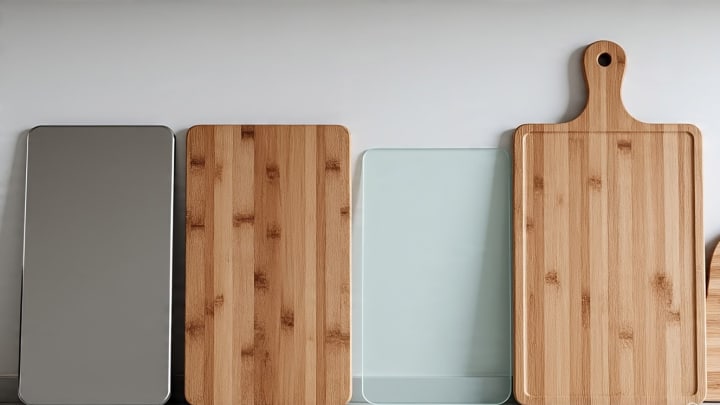
When considering “what is a good cutting board”, material is probably the first decision. Here are the common ones:
Hardwood (Maple, Walnut, Cherry, Teak, Acacia)
Hardwood cutting boards are durable, attractive, and gentle on knives. They can last for years with proper care. However, they require regular oiling and can warp or crack if neglected.
Bamboo
Bamboo boards are eco-friendly and sustainable, making them popular. They look stylish and are lightweight. The downside is bamboo’s hardness, which can dull knives more quickly due to its natural silica content.
Plastic, Polyethylene, or Composite
Plastic and composite boards are affordable and usually dishwasher-safe. They resist moisture and are lightweight. But they scratch easily, and deep grooves may trap bacteria, requiring more frequent replacements to stay hygienic.
Glass, Stone, or Ceramic
These boards are non-porous and very easy to sanitize. However, they’re extremely hard on knives, causing blades to dull quickly. They can also be slippery and prone to breaking or shattering under stress.
Double-Sided or Dual-Material
Dual-material cutting boards offer versatility, such as stainless steel paired with fiber or wood with plastic. One side can handle heavy-duty chopping, while the other is gentler. They cost more but provide flexibility and hygiene benefits.
How to Choose: Practical Tips
To decide “what is a good cutting board” for your kitchen, consider these factors:
- What kind of cooking do you do (meats, vegetables, pastries, or a mix)?
- How often do you cook, and how often will you realistically clean?
- How much space do you have for storage and on your countertop?
- How much maintenance are you willing to handle, such as oiling or sanitizing?
- Budget versus long-term value, since durable boards save money over time.
Always measure your sink and counter so the board isn’t oversized. Rounded edges prevent snagging. A bit of weight adds stability, but it should still be comfortable to carry. Replace boards when deep grooves, scratches, or odors develop.
Choosing the safest cutting board material ensures hygiene and durability.
Why Some Boards Fail
Boards that don’t meet these standards often cause frustrating problems, such as:
- Cracking, warping, or splitting when exposed to too much water or dishwasher heat
- Rapidly dulling knife blades if the surface is overly hard, like glass, stone, or bamboo
- Retaining unpleasant odors or stains in porous materials that are hard to sanitize
- Harboring hidden bacteria deep inside grooves, scratches, or uneven textures
- Being too lightweight or undersized, sliding around, and making everyday food prep unsafe
Ultimately, understanding “what is a good cutting board” also means recognizing the flaws of poor boards—so you can confidently choose durable, safe, and truly reliable options.
ChopChop USA: Cutting Boards That Meet the Standard
Now that you know “what is a good cutting board”, here are four excellent options from ChopChop USA that embody those qualities.
Titanium Cutting Board

The ChopChop USA Titanium Cutting Board is ultra-durable and non-porous, resisting warping, cracking, and bacteria. It’s 100% dishwasher safe and gentle on knives, eliminating concerns about microplastics or harmful chemicals often found in other boards.
This board delivers long-term safety, performance, and convenience. It provides a smooth, reliable cutting surface that stays sanitary through years of use, making it a strong choice for anyone who values durability and hygiene.
Double-Sided Titanium Cutting Board
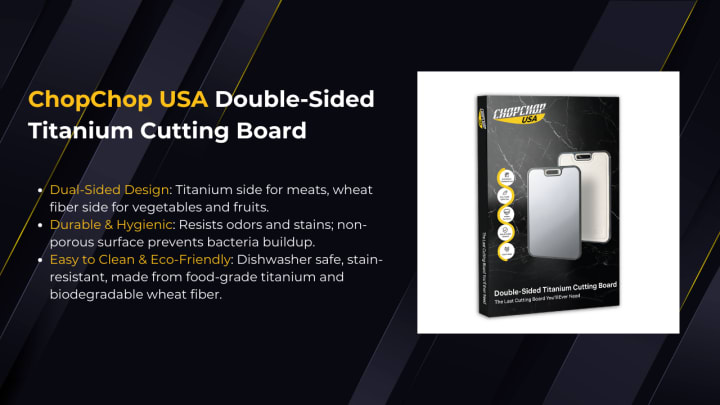
This double-sided titanium cutting board offers titanium on one side for heavy-duty cutting and wheat fiber on the other for lighter, delicate tasks. The dual design ensures versatility while keeping your food preparation surfaces safe and clean.
It’s dishwasher safe, eco-friendly, and practical, blending modern sustainability with durability. A great example of “what is a good cutting board”, it provides hygiene, flexibility, and strength for both home kitchens and professional cooking spaces.
Stainless Steel Cutting Board

The ChopChop USA Stainless Steel Cutting Board combines long-lasting durability with hygienic, food-safe materials. Its non-porous design resists odors, stains, and bacteria, while remaining free from microplastics—offering a cleaner, safer surface for all meal preparation needs.
It’s dishwasher safe, extremely durable, and low-maintenance. If cleanliness and long-term strength define “what is a good cutting board” for you, this board delivers dependable performance and a modern, sanitary upgrade for any kitchen.
Double-Sided Stainless Steel Cutting Board

This Double-Sided Stainless Steel Cutting Board pairs stainless steel on one side for meats or heavy chopping with rice husk fiber on the other to protect knife edges. The design ensures durability without sacrificing knife-friendliness or ease of use.
It’s dishwasher safe, versatile, and hygienic—ideal for busy kitchens. This board illustrates “what is a good cutting board” when you want the strength of steel with the gentler touch of fiber for everyday cooking.
Comparing ChopChop USA Boards to Traditional Materials
Let’s see how these perform against traditional wood, plastic, or bamboo boards in light of “what is a good cutting board”:

Maintenance & Care Tips for Any Good Cutting Board
Even the best boards need care. To maximize lifespan and hygiene, remember these whenever you wonder “what is a good cutting board” in practice:
- Clean immediately after use with hot soapy water
- Sanitize (especially after raw meat) using safe methods like vinegar or a mild bleach solution
- Dry thoroughly; store upright so air can circulate
- For wood, oil with food-grade mineral oil periodically to prevent drying or cracking
- Don’t soak wood or expose metal boards to acidic, salty moisture for too long (could corrode or pit)
- Inspect boards for deep grooves; once bacteria hide too deeply, replace
Answering the Big Question: What Is a Good Cutting Board?
After reviewing materials, features, and standout options like ChopChop USA boards, the answer to “what is a good cutting board” is clear. A good cutting board provides a safe, sanitary, and durable prep surface, protects knives, and fits seamlessly into your kitchen routine.
When choosing, consider material, surface hardness, hygiene, size, and maintenance. Balance initial cost with long-term value to ensure lasting performance without sacrificing safety or convenience.
Final Thoughts
If you keep asking what is a good cutting board, this guide arms you with the answers. A great board supports your knife, keeps your food safe, fits your kitchen life, and rewards care with years of reliable service.
ChopChop USA’s titanium and stainless steel boards exemplify all this: hygiene, durability, knife-friendliness, and minimal maintenance. If you want something that truly delivers—and one you won’t need to replace often—those deserve serious consideration.
FAQs
Is wood better than plastic for cutting boards?
Hardwood is durable and knife-friendly, while plastic is affordable and dishwasher safe. The better option depends on your cooking habits, cleaning preferences, and budget considerations.
Are double-sided or reversible boards worth it?
Yes, they help separate meats from vegetables, reduce contamination, and extend usage time. Double-sided boards are versatile, practical, and a convenient choice for many kitchens.
When should I replace my cutting board?
Replace your board if it develops deep grooves, cracks, persistent odors, or warping that affects stability. Regular inspection ensures safe food preparation and better hygiene.
Why choose a ChopChop USA cutting board over traditional boards?
ChopChop USA boards use premium titanium or stainless steel, making them antibacterial, durable, and eco-friendly. They’re dishwasher safe, gentle on knives, and designed to outlast wood or plastic alternatives.
Are ChopChop USA double-sided cutting boards practical?
Yes, ChopChop USA double-sided boards combine steel or titanium with natural fibers. This design offers hygiene, versatility, and convenience—ideal for switching between meats, vegetables, or bread without cross-contamination.
About the Creator
Keep reading
More stories from Olivia Kim and writers in Lifehack and other communities.
productivity principles
I’m going to show you the habits that will either make you angry or set you free. The choice is yours. Because honestly, most of you already know how to study a lot or work hard. Hardcore studying is not the reason you’re not where you want to be in life. The real reason is that you don’t understand how to take control of your time and squeeze everything possible out of it.
By Mahboubeh Fallahi8 days ago in Lifehack
This Is What I Do When People Throw Rocks At Me
Rocks have been thrown at me for a greater part of my life. Some have been small and missed hitting me. When people don't get a reaction from me, they throw bigger rocks with a better aim. Many have been hurled at me with precision over the years. For a long time, I thought my only options were to dodge them or be crushed by them.
By Margaret Minnicks6 days ago in Confessions


Comments
There are no comments for this story
Be the first to respond and start the conversation.