
What Flight ‘Black Boxes’ Reveal About Plane Crashes
How data recorders help investigators unlock critical details to improve aviation safety

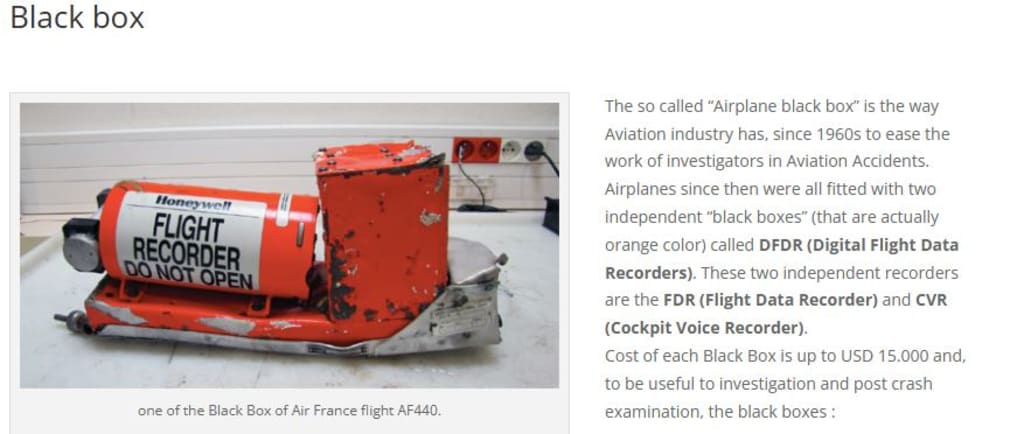
When an airplane crashes, the investigation hinges on uncovering exactly what happened in the final moments of flight. Central to this process is the flight data recorder, commonly known as the “black box.” Despite the ominous name, the device is actually bright orange to aid recovery in wreckage. These black boxes hold the secrets of the flight, capturing vital technical and audio information that help experts piece together the events leading up to an accident.
Black boxes consist of two separate components: the flight data recorder (FDR) and the cockpit voice recorder (CVR). The FDR collects technical data such as altitude, speed, heading, engine performance, and control inputs. Meanwhile, the CVR captures the voices and sounds inside the cockpit, including conversations between pilots, alerts, alarms, and ambient noises. Together, these devices provide a detailed snapshot of what the flight crew experienced and how the aircraft was functioning.
The importance of black boxes cannot be overstated. They serve as the investigators’ most objective witnesses, offering insights far beyond what physical wreckage or eyewitness accounts can provide. Since many crashes occur in remote or hazardous locations, recovering the black boxes can be a race against time. That’s why these devices are built to be extraordinarily durable, designed to withstand extreme heat, pressure, and impact.
Once recovered, the data is analyzed by aviation safety experts, accident investigators, and sometimes manufacturers. They use specialized software and tools to interpret the raw data, looking for anomalies or signs of mechanical failure, human error, or external factors like weather. The cockpit audio can reveal critical information about crew decision-making, communications, and responses to emergencies.
One example highlighting the significance of black box data is the investigation into the tragic crash of Malaysia Airlines Flight MH370, where the absence of recovered black boxes complicated efforts to determine the cause. Conversely, the thorough analysis of black box data helped unravel the causes of other major accidents, leading to improved training, aircraft design, and safety regulations.
Modern black boxes can record dozens of parameters—far more than earlier versions. This increased data collection allows investigators to build a comprehensive timeline of the flight, reconstructing every action and event down to fractions of a second. The technology continues to evolve, with some manufacturers exploring live streaming of black box data to avoid delays in accessing critical information.
Despite their importance, black boxes do have limitations. They only record data from the flight itself, so factors outside the plane or post-impact events may remain unknown. In addition, damage or loss of the device can hinder investigations. Nevertheless, they remain indispensable tools for understanding accidents and preventing future tragedies.
The information gleaned from black boxes doesn’t just solve mysteries; it directly influences aviation safety. Lessons learned from past crashes lead to new regulations, better cockpit protocols, enhanced aircraft systems, and improved emergency response procedures. For passengers and crews alike, these improvements translate into safer skies.
The public often associates black boxes with dramatic crash investigations featured in news reports and documentaries. However, the continuous advancements in black box technology and data analysis play a quieter but equally vital role in everyday aviation safety. Airlines, regulators, and manufacturers rely on this data to identify risks and implement preventative measures long before accidents occur.
In summary, flight data recorders and cockpit voice recorders provide a window into the cockpit during critical moments, offering investigators the detailed information necessary to understand and learn from crashes. Their resilience and detailed recording capabilities make black boxes one of the aviation industry's most important safety tools.
As air travel remains one of the safest modes of transportation worldwide, black boxes will continue to play a crucial role in maintaining and enhancing that safety. Through the meticulous study of the data they provide, the aviation community can keep pushing the boundaries of safety and technology—turning lessons from past tragedies into hope for the future.
About the Creator
Ramsha Riaz
Ramsha Riaz is a tech and career content writer specializing in AI, job trends, resume writing, and LinkedIn optimization. He shares actionable advice and insights to help professionals stay updated.
Keep reading
More stories from Ramsha Riaz and writers in Lifehack and other communities.
Major Tech Brand Shuts Down Baby Monitors and Household Devices – Here’s How to Claim a Refund
A major disruption is unfolding in homes across the country as a leading technology company has abruptly shut down the servers supporting its popular range of smart baby monitors and other connected household devices. This unexpected move has rendered many products unusable overnight, leaving concerned parents and consumers scrambling for answers about what to do next—and how to claim compensation.
By Ramsha Riaz8 months ago in Lifehack
5 Simple Lifehacks to Keep Your Teeth Healthy Every Day
Healthy teeth aren’t just about occasional dental visits—they’re shaped by the little choices you make every day. Simple habits, when done consistently, can prevent cavities, gum issues, sensitivity, and other oral concerns while keeping your smile bright and comfortable. These lifehacks are easy to integrate into your routine and don’t require drastic lifestyle changes.
By Smile Sydney7 days ago in Lifehack
The BAFTA Awards
By now, in a stunning departure from recent years, most of the world is aware of what happened at the BAFTA film awards. Social Media Headlines will tell you the bare bones: that John Davidson, a Tourette's Syndrome advocate, shouted a racial slur at two Actors of Colour, Michael B Jordan and Delroy Lindo.
By Natasja Rose7 days ago in Psyche



Comments
There are no comments for this story
Be the first to respond and start the conversation.