
What are the four major cuisines, eight major cuisines and Twelve major cuisines in China?
A Bite of China

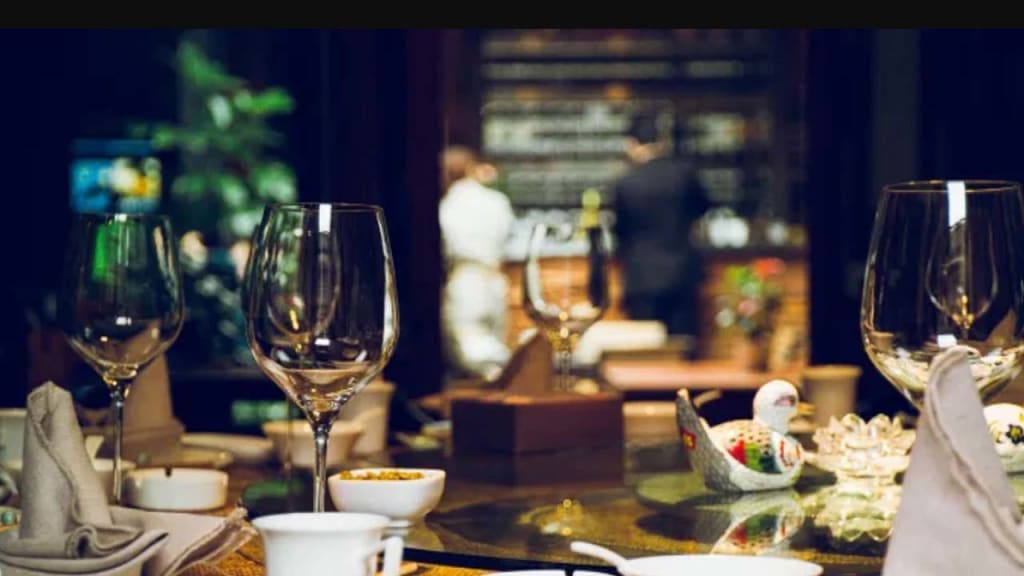
As a little famous foodie, the source of happiness every day is to eat a variety of delicious food, cure 256G stomach! No man, people say, I have eaten all four major Chinese cuisines, each of which has its own characteristics! Ladies, what's in the four major dishes? Today I will tell you!
1. Cantonese cuisine, Cantonese cuisine for short.
● Guangdong is divided into Cantonese cuisine, Chaozhou cuisine, Dongjiang cuisine, and some Hakka cuisine! One of the characteristics of Cantonese cuisine is that it is fresh, tender, cool, smooth, concentrated, the taste is relatively light, taste the delicious dishes, pay attention to the freshness of the ingredients!
● Representative dishes are crispy Suckling pig, Sweet and Sour Pork, stewed abonly wing in Teochew fire drum, white cut chicken

2. Sichuan Cuisine, Sichuan Cuisine for short.
● When it comes to Sichuan food, the first reaction is spicy. Yes, Sichuan cuisine is very spicy. All kinds of pepper hemp, vinegar pepper, spicy, it is very hot and cool to eat. Sichuan cuisine is also famous for its greasy cuisine, which is mainly hot and spicy. Spicy oil, red oil, sesame oil all kinds of oil to cook dishes.
Representative dishes: Shredded pork with fish flavor, Mapo Tofu, Kung pao Chicken, Twice-cooked Pork, Spicy Chicken

3. Jiangsu Cuisine, called Su Cuisine for short.
● This dish is Subang cuisine, which is composed of Huaiyang cuisine, Suzhou cuisine and Nanjing cuisine. It is thick but not greasy. The taste is clear and fresh, but the taste of the dish will be sweet. The production of dishes is also relatively exquisite, pay attention to the shape, the ritual sense of eating is very sufficient.
Representative dishes: Lion's head, called flower chicken, squirrel Mandarin fish, salted duck.
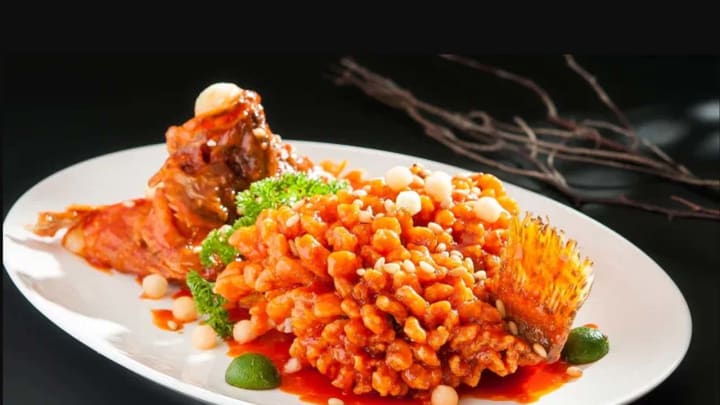
4. Shandong Cuisine, Lu Cuisine for short.
● Shandong cuisine is very beautiful, and the knife is very good, the dish is very exquisite. And it makes good use of scallions and ginger. And so on seasoning to seasoning, the taste will be better to eat oh, dishes are practical.
Representative dishes: Sweet and sour fish, braised elbow, braised Lamb with scallion, braised Sea cucumber with scallion, braised bean curd, braised conch with brown sauce.

China is an ancient civilization with a long history of food culture. Food culture can be summarized into the following characteristics:
Flavor diversity
Due to China's vast territory and abundant resources, there are differences in climate, products, customs and habits. For a long time, many flavors have been formed in the diet. There has always been a saying in China that "rice in the south and rice in the north". The taste is divided into "sweet in the south, salty in the north, sour in the east and spicy in the west". The main flavors are Bashu, Qilu, Huaiyang, Guangdong and Fujian.
The seasons are different.
All year round, according to the seasons, is another feature of Chinese cooking. Since ancient times, China has been seasoning and preparing dishes according to seasonal changes. Winter tastes rich and dense, while summer is light and cool. Braised and stewed in winter and frozen in summer.
Pay attention to aesthetic feeling
Chinese cooking is not only technically exquisite, but also has the tradition of paying attention to the beauty of dishes, paying attention to the harmony of color, aroma, taste, shape and utensils of food. The expression of the beauty of dishes is manifold. No matter it is a carrot or a cabbage heart, it can be carved out of a variety of shapes, unique, to achieve the harmony and unity of color, fragrance, taste, shape and beauty, giving people a special enjoyment of high unity of spirit and material.
Pay attention to interest
Chinese cooking has been paying attention to taste since a long time ago. It not only has strict requirements on the color, aroma and taste of food and snacks, but also has certain requirements on their naming, the way to taste, the rhythm of eating, and the interpenetration of entertainment. The names of Chinese dishes can be said to be marvelous, elegant and popular. Dishes are named according to the realistic name of the main, auxiliary, seasoning and cooking method, but also according to the historical stories, myths and legends, celebrity food interests, dishes image to name, such as "family portrait", "General crossing the bridge", "lion's head", "called chicken", "Dragon and Phoenix Chengxiang", "Hongmen Banquet", "Dongpo meat".
Combination of food and medicine
Chinese cooking technology is closely related to medical care. Thousands of years ago, there was a "medical-food homology. It is the same as medicated diet. Using the medicinal value of food raw materials to make a variety of delicious dishes, to achieve the purpose of the prevention and treatment of certain diseases."
The beauty of harmony is the highest aesthetic ideal of Chinese traditional culture. "In the world, the great also; He who makes peace also makes the world reach. When it comes to neutralization, the position of heaven is how, and everything is how "(Book of Rites · The Mean of the Mean). There is a famous saying in the Ancient Wen Shang Shu Shu Shuo Life, "If you make soup, you must make plum with salt", which means that the key to making soup well is to balance the salty (salt) and sour (plum), which is a metaphor for governing the country. In Zuo Zhuan, Yan Ying (a wise minister of the State of Qi) also talked about "harmony" with Duke Jing of Qi, pointing out that "harmony" is not "harmony" and that harmony should be based on the coordination of different opinions. Therefore, Chinese philosophers believe that everything in heaven and earth finds its place in a state of "neutrality" for reproduction and development. This aesthetic ideal architecture is based on the harmony and unity between individual and society, man and nature. The idea of achieving the "beauty of harmony" through tuning was inspired and influenced by the ancient cooking practice and theory, which in turn influenced people's whole food life, especially for the ancient literati and officials who pursued the art of life.
The opposite of "neutral" is extreme, which is not considered authentic in cooking. Foods that are "too salty, too spicy, too sour" may be sought after by people who are physically disturbed, but in the long run they are harmful to the body. The evils of extremism in social and political life are even more undeniable.
About the Creator
alonbryant
Life is like a journey, don't care about the destination, care about, is the scenery along the way, and the mood to see the scenery.
Keep reading
More stories from alonbryant and writers in Lifehack and other communities.
Life is like a journey
Life is like a journey, don't care about the destination, care about, is the scenery along the way, and the mood to see the scenery. Twilight and day for another year, everyone is in a hurry. In the world, each person has his own state of existence, his own spiritual path and his own values, which cannot be forced. In today's rampant material desire, if a person pays attention to self-adjustment, the pursuit of material desire is less, the pursuit of spirit is more, more idle life, less worldly worldly tired. Then you can enjoy the scenery along the way.
By alonbryant3 years ago in Lifehack
The Surprising Way Positive Thinking Can Change Your Life
Let me tell you the story of how I almost didn't win a car. Yup. You've heard it right. A car. But we almost didn't enter the raffles, thinking "Well, out of the thousands that applied, it's impossible to win".
By Anie Libanabout 11 hours ago in Lifehack



Comments
There are no comments for this story
Be the first to respond and start the conversation.