
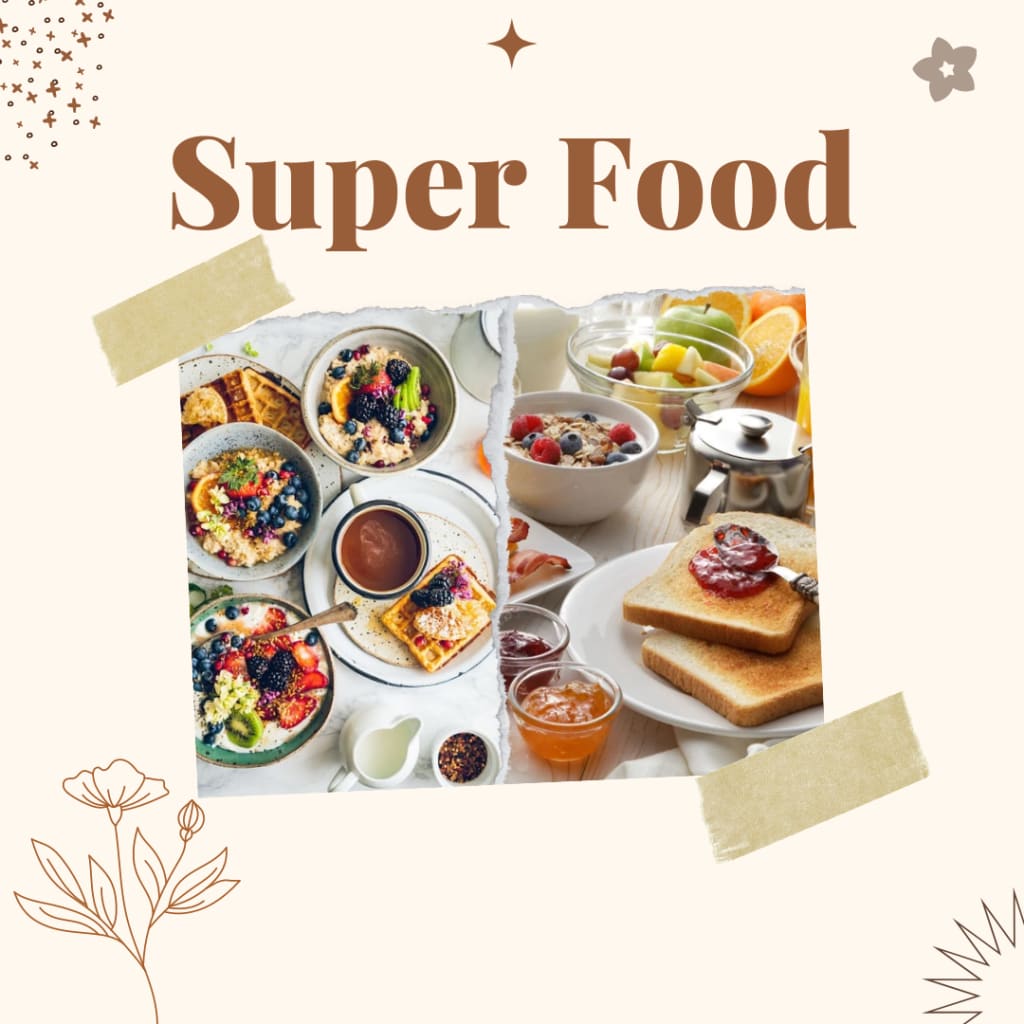
Superfoods are foods — mostly plant-based but also some fish and dairy — that are nutritionally dense, containing lots of vitamins, minerals and antioxidants that are good for one's health. However, "superfood" isn't a scientifically recognised term, with no set criteria to determine what is and isn't a superfood, according to the American Heart Association(opens in new tab). Regardless, some foods, like blueberries, salmon, kale and acai, are nutritionally very valuable in comparison to other less nutritionally dense foods.
"Superfoods don't have their own food group," said Despina Hyde, a registered dietician with the weight management program at New York University's Langone Medical Center. "As a dietician, I think "superfood" is more of a marketing term for foods that have health benefits."
Superfoods contain a variety of nutrients, such as antioxidants, which are thought to ward off cancer and other diseases by reducing oxidative stress on the body. Oxidative stress occurs when there is an excess of free radicals in the body, associated with human disease. Some foods, like salmon, also have healthy fats, which can help to prevent heart disease. High-fiber foods, like kale, can promote good digestion and provide a sense of fullness, which can aid in weight loss efforts, according to a 2019 study in the Journal of Nutrition.
Blueberries
Blueberries often top many lists of superfoods because they are rich in vitamins, soluble fiber and phytochemicals (chemical compounds produced by plants that have an impact on human health, often including chemicals that give plants color or disease resistance).
But the same nutrients found in blueberries are also found in many other kinds of berries, including strawberries and cranberries. Research published in the International Journal of Molecular Sciences(opens in new tab) in 2015 has shown how regular consumption of berries can significantly bring down inflammation levels within the body.
Another study, published in 2013 in the journal Circulation(opens in new tab), found that a high intake of phytochemicals known as flavonoids — which are found in berries — may reduce the risk of certain heart conditions in young women. But the small, vibrant berry may take the top spot purely because it has been more frequently studied, experimental psychologist Barbara Shukitt-Hale told The Atlantic(opens in new tab).
Kale
Kale lives up to the hype it has attracted as a superfood, but so do most dark, leafy greens: Swiss chard, collards, mustards (including radish greens), spinach (and others in the amaranth family) and cabbages. Include broccoli on that list as well. It's in the cabbage-mustard family; the modern version is grown for its flower instead of its leaves.
All these dark green colored vegetables are loaded with vitamins A, C and K, as well as fiber, calcium and other minerals. A 2016 paper in the journal Food and Function(opens in new tab) indicates that regular consumption of spinach may lead to a reduced risk of developing several health conditions including obesity, type 2 diabetes, and several types of cancer.
Popular superfoods
Blueberries
Blueberries often top many lists of superfoods because they are rich in vitamins, soluble fiber and phytochemicals (chemical compounds produced by plants that have an impact on human health, often including chemicals that give plants color or disease resistance).
But the same nutrients found in blueberries are also found in many other kinds of berries, including strawberries and cranberries. Research published in the International Journal of Molecular Sciences(opens in new tab) in 2015 has shown how regular consumption of berries can significantly bring down inflammation levels within the body.
Another study, published in 2013 in the journal Circulation(opens in new tab), found that a high intake of phytochemicals known as flavonoids — which are found in berries — may reduce the risk of certain heart conditions in young women. But the small, vibrant berry may take the top spot purely because it has been more frequently studied, experimental psychologist Barbara Shukitt-Hale told The Atlantic.
Kale
Kale lives up to the hype it has attracted as a superfood, but so do most dark, leafy greens: Swiss chard, collards, mustards (including radish greens), spinach (and others in the amaranth family) and cabbages. Include broccoli on that list as well. It's in the cabbage-mustard family; the modern version is grown for its flower instead of its leaves.
All these dark green colored vegetables are loaded with vitamins A, C and K, as well as fiber, calcium and other minerals. A 2016 paper in the journal Food and Function(opens in new tab) indicates that regular consumption of spinach may lead to a reduced risk of developing several health conditions including obesity, type 2 diabetes, and several types of cancer.
Sweet potatoes & squash
Sweet potatoes and squash also usually make the superfood list, for reasons similar to those listed for leafy greens. Both kinds of food are generally excellent sources of fiber, vitamin A and much more.
Beans & wholegrains
Beans and whole grains are also included on superfood lists. Beans are a source of low-fat protein and insoluble fiber, which lowers cholesterol; soluble fiber, which provides a prolonged feeling of fullness; and loads of vitamins and trace minerals largely absent in the typical American diet, such as manganese.
A 2007 comparative study, published in the Journal of Food Science(opens in new tab), suggests that the pulses with the highest antioxidant abilities include yellow peas, green peas, chickpeas, soybeans, lentils, and red kidney beans.
Whole grains — named as such because, unlike refined grains, they are not stripped of their nutrient-containing bran and germinating part during processing — have benefits similar to those found in beans, though they don't contain as much protein. Quinoa is not a grain, but it cooks up like one, and is also a remarkable source of protein, vitamins, minerals, fiber and antioxidants.
Nuts and seeds
Nuts and seeds contain high levels of minerals and healthy fats. Although these are common additions on superfood lists, the downside is that they are high in calories. A quick handful of nuts could contain more than 100 calories, according to Hyde. Shelled nuts and seeds, in this regard, are ideal because they take time to crack open, which slows you down.
Fish
Salmon, sardines, mackerel and certain other fatty fish are rich in omega-3 fatty acids, which are thought to lower the risk of heart disease and stroke. The benefits of eating fish may far outweigh the risk of harming your health from the mercury these fish contain, according to the Harvard T.H. Chan School of Public Health(opens in new tab). If you worry about the contaminants your fish dinner may contain, avoid eating fish that are high up on the food chain. Certain fish, such as sharks, swordfish, king mackerel and tilefish, contain higher levels of mercury than smaller fish, like sardines, smelt and anchovies.
Fruits
Any superfood list is sure to contain an "exotic fruit of the year." This might be acai berry, noni fruit, dragon fruit, rambutan or pomegranate. These fruits might be healthful, but scientific studies don't show that they are more healthful than other, less exotic (and therefore less expensive) fruits, such as blueberries.
Some of these fruits may be particularly dense in certain kinds of nutrients. Pomegranate, for example, contains ellagitannins (ellagic acid) and other antioxidants, according to a 2020 review published in the Journal of Food Bioactives(opens in new tab), which may have anti-cancer properties. But red raspberries, which are arguably just as delicious as pomegranate seeds, also contain ellagic acid.
About the Creator
Keep reading
More stories from Fathima Haseena and writers in Lifehack and other communities.
How to defeat Pandemic Brain
httpsThe COVID-19 pandemic has elocutionary people all the world in different ways, and I of the to the highest degree considerable impacts has been on our unhealthy health. The pandemic has brought about a fres term called "pandemic brain," which refers to the mental fog, forgetfulness, and difficulty concentrating that many populate are experiencing during this time.
By Fathima Haseena3 years ago in Lifehack
How to Travel the Ella Odyssey Train Route in Sri Lanka
Taking a train ride in Sri Lanka is undoubtedly a unique experience, and there can hardly be a finer choice in this regard than riding the Ella Odyssey, a special luxury train service targeted mainly at tourists. You may well have seen images of the scenic sights that you can experience on this distinctive journey, which may be counted amongst the most picturesque in the world. Some useful information regarding enjoying this amazing ride is provided below.
By ameliarosanna4 days ago in Lifehack
I Lost Them While They Were Still Alive
They didn't die on my hands. I lost them to silence. There was no funeral, no final farewell, and no significant occurrence to signal to me that this was the end. Days turned into weeks, weeks turned into months, and conversations became memories that I thought I could revisit at any time. I was swamped. Busy chasing stability. occupied with trying to get "better." Busy convincing myself that there would always be time later.
By Noor Ul wahaba day ago in Lifehack


Comments
There are no comments for this story
Be the first to respond and start the conversation.