
Using a novel strategy, scientists try to stop human ageing.
Ageing cells become uncontrollable

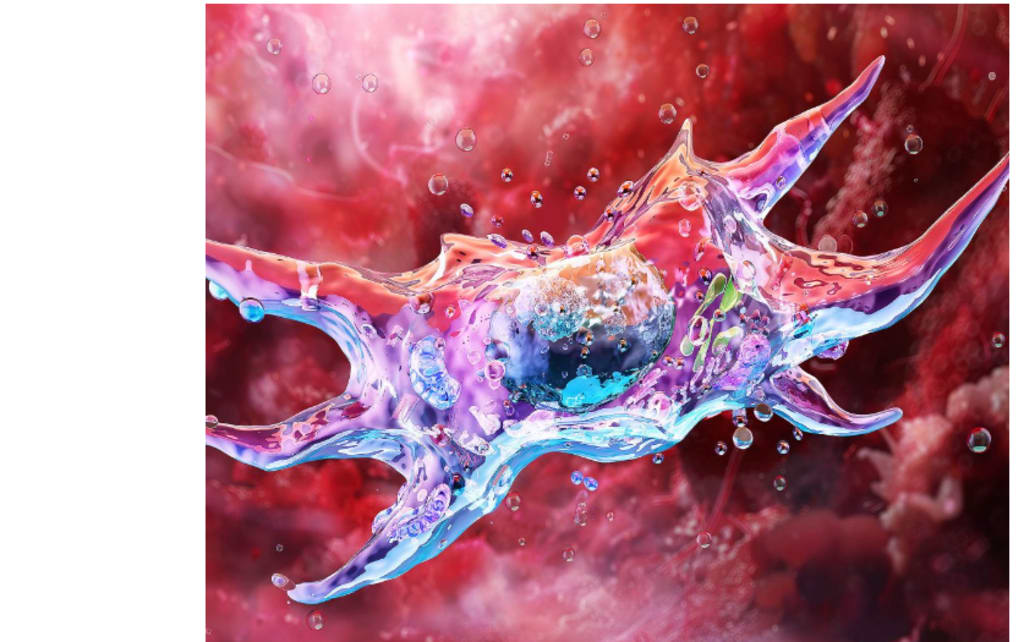
Your cells' functions change as you age, and this gradual change can lead to organ failure, weakening, and scarring. There is now hope for treating age-related disorders since scientists have discovered a mechanism to nudge some cells back towards healthy roles.
Because each cell maintains a distinct identity and adheres to the instructions included in its genetic material, tissues across the body continue to operate. Researchers at Altos Labs monitored how ageing distorted those instructions in a variety of organs and cell types.
Dr. Juan Carlos Izpisua Belmonte, Ph.D., who specialises in tissue repair and cell reprogramming, oversaw the project. The team handled ageing more like poor guidance and less like normal wear and tear by concentrating on identity loss.
Ageing cells move in the direction of scarring
In one study, gene activity patterns in samples from elderly people were analysed, and it was discovered that the same push occurred in numerous disorders. Cells that ought to have remained highly specialised exhibited mesenchymal drift.
Genes associated with flexible support tissue were activated by cells, which can thicken organs and impede repair. Researchers started considering ageing as a systemic issue because the signal showed up in so many locations at once.
Disease and mesenchymal drift
Since the mesenchymal drift increased in diseases that cause tissue damage or inflammation, it was not an uncommon peculiarity of a single organ. In medical data, the pattern was difficult to ignore because higher levels correlated with lower survival and illness progression.
This connection was found in over 40 human tissue types and 20 distinct disorders, such as lung scarring and kidney failure. Independent groups will need to verify where the drift actually predicts outcomes because the authors were employed by the same company.
Ageing cells become uncontrollable
Researchers turned off a few master gene controllers connected to the scar program in order to see if the drift was causing harm. The cells then acquired more youthful-looking epigenetic marks, which are chemical tags that turn genes on or off.
Given that altering a few switches changed numerous downstream genes, that response indicated the drift was more than just damage. Nevertheless, the experiment was conducted under controlled environments, and real organs introduce hormones, immunological signals, and untidy timing.
Resetting ageing cells
Since tissues disintegrate when too many cells reset, another strategy sought to rewind cells without erasing their memory. Before cells began behaving like stem cells, this partial reprogramming and transient activation of gene-resetting proteins decreased mesenchymal drift.
The safer window became the objective after a significant review revealed how complete reprogramming eliminates cell identity. The research suggested treatments that reset ageing signals while maintaining structure by identifying benefits before cells turned blank.
Evidence from past mice
Short bursts of the same gene program could alter aging-related biology, as demonstrated by earlier research on animals. In one study, repetitive pulses prolonged life in a mouse model of accelerated ageing and enhanced ageing indicators.
Longer regimens in normal mice were employed in a subsequent investigation, which revealed younger molecular patterns in the kidney and skin. These findings demonstrated how simple it is to overdo reprogramming, but they also increased confidence that cautious doses can be beneficial.
Mesenchymal drift reprogramming
Controlling reprogramming is still challenging since the same modifications that revitalise cells can also drive them towards disarray. Unchecked division increases the risk of cancer, and tissues may malfunction if too many cells lose their identity at once.
Since gene therapies must reach the appropriate cells and turn off on schedule, developers must also figure out how to administer them. According to Dr. Belmonte, "restoring and maintaining cellular health is one of the most ambitious and important challenges of our time."
Attempts to stop cell ageing
Researchers frequently select organs where physicians can administer small amounts and closely monitor effects when they begin testing on humans. A single dose of ER-100 was proposed for glaucoma and certain optic nerve damage in a registered trial.
Since eye injections can remain localised and vision tests can identify minute changes over months, that decision was made logical. Transitioning from eye to whole-body treatment will require more control and longer follow-up, even with a spotless safety record.
Mesenchymal drift and ageing cells
Reversing mesenchymal drift could lessen scarring and prolong the healthy function of organs if it is a frequent ageing pattern. According to Belmonte, "the decline of cellular health is the cause of many diseases, including the ones that are age-associated."
Researchers now have a specific target thanks to this new drift framework, which may also direct medications that lessen scar programs.
Since any therapy that modifies cell programs contains inherent dangers, the next steps will depend on safe delivery and independent replication. Collectively, these research linked a quantifiable drift in cell behaviour to ageing and subsequently demonstrated techniques to turn it back.
About the Creator
Keep reading
More stories from Francis Dami and writers in Lifehack and other communities.
This was the first indication that my brain was failing when I was 49 years old.
According to a man in his 40s who was diagnosed with dementia, a little change in his ability to work was the first indication that his brain health was deteriorating. When Peter Alexander, now 56, visited a neurologist in 2018, he had no idea that he would be given a diagnosis of memory-robbing illness.
By Francis Dami10 months ago in Lifehack
How to Stop Procrastinating (Scientifically Proven Method That Works)
There’s a moment most people don’t talk about. You sit down with every intention to start. The task is open in front of you. The deadline is real. And yet, something inside you quietly says, not now. You reach for your phone. You reorganize your desk. You tell yourself you’ll begin once you feel ready. Minutes turn into hours. By the end of the day, the guilt is heavier than the work ever was.
By Liam Osuos3 days ago in Lifehack
The dog everyone ignored became the reason I’m still alive.
No one noticed him at first. He crouched in the far corner of the shelter, half-hidden behind a metal food bowl, watching people walk past his cage as if he weren’t there. Families stopped to look at the dog with bright eyes and wagging tail. Volunteers smiled and laughed at the dogs who barked loudly for attention.
By Paw Planet 3 days ago in Lifehack
🅼🅸🅳🅽🅸🅶🅷🆃 🆂🅽🅰🅲🅺🆂
"It's 10 in Tuscon! We all know what that means... It's Time for Midnight Snacks with your man, Gerald Gee! Ready to spend the night together? Me too! I'm full of snacks and can't wait to regurgitate them all back into your hungry ears. Crack a brew! Pop some corn! Anything to get ready for one hell of a show where the talk maybe cheap but the words cut deep...
By Lamar Wiggins2 days ago in Fiction


Comments
There are no comments for this story
Be the first to respond and start the conversation.