
Turn speech into text using Google AI
Exploring the Capabilities and Benefits of Google’s Advanced Speech-to-Text Technology


Introduction
In today’s fast-paced world, efficient communication is more important than ever. Technology has made incredible strides in bridging communication gaps, with one of the most groundbreaking innovations being speech-to-text technology. Among the leaders in this domain is Google AI, which has revolutionized the way we convert spoken language into written text. From accessibility to productivity, Google’s speech-to-text technology has proven to be a game-changer for individuals and businesses alike.
The Technology Behind Google AI Speech-to-Text
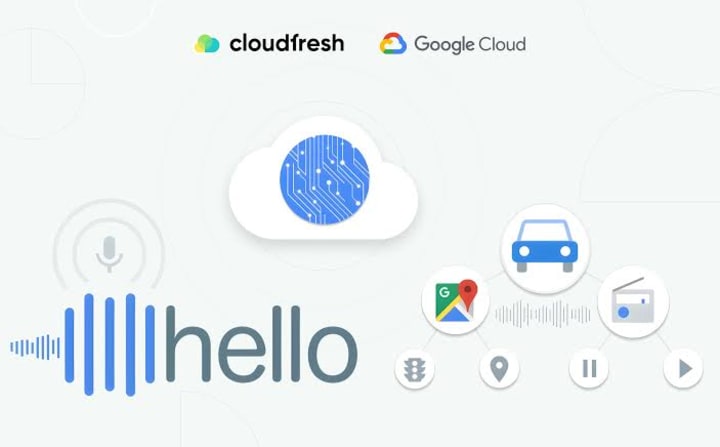
Google’s speech-to-text technology leverages advanced machine learning algorithms and natural language processing (NLP) to deliver accurate and reliable transcription services. Built on the powerful Google Cloud platform, this tool supports over 125 languages and dialects, making it one of the most versatile solutions on the market.
At the core of this technology is deep learning, a subset of artificial intelligence (AI) that trains models to recognize and process human speech. Google uses neural networks to identify patterns in sound waves, breaking down speech into smaller components to match them with text. This method allows the system to adapt to various accents, speech speeds, and even noisy environments.
Key Features of Google Speech-to-Text
1. Real-Time Transcription:
Google AI provides real-time transcription capabilities, allowing users to convert speech to text instantaneously. This is particularly useful for live events, meetings, and dictation.
2. High Accuracy Rates:
Thanks to continuous updates and training, the platform boasts high accuracy, even for technical or industry-specific jargon.
3. Customizable Models:
Businesses can customize the speech-to-text model to recognize specific terminology or unique accents, enhancing its effectiveness in niche applications.
4. Speaker Diarization:
The technology can identify and differentiate between multiple speakers, labeling each speaker’s contributions accurately.
5. Noise Robustness:
Google’s AI is designed to work well in noisy environments, ensuring clarity even when background noise is present.
6. Seamless Integration:
The API integrates smoothly with other Google services and third-party applications, enabling easy deployment across various platforms.
Applications of Google Speech-to-Text
1. Accessibility:
For individuals with disabilities, speech-to-text tools are invaluable. Google AI empowers those with hearing impairments by converting spoken language into text, making communication more inclusive.
2. Business Productivity:
Businesses use Google’s transcription services to automate meeting notes, transcribe interviews, and streamline workflows, saving time and resources.
3. Content Creation:
Content creators leverage speech-to-text to quickly convert ideas and discussions into written content. Podcasters, for instance, can transcribe episodes to improve search engine visibility and accessibility.
4. Education:
Students and educators use speech-to-text for note-taking, lecture transcription, and language learning, making education more interactive and efficient.
5. Healthcare:
In the medical field, Google AI aids in transcribing patient interactions, enabling healthcare providers to focus more on patient care while maintaining accurate records.
Advantages of Using Google AI Speech-to-Text
1. Time-Saving:
Manual transcription is time-consuming. Google AI automates the process, providing accurate results in a fraction of the time.
2. Cost-Effective:
By reducing the need for manual labor, businesses can cut costs while maintaining quality.
3. Global Reach:
With support for multiple languages, the technology enables global communication and collaboration, breaking language barriers.
4. Improved Accessibility:
Speech-to-text technology enhances accessibility for individuals with disabilities, promoting inclusivity across various sectors.
5. Data Security:
Google ensures robust security measures to protect sensitive data, making the platform suitable for industries like healthcare and finance.
Challenges and Future Prospects
While Google AI’s speech-to-text technology is highly advanced, it’s not without challenges. Accents, dialects, and highly technical language can sometimes lead to errors. Additionally, privacy concerns may arise when dealing with sensitive information.
However, Google continues to invest in research and development to overcome these hurdles. Future improvements may include even higher accuracy rates, offline capabilities, and enhanced context understanding to improve transcription quality further.
Conclusion
Google AI’s speech-to-text technology is a testament to how far artificial intelligence has come in enhancing human communication. Its ability to convert speech into accurate, readable text has transformed industries, improved accessibility, and boosted productivity worldwide. As this technology continues to evolve, it holds the promise of even greater innovation, breaking down communication barriers and paving the way for a more connected future.
By making speech-to-text tools more accessible and efficient, Google AI is not just keeping up with the demands of modern communication but shaping its future. Whether you’re a student, professional, or content creator, the possibilities offered by this technology are limitless.
About the Creator
Keep reading
More stories from INFO INSIDER and writers in Lifehack and other communities.
7 Foods That Help Relieve Constipation Naturally
Constipation is a common digestive issue that affects millions of people worldwide. While occasional constipation is normal, chronic cases can lead to discomfort and even health complications. The good news? Your diet plays a crucial role in maintaining regular bowel movements. Incorporating certain foods into your meals can naturally alleviate constipation and support a healthy digestive system. Below are seven foods proven to help relieve constipation, along with tips on how to enjoy them.
By INFO INSIDER about a year ago in Lifehack
The Digital Mess Behind Small Businesses: How They Finally Get Organized
The Chaos Behind Every Small Business Most small business owners spend a surprising amount of their day buried in digital clutter. An invoice arrives through WhatsApp. A contract sits somewhere in an email thread. Last month's spreadsheet is on a laptop that is not even in the room. Important business information ends up scattered across apps, devices, and inboxes, and pulling it all together becomes a daily scavenger hunt.
By Jacob Estrella7 days ago in Lifehack
I Stopped Chasing Money—And This One Lifehack Quietly Made Me Richer
For years, I believed making money was about working harder, longer, and pushing myself to the limit. I thought if I just stayed busy enough—if I said yes to every opportunity and filled every hour of my day—money would naturally follow.
By Lukáš Hrdlička5 days ago in Lifehack
Tatt~Master
— Assembly Line Tatt Machine ~ Impressions to Impress — As I begin to understand more about the Tattoo Phenomenon. I've written silly, yet verbatim, dating site anecdotes in 'Frazzled.' So let me ask you: Would you be More attracted to someone slathered with tattoos, or Less?
By Jay Kantor3 days ago in Humor


Comments
There are no comments for this story
Be the first to respond and start the conversation.