
Top 10 Most Dangerous Animals in the Amazon Rainforest: Manu Rainforest Tours Guide
Discover the top 10 most dangerous animals in the Amazon Rainforest! Stay safe on your Manu Rainforest Tour with our essential wildlife guide and safety tips.

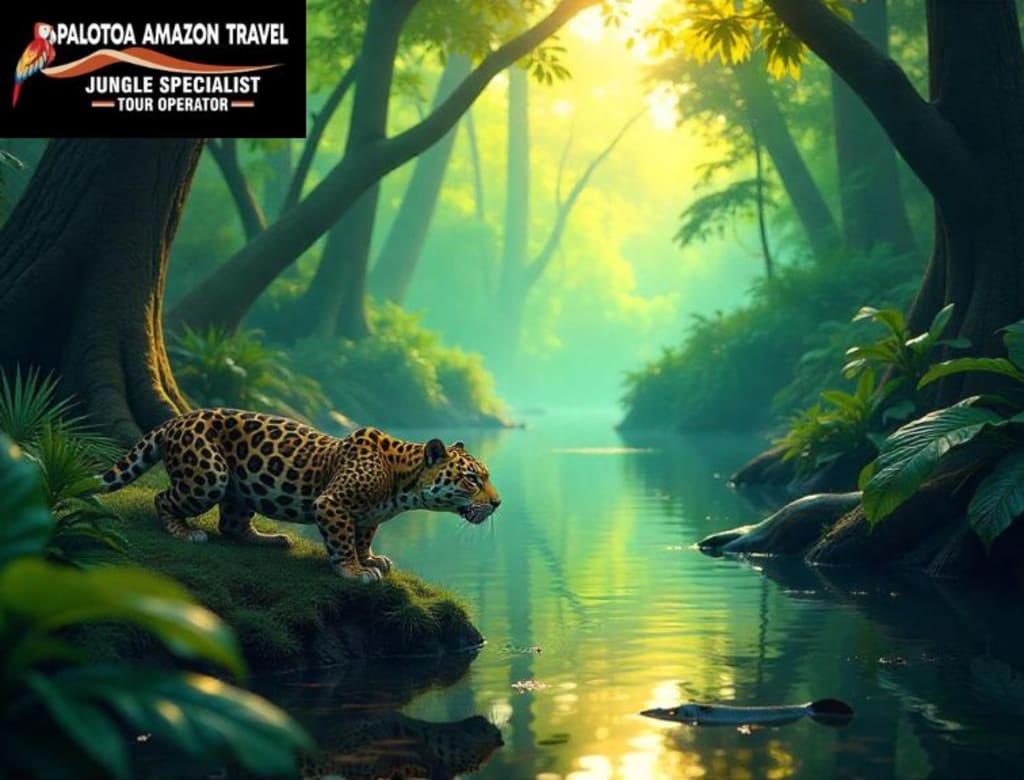
In this world of unmatched biodiversity, every step you take into the lush Amazon Rainforest can reveal new wonders—and hidden dangers. Anyone planning an adventure with Manu Rainforest Tours must be aware of the threats posed by the local wildlife in order to ensure a safe and enjoyable trip. This comprehensive guide by Palotoa Amazon Travel lists the top ten most dangerous animals in the Amazon Rainforest, with a focus on what you might see in Peru's biodiversity treasure trove, Manu National Park.
Top 10 Most Dangerous Animals in the Amazon Rainforest
1. Jaguar (Panthera onca)
In the Amazon Rainforest, which includes Manu National Park, the jaguar is without a doubt the top predator. This magnificent big cat is renowned for its exceptional hunting abilities, muscular physique, and stealth. Jaguars can easily pierce the skulls or shells of their prey because they have the strongest bite of any big cat in relation to their size. From capybaras and deer to caimans and even anacondas, their diet is varied.
Danger:
- Strong Bite: The jaguar is a dangerous predator because of its strong jaw, which can crush bones and skulls.
- Hunter with stealth: Jaguars are experts at ambush and camouflage, frequently striking from above or under heavy cover.
- No Natural Predators (apart from humans): Being the top carnivore, jaguars have no natural enemies in their environment, and even black caimans are afraid of them.
Safety Tips:
- Hike with a guide at all times: Local guides are trained to spot warning signs of jaguar presence and know how to steer clear of dangerous situations.
- Avoid wandering alone at dawn or dusk: These are peak hunting times for jaguars.
- Stay calm and quiet: Keep your cool and don't run if you come across a jaguar. Keep your eyes open, enlarge yourself, and then slowly retreat.
Example:
A jaguar was observed silently stalking a capybara close to a riverbank in 2018 by a team of researchers studying jaguars in Manu National Park. The team hardly had time to react before the jaguar and its prey vanished into the thick underbrush due to the big cat's lightning-fast ambush. This experience made it clear how crucial it is to always go hiking with local guides who can spot the warning signs of predators and make sure everyone is safe.
2. Green Anaconda (Eunectes murinus)
One of the longest and heaviest snakes in the world, the green anaconda can grow up to 30 feet (9 meters) in length and weigh more than 500 pounds (227 kg). These non-venomous constrictors are found in the Amazon's swamps, flooded forests, and sluggish rivers.
Danger:
- Constriction: Anacondas suffocate their victims by encircling them in their enormous coils. Caimans, capybaras, and even jaguars are among the large animals they can subdue.
- Ambush Predator: They are skilled at staying undercover in water and quickly attack gullible animals that come to swim or drink.
Safety Tips:
- Keep an eye out near water: Steer clear of swimming or wading in isolated rivers or swamps, especially at dawn or dusk when anacondas are most active.
- Never swim alone: In areas where anacondas are known to exist, always swim with a guide or group.
- Keep an eye out for movement: Anacondas may be hiding close by, so exercise caution when near logs or floating vegetation.
Case Study:
While kayaking through a flooded forest, a group of tourists claimed to have spotted what looked like a floating log. After promptly identifying it as a green anaconda, their guide told everyone to remain in their boats. Disturbed by the sound, the anaconda quietly sank beneath the water. This incident emphasises how important it is to stay out of unfamiliar Amazonian waters when swimming or wading.
3. Black Caiman (Melanosuchus niger)
With a maximum length of 6 meters (nearly 20 feet) and a maximum weight of 454 kilogrammes (1,000 pounds), the black caiman is the largest predator in the Amazon's waterways. As a top aquatic predator, this crocodile feeds on fish, birds, mammals, and even dangerous jaguars.
Danger:
- Strong Jaws: The black caiman can immobilise large prey by crushing bone with its bite.
- Aggressive When Provoked: When provoked, they will attack without hesitation. They are territorial, particularly during the breeding season or when defending their young.
- Nocturnal Hunter: Due to their superior night vision, black caimans are most active at night and ambush their prey.
Safety Tips:
Stay well away from riverbanks: Caimans are more active at night and may come closer to the shore to feed.
Don't approach or provoke: If you see a caiman, move slowly away and don't make sudden movements.
When fishing or boating, exercise caution: Keep an eye out for indications of caiman activity, like water ripples or floating eyes.
Anecdote:
A black caiman that prowled around the riverbank at night claimed the life of a fisherman in the Madre de Dios region of Peru during the dry season. Nowadays, locals steer clear of fishing after dark and constantly look for the distinctive glint of caiman eyes in the water.
4. Poison Dart Frog (Phyllobates terribilis)
One of the most striking and dangerous creatures in the Amazon Rainforest is the golden poison dart frog. Even though these frogs are small—typically less than 5 cm long—their striking yellow, green, or orange colouring makes them easily identifiable. They are among the most toxic animals on the planet, and their striking appearance serves as a warning to predators.
Danger:
- Strong Skin Toxins: Batrachotoxin, a substance so potent that two microgrammes of it can be lethal to humans, is secreted by the skin of Phyllobates terribilis. Heart failure and paralysis may result from this toxin.
- Contact Hazard: These frogs can be harmful even if you touch them. Accidental exposure is a serious risk because the toxin can be absorbed through cuts or mucous membranes.
- Traditional Use: The term "poison dart frog" refers to the fact that Native Americans have historically used these toxins to tip their blowgun darts for hunting.
Safety Tips:
- Never handle frogs: Steer clear of any amphibians or frogs in the rainforest.
- Hygiene: If your hands come into contact with rainforest surfaces, wash them well. Never touch your mouth, eyes, or face after being near vegetation or the forest floor.
Hypothetical Scenario:
Serious symptoms result when a child playing in the forest touches a poison dart frog and rubs their eyes. This emphasises how crucial it is to have rigorous no-touch rules for all wildlife.
5. Fer-de-Lance (Bothrops atrox)
The majority of snakebite cases in the Amazon Rainforest are caused by the fer-de-lance, which is the most dangerous snake there. This well-camouflaged pit viper can reach a maximum length of 2.4 meters and is usually brown or greenish in colour. It can occasionally be found close to human habitation as well as along riverbanks and forest floors.
Danger:
- Venomous Bite: If treatment is delayed, the hemotoxic venom of the fer-de-lance can result in systemic bleeding or death. It also causes excruciating pain, swelling, and tissue destruction.
- Aggressive When Threatened: Known for its defensive tendencies, this snake will attack if it feels threatened.
- High Human Impact: In Central and South America, it kills more people than any other snake.
Safety Tips:
- Watch where you step: Keep your eyes forward and steer clear of dense undergrowth.
- Wear boots and thick socks: Bites can be avoided by wearing protective clothing, such as boots and thick socks.
- Use a flashlight at night: Use a torch at night because snakes are more active after dark, which is when many snakebite incidents happen.
Case Study:
After leaving a trail, a biologist working at night was bitten by a fer-de-lance. He was saved by prompt evacuation and first aid, but it took months to heal the tissue damage. This incident serves as a clear reminder to always wear boots and carry a torch when you're in the rainforest at night.
6. Bullet Ant (Paraponera clavata)
Of all the insects in the world, the bullet ant is notorious for having the most excruciating sting. These ants, which can grow up to 2.5 cm in length, are found in Manu National Park and other lowland Amazonian rainforests.
Danger:
- Excruciating Sting: The sting is described as "pure, intense, brilliant pain," and it can linger for up to 24 hours. Severe burning sensations and temporary paralysis are possible side effects of the venom.
- Social Insects: Bullet ants are fierce protectors of their nests, and if a nest is disturbed, several stings may result.
Safety Tips:
Wear long pants: Ants are less likely to crawl onto your skin if you wear long trousers.
Avoid resting on logs or trees: Bullet ants frequently build their nests in decaying wood or at the base of trees.
Anecdote:
The aggression of bullet ants was underestimated by a documentary crew filming them for a nature series. Several crew members experienced hours-long stings that were described as "waves of burning pain" after upsetting a nest. They had to stop filming because of the experience, which also made them realise how dangerous ant nests can be.
7. Electric Eel (Electrophorus electricus)
The Amazon's murky rivers and floodplains are home to the electric eel, a species of knifefish, despite its name. It can produce strong electric shocks and can reach a maximum length of 2.5 meters.
Danger:
Electric Shock: If a human is incapacitated in water, the electric eel's 600 volt shocks could stun them or even cause them to drown.
Multiple Shocks: There is a greater chance of severe injury due to the eel's ability to deliver repeated electrical bursts.
Safety Tips:
- Avoid wading in murky water: Wading in murky water should be avoided because electric eels are hard to identify and are most dangerous in turbid water, especially at night.
- Stay with a guide: Local guides can help you avoid dangerous areas because they are familiar with eel habitats.
Case Study:
In 2020, an electric eel stunned a fisherman who was wading in shallow water. He momentarily passed out from the shock, but his friends dragged him to safety. This actual event illustrates why wading in murky waters is discouraged by guides.
8. Brazilian Wandering Spider (Phoneutria spp.)
Many people consider the Brazilian wandering spider to be among the most poisonous spiders on the planet. These spiders, which can be found all over the Amazon, including Peru's Manu National Park, are well-known for their strong neurotoxic venom and aggressive defensive behaviour. Being nocturnal hunters, they frequently conceal themselves during the day in clothing, shoes, or among foliage, which raises the possibility of unintentional human encounters.
Danger:
- Venomous Bite: A complex mixture of neurotoxins, including PhTx3, are present in the venom. These neurotoxins can cause nervous system disruption, resulting in symptoms like severe pain, muscle paralysis, breathing problems, tachycardia, hypertension, convulsions, and in extreme situations, respiratory arrest and death.
- Aggressive When Disturbed: In contrast to many other spiders, the Brazilian wandering spider may bite if provoked and will raise its head and show its fangs when threatened.
- Severity: Children and people with weakened immune systems are more susceptible to severe reactions, even though the majority of bites are not lethal because the spider typically delivers a "dry" bite (one devoid of venom). Although they are uncommon, fatalities have happened, usually as a result of respiratory failure.
- Notable Effects: Research into the venom's possible medical uses has been prompted by its notorious occurrence of priapism, or prolonged, painful erections, in addition to pain and systemic symptoms.
Safety Tips:
- Shake Out Shoes and Clothing: Always shake out shoes, boots, and clothing before putting them on, especially if you'll be staying in or close to a rainforest.
- Avoid Handling: In the wild, never try to handle or agitate spiders.
- Seek Medical Assistance: Get medical help right away if you are bitten.
Example:
After wearing boots that had been left outside overnight, a tourist in Brazil got bitten. Despite experiencing excruciating pain and muscle spasms, he managed to survive thanks to timely medical attention. Visitors to rainforests are frequently given safety briefings that mention this case.
9. Piranha (Pygocentrus nattereri)
The famous Amazonian fish known as piranhas are renowned for their strong jaws and incredibly sharp teeth. The most infamous species is the red-bellied piranha, which is frequently found in schools in flooded forests and rivers across the Amazon.
Danger:
- Sharp Teeth: Piranhas have the ability to bite deeply and seriously, swiftly removing flesh.
- Feeding Frenzies: Although human attacks are uncommon, they can happen if the fish are under stress, there is a shortage of food, or there is blood in the water. Although most incidents only involve minor bites, serious injuries can occur, particularly to children or people who are unable to get out of the water.
- Behaviour: When food is scarce and water levels are low during the dry season, piranhas are more likely to bite.
Safety Tips:
- Avoid Swimming with Open Wounds: Don't swim with open wounds because blood can draw piranhas and make them aggressive feeders.
- Heed Local Advice: When it comes to safe swimming locations and hours, always heed the advice of local guides.
- Avoid Splashing: Steer clear of splashing because too much movement can draw piranhas.
Anecdote:
A local boy who was swimming during the dry season and had a small cut on his leg was bitten by piranhas. Although the injury was minor, the incident resulted in more stringent swimming regulations in the village, particularly during times of low water when fish have less food.
10. Giant Otter (Pteronura brasiliensis)
One of the most endearing mammals in the Amazon is the giant otter, the largest member of the weasel family. Along rivers and lakes, including those in Manu National Park, these gregarious animals reside in family groups.
Danger:
- Territorial Behaviour: Although giant otters are usually not hostile to people, they are fiercely protective of their dens and young.
- Strong Jaws: They can bite people seriously if they feel threatened, and their jaws are powerful enough to crush fish and even small caimans.
- Group Defence: If otters feel that their family or territory is in danger, they may launch an attack in groups.
Safety Tips:
- Keep Your Distance: Avoid going near otter dens or making an effort to engage with otters, particularly if there are pups around.
- Do Not Disturb: Steer clear of loud noises and abrupt movements close to otter habitats.
- Respect Wildlife: Always do as your guide directs and keep a respectful distance.
Case Study:
When a group of kayakers got too close to a giant otter den, the otters violently confronted them, using loud vocalisations and intimidating displays to protect their young. The group learnt to respect otter territories but retreated unharmed.
Safety Tips for Wildlife Encounters in Manu National Park
- Keep Your Distance: Keep a safe distance from all animals at all times. Never try to provoke or feed animals.
- Travel with a Guide: By guaranteeing that you have access to professional knowledge, guided Manu Rainforest Tours lower risk and improve your experience.
- Put on protective gear: boots, long sleeves and trousers guard against scratches, stings and bites.
- Stay on Trails: You run a higher risk of running into potentially harmful plants or animals if you veer off designated trails.
- Be Ready for Anything: Keep a first aid kit on you, know where the closest hospitals are, and have emergency contacts on hand.
- Health and Vaccinations: Use insect repellent to protect yourself from disease-carrying mosquitoes and make sure you are up to date on recommended vaccinations (malarial prophylaxis, yellow fever).
- Respect the Rainforest: Keep in mind that you are a guest at the animals' house. You and the wildlife are both protected when you act responsibly.
Example:
A fer-de-lance was encountered by a lone hiker who had veered off a designated trail. After he was bitten and had to be airlifted out, park officials increased patrols and signage to ensure visitors stayed on approved routes.
Real-World Application:
By offering comprehensive safety briefings and first aid kits, tour operators such as Palotoa Amazon Travel make sure that passengers are equipped to handle emergencies and know how to steer clear of risky situations.
Why Explore Manu National Park with Palotoa Amazon Travel?
Manu National Park: A Living Eden
Situated in the southeast of Peru Manu National Park is one of the planet's most biologically diverse locations and a UNESCO World Heritage Site. It covers an area of more than 1.7 million hectares and includes lowland Amazonian jungle and Andean cloud forests. Thousands of rare or endangered plant and animal species can be found in this enormous, unspoiled wilderness. Manu is the ideal location for tourists looking for a genuine Amazonian experience because it provides a window into a world where nature is king.
The Palotoa Amazon Travel Advantage
A locally owned and run tour operator, Palotoa Amazon Travel specialises in eco-friendly, immersive rainforest experiences. Not only are you scheduling a trip when you choose our Manu Rainforest Tours, but you are also gaining access to decades of local knowledge, a profound respect for the environment, and a dedication to your enjoyment and safety.
1. Expert Local Guides
The Amazon region is where our guides were born and raised. They are well-versed in the ecology, wildlife behaviour, and indigenous customs of the rainforest. Their knowledge is crucial for identifying elusive animals, deciphering animal footprints, and—above all—protecting you from the Amazon rainforest's dangerous fauna. They will teach you how to responsibly observe wildlife and reduce risks while on your adventure.
Anecdote:
Their guide heard distant monkey calls, a sign of the presence of jaguars, and alerted a group of macaw hunters. After leading the group away to prevent a potentially dangerous encounter, the guide later saw the jaguar from a safe distance.
2. Safety First, Always
Although exploring the Amazon can be exciting, there are difficulties involved. Numerous potentially harmful species can be found in the rainforest, ranging from territorial mammals to poisonous snakes. Your safety is our first concern at Palotoa Amazon Travel. We offer:
- Before every trip, thorough safety instructions are given.
- Emergency procedures and first-aid supplies
- Wildlife behaviour and emergency response-trained guides
- Tips for appropriate behaviour and clothing in the jungle
Our extensive local knowledge guarantees that you are not only ready for wildlife encounters but also equipped to steer clear of needless dangers.
Case Study:
A visitor on a Palotoa Amazon Travel tour received a bullet ant sting. First aid was given right away, and the guide kept an eye on the visitor, who recovered without any issues. The event proved how important it is to have emergency protocols and trained guides in place.
3. Authentic and Responsible Experiences
We support eco-friendly travel that helps the community and the environment. Our tours are made to maximise your time in nature and have as little of an impact as possible on the rainforest. We collaborate closely with indigenous communities and support regional conservation initiatives to make sure your visit has a positive impact on the area.
Example:
Palotoa Amazon Travel supports local conservation by collaborating with indigenous communities. Visitors frequently take part in reforestation initiatives or acquire traditional survival skills, which makes their trip impactful and meaningful.
4. Unrivaled Wildlife Viewing
Wildlife lovers will find paradise in Manu National Park. There are 200 mammal species, more than 1,000 bird species, and innumerable amphibians, reptiles, and insects. New discoveries are made every day. You have a better chance of seeing uncommon creatures like macaws, giant otters, jaguars, and even the elusive harpy eagle because our guides are knowledgeable about the best times and locations to see wildlife.
Anecdote:
Thanks to the knowledge of their guide, a family on a guided tour was able to spot a rare harpy eagle. Unguided tourists frequently miss these sightings, underscoring the value of local expertise.
5. Personalized and Flexible Itineraries
We customise our tours to your interests and fitness level, whether you're an experienced birder, a photographer, or a family looking for adventure. Our itineraries are adaptable and made to optimise your experience, ranging from quick hikes to multi-day expeditions.
Example:
Early morning hikes were requested by a group of wildlife photographers who wanted to document animal activity and sunrise light. They took breathtaking pictures of enormous otters and vibrant birds after their guide rearranged the itinerary and guided them to the best viewing locations.
6. Cultural Immersion
Manu National Park has a rich cultural legacy in addition to its wildlife. Visits to indigenous communities are a common part of our tours, where you can discover more about sustainable living, traditional medicine, and the spiritual significance of the rainforest.
Anecdote:
Guests learnt how local plants are used for healing and took part in a traditional ceremony while visiting a nearby village. According to one visitor, this cultural exchange enhanced their understanding of the connection between nature and culture and was the high point of their trip.
FAQs
1. What are the top 10 most dangerous animals in the Amazon Rainforest?
The jaguar, green anaconda, black caiman, poison dart frog, fer-de-lance snake, bullet ant, electric eel, Brazilian wandering spider, piranha, and giant otter are among the top ten most dangerous creatures in the Amazon rainforest. These animals pose a threat to guests on Manu Rainforest Tours because of their strong venom, vicious bites, or hostile tendencies.
2. Why is the jaguar considered the most dangerous predator in Manu National Park?
Because of its strong bite, ability to hunt covertly, and capacity to kill large prey like deer and caimans, the jaguar is the top predator in the Amazon. It is an important animal to be mindful of during rainforest tours because it is found in Manu National Park.
3. How dangerous is the green anaconda in the Amazon?
Caimans and even jaguars can be suffocated by the green anaconda, one of the biggest snakes in the world. Human attacks are uncommon, but because of their size and power, care must be taken when near Amazonian rivers and swamps.
4. What should I do if I encounter a black caiman during my Amazon tour?
Avoid provoking a black caiman, stay away from riverbanks at night, and maintain a safe distance if you see one. Because black caimans are territorial and can be aggressive, especially during breeding season, you should always heed your guide's instructions.
5. How can I protect myself from poison dart frogs in the Amazon Rainforest?
Never touch or handle any frogs or amphibians to avoid the deadly toxins of poison dart frogs. Humans are seriously at risk from the strong toxins secreted by their skin, which can enter through wounds or mucous membranes.
6. Are snake bites common in Manu National Park, and which snake is most dangerous?
The fer-de-lance is the most dangerous snake in Manu National Park, but snake bites do happen. Its hemotoxic venom can be fatal or cause serious harm. Important safety precautions include wearing boots, staying on trails and using a torch at night.
7. What makes the bullet ant sting so painful?
The sting of the bullet ant is thought to be the most excruciating insect sting in the world, causing excruciating, burning pain that can linger for up to twenty-four hours. Accidental encounters can be avoided by wearing long trousers and avoiding resting on logs or trees.
8. How do electric eels pose a danger to Amazon visitors?
A person in the water could be stunned or rendered incapacitated by an electric eel's powerful 600 volt shocks, which could result in drowning. To reduce risks, stay with an experienced guide at all times and steer clear of murky waters.
9. What precautions should I take to avoid Brazilian wandering spiders?
Avoid handling spiders, always shake out shoes and clothing before putting them on, and get medical attention right away if you get bitten. The venom of the Brazilian wandering spider is extremely neurotoxic and can result in severe symptoms.
10. What general safety tips should visitors follow to avoid dangerous animal encounters in the Amazon?
Always have a first aid kit with you, wear protective gear, stay on designated trails, travel with an experienced guide, and keep a safe distance from wildlife. A safer and more pleasurable Amazon adventure is guaranteed if you heed these suggestions.
Conclusion
Although the Amazon Rainforest is a place of wonder and exploration, its untamed residents must be respected. You can responsibly and safely explore one of the last remaining true wildernesses in the world by selecting Manu Rainforest Tours with Palotoa Amazon Travel. Get ready, show consideration for the wildlife, and allow the enchantment of Manu National Park to leave you with lifelong memories and tales.
About the Creator
Palotoa Amazon Travel
Palotoa Amazon Travel is a specialized tour operator dedicated to providing unique experiences in the Peruvian Amazon. We offer eco-friendly tours to the remote Manu Reserve in Peru, one of the most biodiverse regions on the planet.
Keep reading
More stories from Palotoa Amazon Travel and writers in Lifehack and other communities.
Explore the Wild: Top Manu Jungle Tours for Adventure Seekers
Are you ready to discover a world full of vibrant biodiversity, ancient cultures, and exciting adventure? Manu National Park in the Peruvian Amazon is calling. More than just a holiday, your Manu Jungle Tour with Palotoa Amazon Travel is an immersive wilderness experience led by experienced locals that will change your life. You can find all the information you need to plan your trip right here.
By Palotoa Amazon Travel8 months ago in Lifehack
7" Simple Daily Habits that can change your life
7 Simple Daily Habits That Can Change Your Life Life can often feel overwhelming. With endless responsibilities, constant notifications, and the pressure to succeed, it’s easy to lose track of what really matters. But the good news is, making small, consistent changes in your daily routine can have a huge impact on your overall well-being, happiness, and productivity. Here are seven simple daily habits that, if practiced consistently, can truly change your life. 1. Wake Up Early
By Kawtar Aithammouabout 7 hours ago in Lifehack
So You Decided To Become a Nurse Practitioner:
So you decided to become an "Advanced Practice" nurse. Congratulations!... is what I would say if this was a good idea. Grad school? In this economy? What were you thinking? Likely it was something along the lines of either 1) “I've seen these other chucklefucks do it— Why can't I?” or even 2) “I've got a nice career, I should shake it up. I miss feeling like I have no clue what I'm doing.”
By Sandor Szabo2 days ago in Fiction




Comments (2)
The article was detailed and comprehensive
The jaguar sounds like a seriously formidable predator. It's crazy how strong its bite is and how good it is at ambushing. I can see why it's at the top of the dangerous animals list. The safety tips are smart. I wonder, though, what if you don't have a guide? Is there any way to still be somewhat safe? And how often do people actually encounter jaguars in the wild? It must be terrifying when it happens.