
The Ultimate Strength and Muscle-Building Method: Two Sets, Two Exercises
Two Sets, Two Exercises: Maximum Gains, Minimal Time

Building muscle and strength doesn't have to be complicated. In fact, one of the most effective methods for achieving serious results is incredibly simple: two exercises per workout, with two sets per exercise. This method, used by elite athletes and fitness enthusiasts alike, has helped countless individuals make rapid progress in both strength and muscle growth. Whether you’re a beginner or an experienced lifter, focusing on just two key exercises per session maximizes intensity, reduces overtraining, and accelerates results.
The simplicity of this approach may surprise you, but its effectiveness is backed by years of research, training knowledge, and real-world success stories from athletes of all backgrounds. By following this strategy, you can achieve outstanding muscle gains and strength improvements—without the need for complex routines or excessive volume.
Why Only Two Exercises?
When it comes to building strength and muscle, the most effective approach is often the simplest. The key to maximizing results lies in intensity, not volume. By focusing on just two exercises per workout, you allow yourself to go all-in on those movements, pushing your muscles to their limits without risking overtraining.
Targeting All Major Muscle Groups:
The beauty of this method is that the two exercises you choose should hit all the key muscle groups you need for balanced growth. For example, on a pull day, incorporating weighted pull-ups and a rowing machine is more than enough to fully engage your back, biceps, and forearms. The pull-up targets the upper back and lats, while the rowing machine hits the mid-back, traps, and rhomboids. Together, they give you a comprehensive workout for your pulling muscles. There's no need to add additional isolation exercises like bicep curls or machine rows.
Similarly, when training legs, a squat is a powerhouse movement that works not just the quads, but also the hamstrings, glutes, and lower back. Adding extra leg exercises like leg extensions or lunges might seem like a way to “finish off” your legs, but in reality, squats are already hitting the major muscles you need. Overcomplicating your leg day with extra exercises will only increase the risk of overtraining, potentially leading to injury or burnout.
The Risk of Overtraining:
When you add more exercises, you also add volume—and with more volume comes the increased risk of overtraining. Overtraining occurs when you push your body too hard without giving it enough time to recover, which leads to fatigue, declining performance, and a higher risk of injury. With two key exercises per session, you can give your muscles enough intensity to stimulate growth without overwhelming them.
Additionally, focusing on just two exercises allows for maximal intensity—the effort you put into each rep is much higher when you're not juggling multiple exercises. This focused intensity leads to greater gains in both strength and muscle growth because you're consistently pushing your body to its limits in every set.
More Recovery, Better Progress:
By keeping your workouts focused and concise, you reduce the overall stress on your body. This means you need less recovery time between workouts. More exercises can result in longer recovery periods, meaning you'll spend more time waiting to hit the gym again and less time actually making progress. With the two-exercise method, your recovery is optimized, and your muscles have time to rebuild and grow stronger, which leads to faster and more sustainable results.
In short, less is more—two well-chosen exercises per workout, performed with maximum intensity, will take your strength and muscle growth to new heights, all while minimizing the risk of burnout and overtraining. By focusing on quality over quantity, you can make faster progress and avoid the common mistakes that lead to wasted effort in the gym.
The Science of Intensity vs. Volume in Strength Training
In strength training, two fundamental variables dictate how effectively you can build muscle and strength: intensity and volume. Understanding the interplay between these two factors is key to designing an efficient and effective training program.
- Intensity refers to the level of effort exerted during a set, often measured by how close you get to failure, which is the point at which you can no longer perform a repetition with good form. In other words, it's how hard you're pushing yourself. High intensity means you're lifting heavier weights and exerting maximum effort during each set.
- Volume, on the other hand, refers to the total amount of work done, typically calculated by multiplying the number of sets by the number of reps performed. Volume is a measure of how much total work you're doing during your workout session. Higher volume means doing more sets or more exercises, while lower volume means fewer sets or exercises.
The Two-Set Method: Maximizing Intensity with Minimal Volume
One effective training approach is the two-set method, which emphasizes high intensity while keeping volume low. The idea is to push yourself as hard as possible within just two sets per exercise. This method is particularly effective for strength and muscle gains because it maximizes intensity, and research has shown that when intensity is kept high, fewer sets are needed to stimulate muscle growth and strength.
With this method, you focus on lifting heavy weights with maximum effort, working close to failure in each set. Since you’re training close to your limits, you don’t need to do multiple sets to get the same training effect. The two-set approach encourages you to use intensity to its fullest potential while preventing unnecessary fatigue from excessive volume, thus optimizing both muscle-building and strength gains.
Rep Range: Finding the Sweet Spot for Muscle Growth
When determining how many reps to perform per set, it's important to find a rep range that balances intensity and volume while allowing for maximal effort. Aim for 8-17 reps per set for optimal hypertrophy (muscle growth) and strength development.
- Below 8 reps: While this range can be effective for strength training (particularly for powerlifting), it may be less optimal for hypertrophy. The heavy weights required for sets of fewer than 8 reps may not create enough time under tension to stimulate significant muscle growth.
- Above 17 reps: At higher rep ranges, it becomes increasingly difficult to maintain the necessary intensity to stimulate muscle growth. While higher reps can be useful for endurance, they don't create the same level of overload necessary for maximal strength or hypertrophy, and fatigue may set in before muscle stimulation.
If you can perform more than 12 reps with a given weight, it's time to increase the weight to maintain an appropriate level of challenge. This ensures you're continuing to overload the muscles, which is key to making progress.
Structuring Your Training Program: The Push-Pull-Legs Split
A simple and effective way to structure your workouts is by using a Push-Pull-Legs (PPL) split, which divides your training into three main movement categories based on the muscles involved.
1. Push Day (Chest, Shoulders, Triceps):
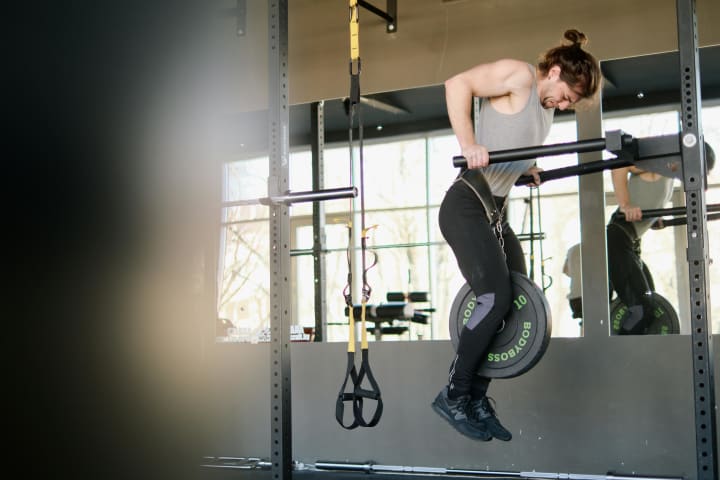
- Focus on compound exercises that engage multiple muscle groups. For example, weighted dips or bench presses are excellent choices for working the chest, triceps, and shoulders.
- Add some accessory exercises like lateral raises for the shoulders if you need more side delt work.
2. Pull Day (Back, Biceps):
- Perform exercises like weighted pull-ups or rows to target the back and biceps. These movements will engage your lats, traps, and biceps, providing a comprehensive pulling workout.
- You can include additional exercises like face pulls or bicep curls if desired for further isolation work.
3. Leg Day (Quads, Hamstrings, Glutes):
- Begin with a compound leg movement like squats, which target multiple muscle groups (quads, hamstrings, glutes).
- Follow up with accessory movements like hip thrusts or hamstring curls to specifically target the posterior chain and ensure balanced development.
Rest Days: After a Push Day, for example, the next day could be a rest day to allow recovery. After that, follow it with a Pull Day, then a Leg Day, and then take another rest day. This alternating structure helps balance intensity with adequate recovery.
Warm-Up: Preparing for Intensity
To avoid injury and ensure optimal performance, always begin your training with a proper warm-up. The warm-up serves to prepare your muscles and joints for the intense work ahead, gradually increasing blood flow and range of motion.
A typical warm-up could look like this:
- If you're planning to bench press 70 kg, start with a few lighter sets to prime your muscles:
- Set 1: 30 kg for 5 reps
- Set 2: 50 kg for 5 reps
- Rest for 2-3 minutes between each warm-up set.
- This gradual progression helps you mentally and physically prepare for the working sets, ensuring you're ready to lift at your target intensity without risking injury.
The science of intensity versus volume shows that for effective muscle and strength gains, it's not always about doing more; it’s about doing it with focus and maximum effort. By keeping volume moderate (as in the two-set method) and adjusting your rep range to 8-17 reps, you can create the optimal conditions for both hypertrophy and strength development. Pair this approach with a well-structured push-pull-legs workout split and a proper warm-up, and you'll be on the path to consistent progress.
Key Principles for Success
1. Never Skip Rest Between Sets: Rest for 5-7 Minutes
Resting for 5-7 minutes between sets may seem long compared to the usual 1-2 minutes that many people use, but this extended rest period is critical for maximizing strength gains. When you're lifting heavy and working at high intensity, your muscles require adequate time to recover between sets in order to perform at their best on each subsequent effort. Longer rest periods allow your body to replenish the energy stores (ATP) that fuel muscle contractions, enabling you to lift heavier weights and push your strength limits during each set. Without enough rest, you'll fatigue more quickly, which can lead to suboptimal performance and diminished results. The goal is to fully recover so that each set is as intense as possible, which is key to making strength progress over time.
2. Avoid Overtraining: Don’t Add Extra Exercises or Sets
While it can be tempting to do more—more sets, more exercises, more volume—the reality is that overtraining is a serious risk that can impede progress and increase the likelihood of injury. Your muscles need time to repair and adapt after each workout, and if you don't give them enough recovery time, they won't grow or get stronger. Instead of adding more exercises or sets, focus on quality over quantity. The key to progress is ensuring that each set is performed with maximum intensity and good form, rather than simply doing more work. Overtraining can lead to chronic fatigue, diminished performance, and increased risk of injuries like strains or joint problems, which will ultimately slow your progress and set you back. Always remember: more isn't always better; adequate rest and recovery between sessions is where the real growth happens.
3. Recovery: Train Every 5 Days for Optimal Results
Recovery is critical to making progress. Strength training causes microtears in your muscle fibers, and it’s during recovery that muscles rebuild and grow stronger. Without sufficient recovery, you risk overtraining, which can lead to stagnation or injury. A typical training schedule could involve a Push Day, followed by a Rest Day to allow for muscle recovery. Then, after the Push Day, perform a Pull Day, followed by Leg Day, and take another Rest Day after that. This alternating cycle of training and rest ensures each muscle group has enough time to recover, allowing you to train with full intensity during each workout. Proper recovery, which includes sleep, nutrition, and hydration, is essential for muscle growth and continued progress. Without it, you won’t see the strength gains you're aiming for.

The Bottom Line
By committing to this training method, you’ll experience more progress in 3-6 months than many people see over the course of years. This approach is not based on gimmicks or trends—it's rooted in proven principles of intensity, focus, and recovery, all of which have been validated by decades of research and real-world results. The simplicity of the method is its strength. Rather than getting caught up in the latest exercise fads or overly complex routines, you’ll be focusing on the basics: performing a few key movements with maximum intensity and giving your body the rest it needs to recover and grow.
In the fitness world, it's easy to get distracted by flashy exercises or advice that promises quick fixes. But true, sustainable progress comes from consistency and hard work within a well-structured program. When you train with intensity and allow adequate time for recovery, you tap into your body's natural muscle-building and strength development mechanisms. The result? Faster progress, fewer setbacks, and more noticeable gains over time.
Don’t waste time chasing after random exercises or jumping between different training programs. Stick to the fundamentals, and trust the process. You don’t need an overly complicated routine to see serious results—what matters most is pushing yourself hard in each set, sticking to a smart and efficient program, and ensuring your body has the recovery time it needs to grow stronger. This method is simple, but it's incredibly effective when applied consistently. With patience and dedication, you’ll reach your goals in a fraction of the time it would take with an inconsistent or overly complex approach.
About the Creator
Keep reading
More stories from writers in Lifehack and other communities.




Comments
There are no comments for this story
Be the first to respond and start the conversation.