
The Tesla Cybertruck Explosion: What Happened Outside Trump International Hotel?
Exploring the tragic explosion of a Tesla Cybertruck outside the Trump International Hotel

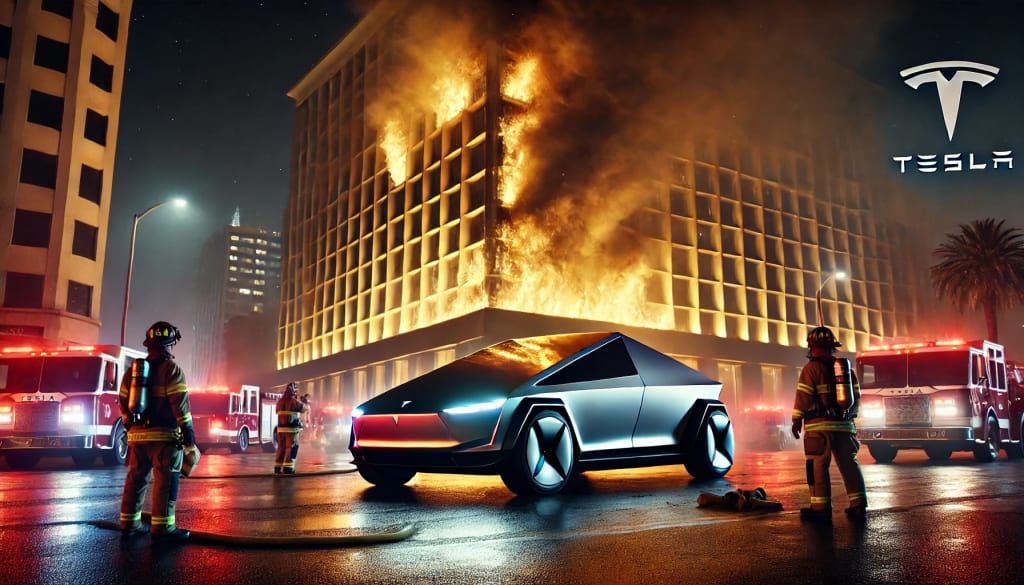
On January 1, 2025, a shocking explosion involving Tesla’s much-discussed Cybertruck rocked the Trump International Hotel in Las Vegas. The incident resulted in the tragic death of the driver and injuries to seven bystanders. This high-profile event has since raised a mix of questions about vehicle safety, criminal intent, and the potential impact on Tesla's brand.
The Explosion: A Chronology of Events
The explosion occurred outside the valet parking area of the Trump International Hotel shortly after the Cybertruck arrived. Witnesses described the scene as chaotic, with flames engulfing the area and hotel staff rushing to evacuate nearby guests.
The vehicle was identified as being driven by Matthew Livelsberger, a 37-year-old U.S. Army veteran. Investigators later revealed that the Cybertruck had been rented through the car-sharing platform Turo. Inside the truck’s bed, authorities found a mix of gasoline containers, camp fuel canisters, and firework mortars rigged to a detonation system. The evidence suggested that the explosion was deliberate, rather than accidental.
Despite the intentional nature of the blast, questions have persisted about why the Cybertruck was chosen and how its robust design may have influenced the scope of the damage.
The Investigation Unfolds
Federal and local law enforcement agencies are working to determine the motive behind the explosion. The FBI has categorized the incident as a potential terrorist act, though no conclusive motive has been established. Livelsberger's background has come under scrutiny, particularly his connections to an individual involved in a prior domestic attack.
Experts believe that Livelsberger’s military training could have played a role in how the explosive device was constructed and executed. Still, no manifesto or immediate evidence of ideological motivation has surfaced, leaving investigators to piece together fragments of a complicated case.
Tesla's Role and Response
Tesla, known for its swift responses to controversies, moved quickly to address public concerns. CEO Elon Musk took to social media to clarify that the explosion was not due to any fault in the vehicle's design or functionality. According to Musk, the Cybertruck's internal telemetry systems were operational at the time and showed no signs of malfunction.
He also praised the vehicle's design for minimizing the extent of the explosion. The Cybertruck’s sturdy stainless steel exoskeleton, originally marketed for its resilience, may have played a role in containing the blast, preventing an even greater tragedy.
Tesla has pledged its full cooperation with the ongoing investigation, offering data from the vehicle’s onboard systems to help authorities piece together the events leading up to the explosion.
Safety Concerns and Public Scrutiny
The Cybertruck, which has long been a symbol of Tesla’s innovation and bold engineering, has not been without its controversies. Even before this incident, the vehicle faced scrutiny for recalls addressing issues such as accelerator pedal malfunctions and windshield wiper problems.
While the explosion was caused by external factors, it reignites broader discussions about the safety of electric vehicles and the public’s perception of Tesla’s quality control. Critics argue that Tesla’s vehicles often serve as lightning rods in public debates about technology and accountability, whether or not the company is at fault.
The Bigger Picture: Implications for Tesla
This incident comes at a pivotal time for Tesla. The company recently celebrated a 63% rise in its stock value in 2024, buoyed by favorable regulatory changes and strong demand for its vehicles. However, Tesla’s reputation has always been a double-edged sword, with its successes often overshadowed by high-profile controversies.
While the Cybertruck explosion may not directly impact Tesla’s technical credibility, the optics of the event—especially occurring outside a location as iconic as the Trump International Hotel—could influence public perception. The fact that the Cybertruck, a symbol of futuristic resilience, was involved in such a tragic and violent event adds an ironic layer to the unfolding narrative.
The Broader Impact on EVs
Beyond Tesla, this incident could have ripple effects across the electric vehicle (EV) industry. As a leader in the EV market, Tesla often sets the tone for public discourse about the technology. Incidents like these, even when caused by external factors, may prompt renewed debates about EV safety protocols, fire risks, and their integration into public spaces.
Regulators and competitors will likely watch closely as investigations proceed, looking for lessons that could shape future policies and designs across the automotive landscape.
Concluding Thoughts
The explosion of a Tesla Cybertruck outside the Trump International Hotel is a tragic and multifaceted event. It raises questions about criminal motives, vehicle safety, and the intersection of technology with public life.
While the investigation is far from over, this incident serves as a grim reminder of the challenges faced by innovators in balancing groundbreaking technology with the unpredictable complexities of human behavior.
As the world watches Tesla navigate this crisis, one thing remains clear: the Cybertruck, once celebrated as a vehicle of the future, now carries the weight of a moment that will be remembered for years to come.




Comments
There are no comments for this story
Be the first to respond and start the conversation.