
The Sound of Rain
One moment. One stranger. A lifetime transformed.
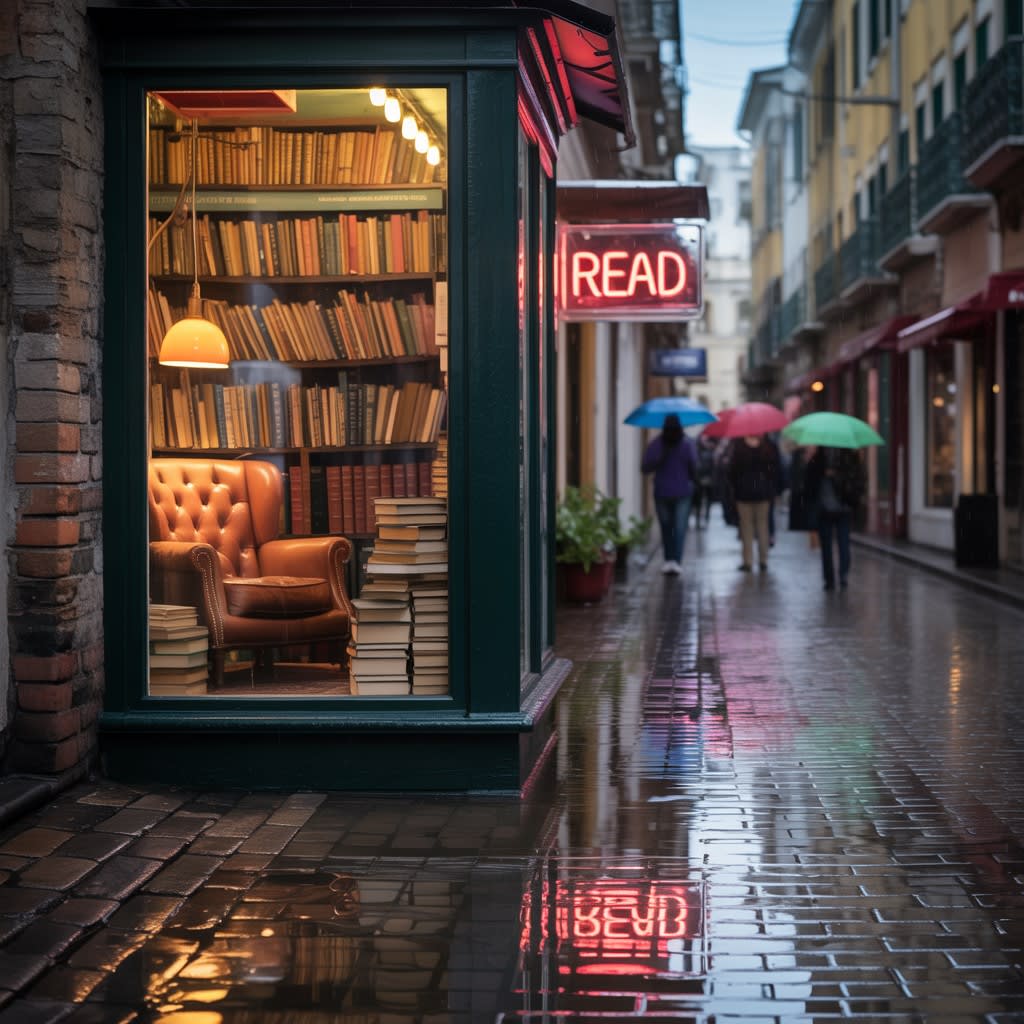
Adil lived a life stitched from quiet repetition. Each morning at 6:30, he rose to brew instant coffee—two sugars, no milk. He opened the shutters of his small second-floor apartment and stared at the same dull sky that hung over Shalimar Road. Then, with a worn coat and his father’s old satchel, he walked the short distance to his bookstore.
The shop, “Paper Lanterns,” was a place time had forgotten. Dust clung to the upper shelves like memories unwilling to fade. A velvet armchair by the window sat sunken with age. Few customers came anymore, but Adil didn’t mind. He liked the hush. The order. The safety.
Five years ago, Adil’s world had shattered in a single night—the car crash that took both his parents left behind not just grief but a kind of emotional muteness. He didn’t cry. Didn’t rage. He simply… stopped living loudly.
Then came that Thursday.
It began with rain, soft and steady. The kind that painted the city gray and made everything slow down. Adil unlocked the shop at 9:00, flipped the sign to OPEN, and settled behind the counter with a book he wasn’t reading.
At 11:47, the door opened with a soft jingle. A girl stepped in, soaked from the shoulders down. Her coat was dripping, and a violin case hung at her back like a sword.
“Do you mind if I wait out the rain here?” she asked, wiping water from her eyebrows.
Adil hesitated. Rain meant wet floors and muddy footprints. But something about her—perhaps her calm defiance of the storm—made him nod.
“Thanks,” she said, stepping inside. She wandered the shelves as though she knew the place. Her fingers brushed over titles like old friends: Neruda, Gibran, Marquez.
“You have Kafka on the Shore,” she said brightly, pulling it out. “Murakami’s weird, but beautiful.”
“I sell books. Doesn’t mean I read them,” Adil replied, a little more curtly than he intended.
She turned and smiled, unaffected. “Then you’re missing the point of owning a bookstore.”
“Maybe,” he said, retreating behind the counter.
“I’m Sana,” she offered, placing her violin case on the velvet chair.
Adil didn’t reply.
She raised an eyebrow. “You don’t have to talk. I’ll just play.”
Without waiting for a response, she opened the case and drew out a polished, honey-colored violin. She tuned it quickly, then drew the bow across the strings. The sound was low at first—a whisper in the quiet—but it grew, spiraling through the room in golden waves.
The music wasn’t perfect. There were trembles and rough edges. But it carried something Adil hadn’t felt in years: emotion raw and unfiltered.
She played for six minutes. When she finished, she set the violin down and looked toward the window, where rain still trickled like a broken hourglass.
“You’ve got great acoustics in here,” she said lightly.
Adil, still behind the counter, realized his hands were shaking slightly. He forced a smile. “You play well.”
She shrugged. “Good enough to feel something.”
She zipped the violin back into its case. “Thanks for the shelter.”
“You can… come again,” Adil said, surprising himself.
She paused at the door. “Maybe I will.”
And she did.
The next Thursday. And the one after that. Always around noon. Sometimes she brought coffee. Sometimes she played. Sometimes they sat in silence, each reading their own book.
Adil began changing. Slowly, subtly. He re-arranged the shelves. Cleaned the windows. Played soft jazz on an old speaker. He started reading again—first Kafka on the Shore, then books his mother used to love. He even tried writing poems, though he never showed them to anyone.
Sana talked about small things: the taste of monsoon air, the sound of train whistles at night, the way people wear masks without knowing it. Adil listened. And for the first time in years, he spoke. Not with scripts, but with truth.
“Why do you come here?” he asked one rainy afternoon, watching her rosined hands.
She looked up, surprised. “Because it feels like a place where silence isn’t empty. It has weight here. Like a conversation waiting to happen.”
He didn’t know what to say. So he just nodded.
Months passed, and the rainy season gave way to a brighter sky. But by then, it didn’t matter. Adil’s world had color again—not from the weather, but from within.
He no longer lived inside silence. He lived beside it, knowing that music could rise from it like light from a shuttered window.
Moral:
Life doesn’t always change in earthquakes or explosions. Sometimes, it changes in a drizzle. In the space between two strangers. In the sound of rain and a violin played in a quiet room.
About the Creator
Atif khurshaid
Welcome to my corner of the web, where I share concise summaries of thought-provoking articles, captivating books, and timeless stories. Find summaries of articles, books, and stories that resonate with you
Keep reading
More stories from Atif khurshaid and writers in Lifehack and other communities.
The Last Ember
The snow hadn’t stopped in years. The elders of the Glacier Cities said the sun had died long ago, swallowed by a war between gods and machines. Children, born beneath steel ceilings and fed by fungus farms, had never seen sunlight. Most didn’t believe it had ever existed.
By Atif khurshaid10 months ago in Lifehack


Comments
There are no comments for this story
Be the first to respond and start the conversation.