
The Secret World of Urban Foraging: Locating Food in the Concrete Forest
The Secret World of Urban Foraging: Locating Food in the Concrete Forest
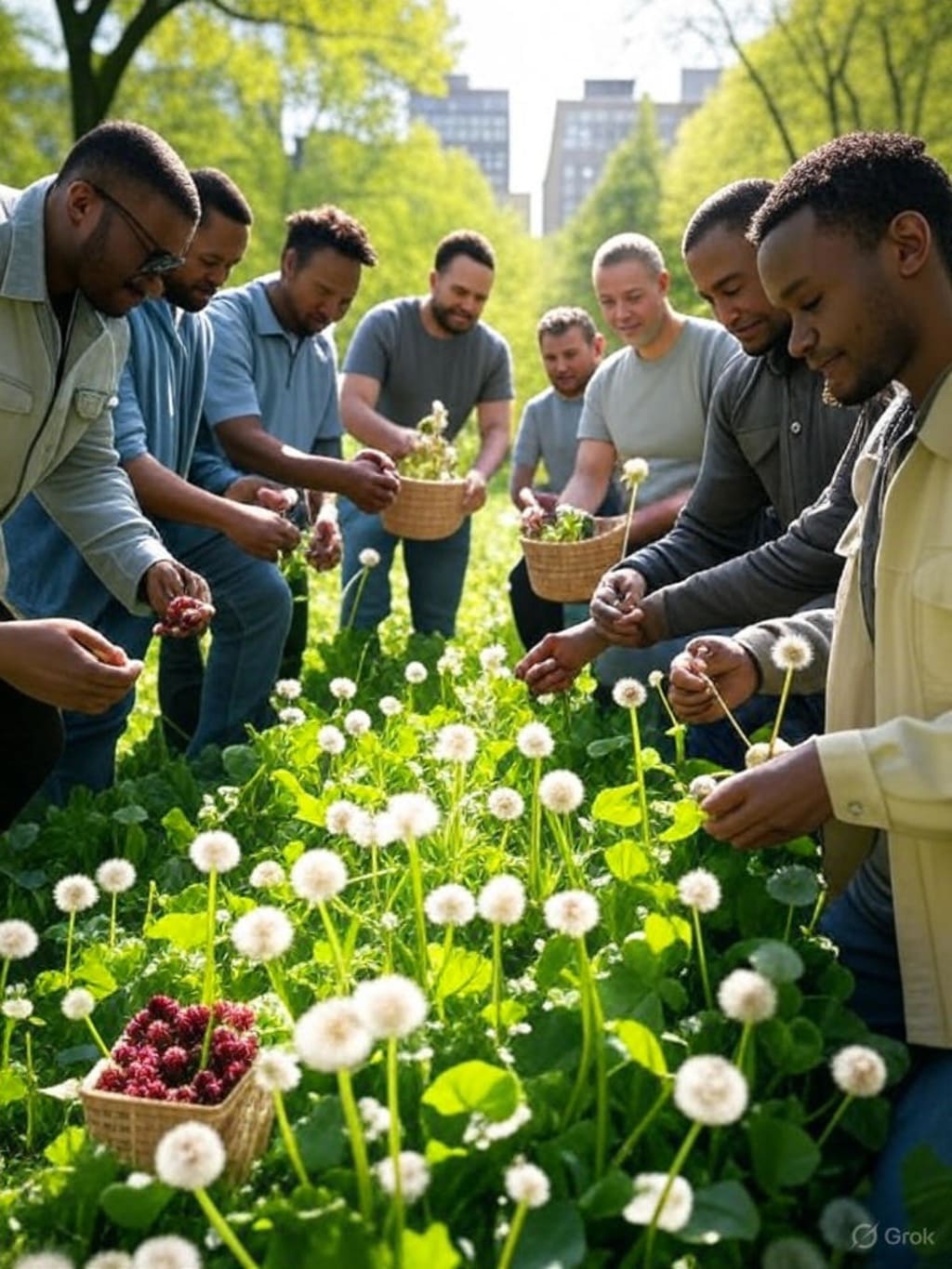
Foraging may conjure images of luscious woodlands, untamed berries, or perhaps a charming rural excursion while carrying a wicker basket. However, what if I told you that some of the most delicious, nourishing, and cost-free food is being grown in the city right in front of your eyes? Greetings from the unexpected realm of urban foraging, a burgeoning trend in which urban dwellers are unearthing the edible gems concealed in plain view. Urban foraging is changing the way we interact with our surroundings, our food, and even our neighbors by utilizing things like forgotten fruit trees and sidewalk weeds. Get ready for an adventure through the concrete jungle, where the rewards are as surprising as they are delightful.
Urban Foraging: What Is It?
The practice of collecting edible, wild plants, fruits, and herbs that grow naturally in urban settings is known as urban foraging. Imagine wild garlic hidden in alleyways, mulberries hanging over park fences, or dandelions growing through sidewalk cracks. As people look for sustainable, hyper-local food sources, this ancient practice is making a resurgence in cities across the globe. Foragers are more than just survivalists or hippies; they are also chefs, environmentalists, inquisitive foodies, and regular people trying to reestablish a connection with nature in areas where it doesn't seem likely to flourish.The accessibility of urban foraging is what makes it so appealing. You only need a sharp eye, some knowledge, and an openness to exploring; you don't need a farm or a forest. However, there are some difficulties.
The City's Unexpected Bounty
What could possibly grow in a city that is edible, you ask? There is more to the answer than you might think. Edible plants abound in urban settings, many of which are disregarded as "weeds" or decorative vegetation. A few prominent figures in the urban foraging scene are as follows:
Dandelions: The epitome of urban foraging are these bright yellow blossoms. Dandelions are completely edible and can be found in parks, abandoned lots, and even your neighbor's overgrown lawn. You can roast the roots to make a coffee-like beverage, the leaves to make a peppery salad green, and the flowers? They go well with homemade fritters or wine.
Mulberries:
You've probably come across a mulberry tree if you've ever passed beneath one and seen purple stains on the sidewalk. Cities like New York, Chicago, and Los Angeles are home to an abundance of these juicy, sweet berries, which are frequently grown on public property and are available for free.
Purslane: This succulent "weed" grows well in parking lots and cracks in sidewalks. In salads or stir-fries, its crisp, lemony flavor and abundance of omega-3 fatty acids make it a chef's dream.In urban green spaces, look for the distinctive green shoots of wild garlic and onions. They give any dish a strong flavor boost, and people who aren't familiar with them frequently confuse them for grass.
Fruit Trees on Public Land: Apples, pears, and figs are just a few examples of the fruit trees that have been planted in parks or along streets in many cities over the years. Foragers can usually take advantage of these as long as they abide by local regulations.
The variety of urban edibles is astounding, and discovering something new is like learning a secret the city didn't want you to know. The true magic, however, occurs when you begin to perceive your environment in a new way. That empty lot serves as a pantry in addition to being an eyesore. That median strip that's overgrown? A feast in the making.
The Allure of Urban Foraging Urban foraging is a way of thinking, not just a way to get free food. Foraging forces you to confront your surroundings in a world where supermarkets rule and food production seems disjointed. It serves as a reminder that nature endures even in the most unlikely settings. Here's why it's winning over people's hearts and palates:
Sustainability: The best low-carbon food source is foraging. It doesn't need industrial agriculture, packaging, or shipping. You're lessening your ecological footprint and waste by eating what's already there.
Building Communities: Conversations are frequently sparked by foraging. It creates connections in frequently isolated urban environments, whether it's exchanging advice with another forager or giving a neighbor a jar of homemade dandelion jam.
Benefits to Health: Wild plants are frequently nutrient-dense. For instance, dandelions are high in vitamins A, C, and K, and purslane contains more omega-3s than many fish. Additionally, foraging encourages movement, exploration, and outdoor time.
Exploration and Adventure: Every excursion is a treasure hunt. You may discover wild mint in a community garden or a fig tree behind a library. Half the fun is in the uncertainty.
Overcoming the Obstacles
There are a few things to consider before you pick up a baske
Safety First: Steer clear of foraging close to busy roads, industrial sites, or areas that have received pesticide treatment because cities can become polluted. Toxic lookalikes can be avoided by properly cleaning all finds and learning to recognize plants (such as hemlock being mistaken for wild parsley—yikes!).
Legal Grey Areas:
Not all urban land is open to the public. You could get into trouble if you pick fruit trees or plants that are on private property without permission. Keep to public areas like parks or community gardens and learn about local laws.
Honor the ecosystem
by taking only what you require and leaving plenty for other foragers and wildlife. Don't overharvest because it can damage local ecosystems.
Learn from Experts:
Enroll in a local workshop or group if you're new to foraging. You can start with books like Elisa Spungen Bildner's The Urban Forager or apps like Falling Fruit. Your greatest tool is knowledge.
An Individual Foraging Experience
I made the decision to experiment with urban foraging in my own city last spring. Equipped with a reusable tote and a field guide, I embarked on an exploration of my Brooklyn neighborhood. A mulberry tree in a local park, its branches laden with ripe, dark berries, was my first discovery. I filled a small container while avoiding some perplexed joggers and curious squirrels. I made a mulberry crumble that evening that was sweet, tart, and incredibly satisfying—it was like summer in a bowl.Feeling more confident, I began to see dandelions everywhere. With permission, I picked a few young leaves from a peaceful area of a community garden and added them to a salad with lemon and olive oil. The richness of a soft-boiled egg was sliced through by a surprising bitterness.
Urban Foraging's Future
Urban foraging has the potential to grow beyond a quaint pastime as cities expand and climate concerns increase. It's a means of reconsidering how we relate to waste, food, and cities. Some cities are even embracing it—for example, Seattle has a "food forest" where locals are free to harvest, and Falling Fruit and other organizations map edible plants around the world. Imagine a future in which every park serves as a pantry, edible landscapes are incorporated into urban planning, and every resident is aware of the flavor of their city's abundant produce.
Embrace the Revolution in Urban Foraging
Are you prepared to give it a try? Begin modestly. Take a fresh look around your neighborhood, searching for fruit trees, clover, or dandelions. To find out what is plentiful and safe in your area, download a foraging app or join a local group. Whether it's a recipe, an image, or a narrative, share your discoveries with friends or on Vocal Media. Urban foraging is about rediscovering the wildness within our cities and ourselves, not just about finding food.Look down, look up, and look closer the next time you're walking through your urban jungle. That tree could be dessert, and that "weed" could be dinner. The city is thriving and is extending an invitation for you to join its table. Will you accept it?
About the Creator
Keep reading
More stories from Umair Khan and writers in Lifehack and other communities.
Decoding Temu: The Good, The Quirky, and How to Navigate the Hype for Your Wallet
Let's be honest, Temu is everywhere. From viral TikTok hauls to those "shop like a billionaire" ads, it's hard to scroll for more than a minute without encountering this ultra-affordable online marketplace. But beyond the eye-popping prices, what's the real deal with Temu? Is it a shopper's paradise or a "too good to be true" trap?
By Umair Khan8 months ago in Lifehack
Mother’s Day Gift Ideas for Garden Lovers
Mother’s Day is just around the corner, and there’s no better way to celebrate one of the most important women in your life than by giving her the perfect present. Have you decided what to give her this year? If your mom loves gardening and finds peace among her plants, there are plenty of meaningful gift ideas that can perfectly match her passion.
By Andrew Lemieux5 days ago in Lifehack
How to Recover a TikTok Account: The Complete 2026 Guide for Hacked, Suspended, or Deleted Accounts
Losing access to your TikTok account can feel like losing a part of your digital identity. Whether you are a casual user with cherished memories or a creator who has spent years building a community, a sudden lockout is stressful. With over a billion active users, TikTok accounts are prime targets for hackers, and automated moderation systems can sometimes make mistakes.
By Alexander Hoffmann3 days ago in Lifehack
The Forsyth House Fire
Since 1851, Forsyth House has stood on the corner of Union Street and Gordon Street in the heart of Glasgow. Its iconic, or was... because on Sunday 8th of March, 2026, a fire broke out in a small, seemingly un-named shop in the building and tore all that history down. As I write, the rubble is still unsettled and the street is still blocked off. Central Station is quiet on the upper level, and around 30 small businesses have quite literally gone up in smoke.
By S. A. Crawford3 days ago in The Swamp




Comments (1)
I really loved your story. I just published mine — would love your opinion.