
The New Hair Loss Science That's Changed Everything in 2025: Growth Factor Treatment Breakthrough
The Evolution of Hair Loss Treatment: From Past to Present
Why Traditional Hair Loss Treatments Are Becoming Obsolete
For years, battling hair loss felt like trying to plug a leaky bucket with chewing gum. You’d get temporary fixes—medications like minoxidil or finasteride, hair transplants, or expensive shampoos—but the results were often underwhelming. Worse, these options came with side effects or didn’t work for everyone.
While hair transplants provided visible results, they involved surgery, long recovery times, and a hefty price tag. Medications like finasteride helped some men but could lead to hormonal side effects—nobody wants their hairline saved at the cost of their libido. And let’s not even talk about “miracle” creams that were more miracle marketing than science.
In 2025, the game has changed, thanks to growth factor therapy. This minimally invasive treatment doesn’t rely on generic solutions. Instead, it targets the root (literally) of the problem: dormant or damaged hair follicles.
The Scientific Breakthrough: Understanding Growth Factors
Growth factor therapy is like the superhero your scalp didn’t know it needed. Derived from platelets in your blood, growth factors are natural proteins that signal your body to repair and regenerate tissue. When concentrated and reintroduced to balding areas, they awaken tired follicles, triggering new hair growth.
Think of your scalp as a garden. Over time, the soil (your follicles) becomes dry and unresponsive. Traditional treatments might sprinkle water on the surface, but growth factors work like enriching fertilizer and reinvigorating the roots. This approach doesn’t just slow hair loss—it can restore density and thickness naturally.
Latest Research: What Clinical Studies Reveal About Success Rates
The numbers don’t lie. Studies show patients who undergo growth factor concentrate (GFC) treatment experience a mean hair density increase of 40 hairs per square centimeter. And the best part? It’s not a one-size-fits-all gimmick. The treatment is customized to the individual’s hair loss pattern and needs, making it a highly effective option for both men and women.
A patient satisfaction survey reported that over 80% of participants saw noticeable improvements in hair quality and thickness. Results also held up during follow-ups, with most patients maintaining growth over time.
Clinical trials evaluating PRP (platelet-rich plasma) and growth factors between 2018 and 2021 highlighted their efficacy in addressing androgenetic alopecia—a common type of hair loss. Unlike older treatments, which often felt like rolling the dice, GFC therapy is consistently delivering results.
What Are Growth Factors? A Simple Breakdown
If you’re picturing growth factors as some kind of sci-fi potion, you’re not entirely wrong. Growth factors are natural proteins found in your blood. They’re like the body’s internal construction crew, repairing damaged tissue and stimulating cell growth. The magic lies in how they communicate with your hair follicles.
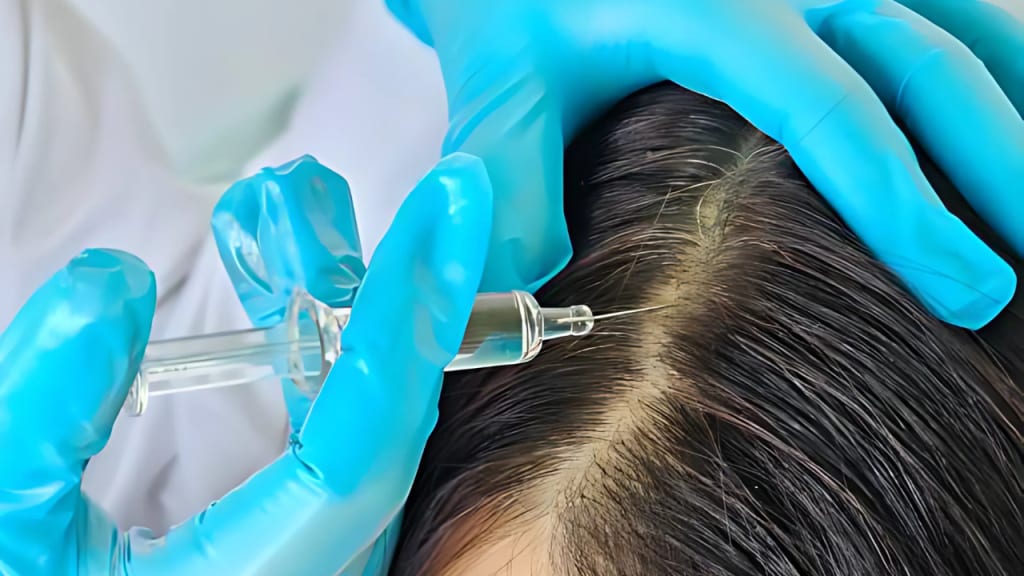
To extract these growth factors, a small sample of your blood is drawn and spun in a centrifuge to isolate platelet-rich plasma (PRP). This plasma is packed with growth factors, which are then injected into areas experiencing hair thinning or baldness. It’s a simple process with a powerful effect.
How Growth Factors Trigger Natural Hair Regeneration
Here’s the deal: hair follicles aren’t “dead” when hair stops growing—they’re just dormant. Growth factors send a wake-up call to these lazy follicles, kickstarting their natural growth cycle. Imagine your scalp getting a personalized pep talk, telling it to get back in the game.
When injected into the scalp, growth factors:
- Stimulate blood flow to the follicles, providing them with essential nutrients.
- Encourage cell renewal and repair of damaged follicle structures.
- Extend the hair growth phase (anagen phase), which results in thicker, healthier hair.
It’s like upgrading your scalp’s operating system. Instead of relying on external products, your body does the work from within.
The Biological Mechanism: Why This Approach Works
Hair growth happens in cycles: growth (anagen), rest (telogen), and shedding (catagen). When this cycle is disrupted—due to genetics, stress, or aging—follicles shrink and eventually stop producing hair. Growth factors essentially reset this cycle by stimulating stem cells and repairing follicular damage.
The process also increases the production of collagen and keratin, two proteins essential for strong, healthy hair. Think of collagen as the scaffolding that holds your follicles in place and keratin as the material that builds the hair itself.
Key Types of Growth Factors in Hair Restoration
Not all growth factors are created equal. The most effective ones for hair restoration include:
- Platelet-derived growth Factor (PDGF): Promotes tissue repair and blood vessel growth.
- Vascular Endothelial Growth Factor (VEGF): Boosts blood circulation to nourish follicles.
- Fibroblast Growth Factor (FGF): Stimulates the production of keratinocytes, which are vital for hair structure.
- Transforming Growth Factor Beta (TGF-β): Regulates the hair growth cycle by extending the anagen phase.
These growth factors work synergistically to rebuild and rejuvenate the scalp, leading to natural and lasting results.
Growth factor therapy isn’t just effective; it’s revolutionary because it taps into the body’s innate ability to heal and regenerate. In the next section, we’ll explore the transformative results patients are experiencing and how long it takes to see progress. Stay tuned!
Before and After: Real Patient Transformations
The proof is in the results. Patients who’ve undergone growth factor therapy often describe it as “life-changing”—and the photos back them up. Before treatment, thin patches and receding hairlines dominate. A few months later, those same areas are thicker, denser, and more youthful-looking.
For example:
- Case 1: A 35-year-old man with early-stage male pattern baldness saw a 40% increase in hair density within three months. His hairline looked fuller, and he no longer felt the need to wear a cap everywhere.
- Case 2: A woman dealing with postpartum hair loss reported significant regrowth and thicker strands in less than six months. The treatment boosted her confidence, and she noticed her hair quality improved across the board.
These transformations highlight how personalized, targeted treatments make all the difference.
R3 Stem Cell India’s Advanced Growth Factor Protocol
What sets R3 Stem Cell India apart is their cutting-edge approach to growth factor therapy. Their specialists use medical-grade equipment to extract and concentrate growth factors with exceptional precision. This ensures optimal potency and effectiveness, delivering results that match or exceed international standards.
Their protocol focuses on:
- Precision Placement: Injecting growth factors directly into areas of thinning or baldness.
- Combination Therapy: Pairing growth factors with topical treatments or laser therapy for enhanced outcomes.
- Ongoing Care: Offering follow-up sessions and maintenance plans to maximize long-term benefits.
Timeline: When to Expect First Signs of Regrowth
Growth factor therapy isn’t an overnight miracle—but it doesn’t take forever either. Here’s a general timeline:
- Weeks 1-4: Improved scalp health and reduced hair fall. Many patients notice their hair feels stronger and looks shinier.
- Months 2-3: Visible signs of regrowth. Thin areas start filling in, and hair density improves noticeably.
- Months 4-6: Peak results. By this point, patients typically see dramatic improvements in both thickness and coverage.
What’s impressive is how results continue to improve over time, especially with periodic maintenance sessions.
Long-term Results and Maintenance
Unlike temporary fixes, growth factor therapy offers sustained benefits. Many patients maintain their new hair density for years with occasional touch-ups. The treatment’s ability to rejuvenate follicles means your scalp remains in a healthier state, reducing the risk of future hair loss.
Maintenance is simple, with follow-up treatments every 6–12 months depending on individual needs. Combined with a good hair care routine, the results can be long-lasting and incredibly satisfying.
Growth factor therapy has redefined what’s possible for hair restoration in 2025. With proven results, minimal downtime, and the ability to address different types of hair loss, it’s a treatment worth considering for anyone seeking a natural, effective solution. Ready to take the next step? Schedule a consultation and discover what growth factor therapy can do for you!
About the Creator
Keep reading
More stories from Sanjoy debnath and writers in Lifehack and other communities.
The Future of Paralysis Treatment? Inside the Revolutionary Stem Cell Procedure
Imagine waking up one morning and finding out you can wiggle your toes again – after years of paralysis. Sounds like science fiction? Well, it's becoming science fact. Thanks to an amazing medical breakthrough called intrathecal stem cell therapy, patients worldwide are experiencing what many thought impossible.
By Sanjoy debnathabout a year ago in Lifehack
Planning a Move in Canton: How Local Moving Companies Fit Into the Process
Moving is often described as one of life’s most stressful experiences, and in a town like Canton, that stress can increase without proper planning. While Canton offers a welcoming residential atmosphere and a mix of housing styles, relocating within or to the area involves logistical details that many people underestimate. Understanding how local moving companies operate within this context helps residents approach moving day with more clarity and confidence.
By House Doctorabout 3 hours ago in Lifehack




Comments
There are no comments for this story
Be the first to respond and start the conversation.