

The mental time travel system is a cognitive process that allows humans to mentally simulate past events, present situations, and future possibilities. It is a fundamental aspect of our human experience and is essential for goal-directed behavior and decision-making. In this review, we will explore the important parts of the mental time travel system, including its neurobiological basis, the role of memory, and its implications for mental health and well-being.
The neurobiological basis of mental time travel involves a complex network of brain regions, including the prefrontal cortex, the hippocampus, and the parietal cortex. The prefrontal cortex is involved in planning and decision-making, while the hippocampus is critical for memory consolidation and retrieval. The parietal cortex, on the other hand, is involved in spatial and temporal processing, allowing us to mentally navigate through time and space. Together, these brain regions work together to create a mental simulation of past events, present situations, and future possibilities.
Memory plays a crucial role in the mental time travel system. Our memories are not simply records of past events, but they are actively reconstructed each time we retrieve them. This means that our memories can be influenced by our current state of mind, as well as by external cues and suggestions. Additionally, our memories are often incomplete and fragmented, and we rely on our imagination and creativity to fill in the gaps.
One important aspect of the mental time travel system is the ability to mentally project oneself into the future. This ability is critical for goal-directed behavior and decision-making. By mentally simulating future scenarios, we can evaluate the potential outcomes of different actions and make informed decisions. However, this ability is not without its challenges. For example, we may have a tendency to overestimate the positive outcomes of our actions and underestimate the negative ones, leading to unrealistic expectations and disappointment.
Another important aspect of the mental time travel system is its role in mental health and well-being. Research has shown that the ability to mentally simulate positive future scenarios is associated with higher levels of optimism and resilience. On the other hand, individuals who struggle with mental health conditions such as depression and anxiety may have difficulty simulating positive future scenarios and may instead focus on negative outcomes and worst-case scenarios.
Furthermore, the mental time travel system is also implicated in conditions such as post-traumatic stress disorder (PTSD), where individuals may experience vivid and intrusive memories of past traumatic events. In these cases, the mental time travel system may be overactive, leading to a persistent and distressing re-experiencing of past events.
Overall, the mental time travel system is a fundamental aspect of our human experience, allowing us to mentally simulate past events, present situations, and future possibilities. Its neurobiological basis involves a complex network of brain regions, including the prefrontal cortex, the hippocampus, and the parietal cortex. Memory plays a crucial role in the mental time travel system, as it is responsible for creating and reconstructing our mental simulations. The ability to mentally project oneself into the future is critical for goal-directed behavior and decision-making, and is also implicated in mental health and well-being. While the mental time travel system can be a source of joy and creativity, it can also be a source of distress and trauma, highlighting the importance of understanding and managing this complex cognitive process.
About the Creator
Keep reading
More stories from Ryan Langham and writers in Lifehack and other communities.
Smart Blood Sugar How Impacts Your Life
Smart Blood Sugar is a program designed to help people manage their blood sugar levels and improve overall health. The program was created by Dr. Marlene Merritt, a licensed acupuncturist and nutritionist who has over 20 years of experience in the field of health and wellness.
By Ryan Langham3 years ago in Longevity
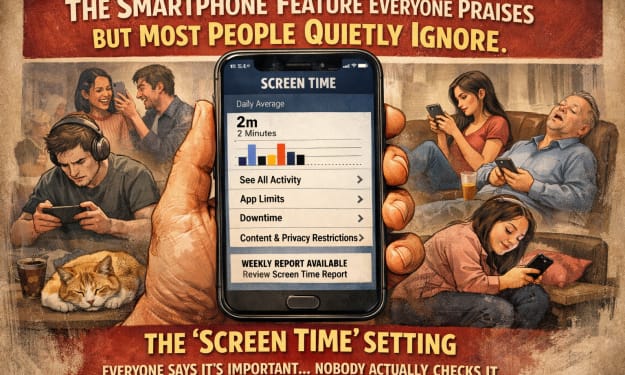
The Smartphone Feature Everyone Praises
There’s always at least one smartphone feature that gets universal praise. Reviewers highlight it. Launch events emphasize it. Comment sections fill with excitement. On paper, it sounds like the kind of innovation people have been waiting for.
By abualyaanart3 days ago in Lifehack
Top Seattle Mobile App Development Trends to Watch in 2026
The moment often comes quietly. A leadership team reviews last year’s mobile roadmap and realizes how much has already shifted. Costs are higher. Users are less patient. Regulations feel closer. What worked even two years ago now feels slightly outdated.
By Samantha Blake5 days ago in Lifehack



Comments
There are no comments for this story
Be the first to respond and start the conversation.