
The Invisible Rule of the Mind: Why You Never Stay Consistent — and How to Fix It
The brain’s secret resistance mechanism—and the one simple shift that can make you unstoppable
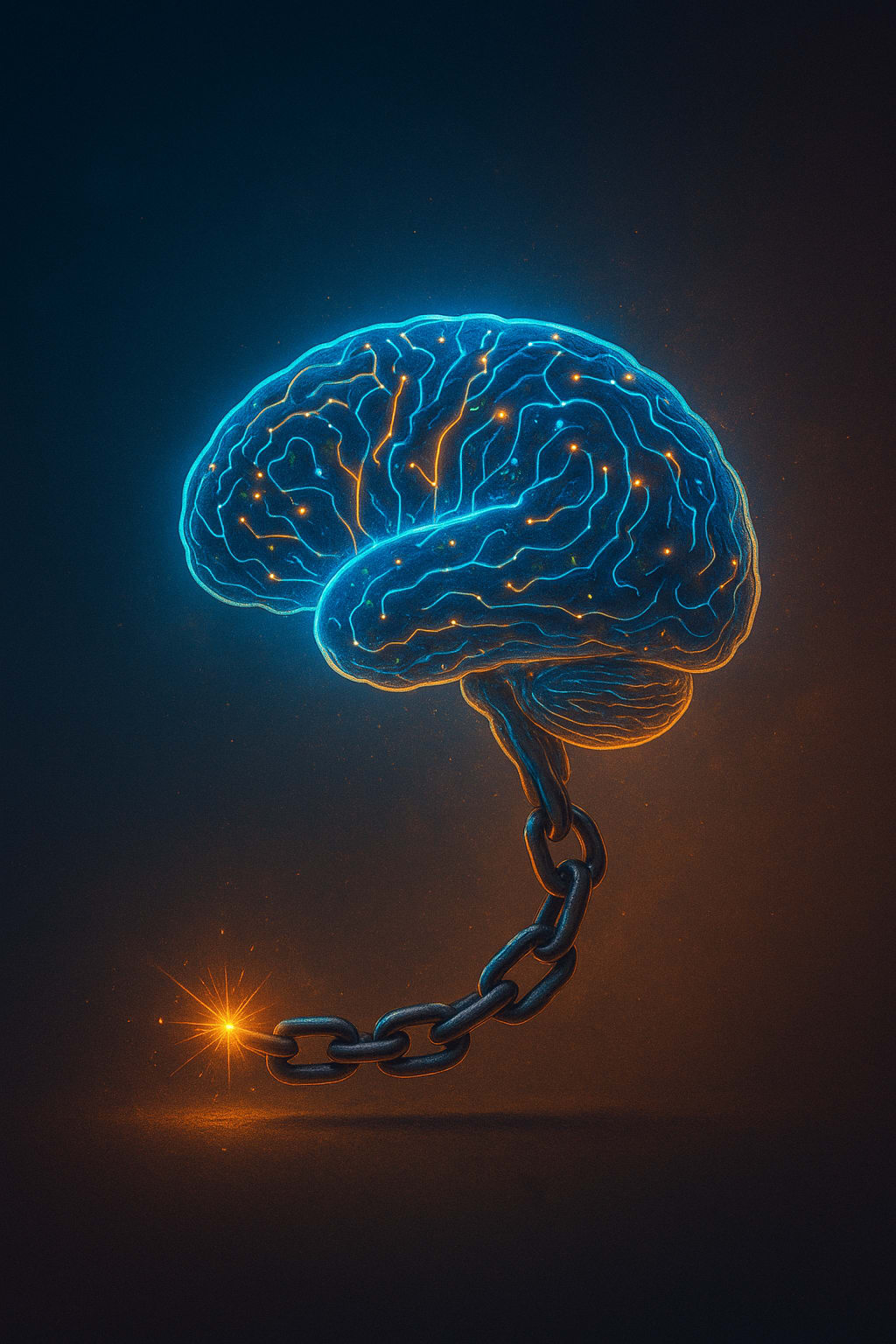
Have you ever told yourself, “This time I’ll stick with it,” and actually believed it?
You start with fire. A new morning routine, a workout plan, a study habit. For a week, maybe two, you’re unstoppable. Then one morning comes when you just don’t feel like it.
You skip a day.
Then another.
And then it’s gone — the fire, the drive, the discipline.
Sound familiar?
It’s not weakness.
It’s not laziness.
It’s neuroscience.
Psychologists call it The Resistance Loop — a mental trap built into every human brain.
It begins the moment you start something new. Your brain, designed to conserve energy, sees change as a threat. It doesn’t care whether you’re improving your life or destroying it — it only cares that you’re doing something unfamiliar.
So it fights back.
Every excuse — “I’ll start tomorrow,” “I’m too tired,” “It’s not working anyway” — isn’t random. It’s your brain trying to pull you back to what it already knows.
To safety.
To comfort.
To the familiar pain you’ve learned to live with.
That’s why consistency feels so hard. You’re not just building a habit — you’re fighting biology.
But here’s the twist: the people who win this battle don’t have stronger willpower. They simply understand how to bypass the loop.
And the secret isn’t motivation — it’s association.
Let me explain.
When you start a habit, your brain ties it to an emotion. If it feels like effort, pain, or stress, your subconscious marks it as “bad.” So every time you try again, your brain triggers that same discomfort.
That’s why habits like studying, exercising, or saving money never stick for long. Your brain has linked them with struggle.
But if you rewire that association — if you make your brain feel rewarded instead of drained — the same action becomes automatic.
This is where the 2-Minute Rewire comes in.
It’s a technique developed from behavior design research by Stanford psychologist BJ Fogg.
Here’s how it works:
✅ Step 1: Shrink the task.
Make it so small your brain can’t say no.
Instead of “work out for an hour,” say, “I’ll do 2 push-ups.”
Instead of “write 1,000 words,” say, “I’ll open my document.”
✅ Step 2: Celebrate instantly.
When you complete that tiny action, smile, breathe, say “yes” — whatever signals success to your brain.
It sounds silly. But what you’re really doing is rewiring dopamine. You’re teaching your brain that action = reward.
Do it enough times, and the action stops feeling like resistance. It starts feeling like relief.
That’s how people go from inconsistency to obsession.
Here’s a simple truth most self-help books never tell you:
You don’t need more motivation. You need better chemistry.
Motivation fades. Willpower fails. But neural association — that’s biology you can train.
Every consistent person you admire has done exactly that. They’ve linked the act of showing up with satisfaction, pride, or relief — never guilt.
It’s not about doing it perfectly.
It’s about doing it automatically.
So the next time you feel the slump — when your brain screams, “Skip it, it’s not worth it” — recognize it for what it is: an ancient survival code.
And you?
You’ve evolved past that.
You can outsmart it, one small win at a time.
Because the truth is, consistency isn’t built in a day — it’s built in the 2 minutes your brain decides whether to give up or grow.
And once you master that window… you become unstoppable.
💡 If this story flipped a switch in your mind, hit ❤️, drop a comment, and follow — because next time, I’ll show you the hidden mental trick Olympic athletes use to stay in flow every single day.
About the Creator
OWOYELE JEREMIAH
I am passionate about writing stories and information that will enhance vast enlightenment and literal entertainment. Please subscribe to my page. GOD BLESS YOU AND I LOVE YOU ALL
Keep reading
More stories from OWOYELE JEREMIAH and writers in Lifehack and other communities.
Snapchat Account Hack in 2026: The Real Methods and How to Protect Yourself
Your Snaps Aren't as Disappearing as You Think When you send a Snap, you probably believe it vanishes into the digital void after being viewed. This illusion of ephemerality creates a dangerous false sense of security for millions of Snapchat users. Behind the playful lenses and streaks lies a constant, hidden battle for account access—a battle where your personal conversations, photos, and location data are the prize. Understanding this landscape isn't about promoting hacking; it's about empowering you with the knowledge to build digital fortresses around your private life.
By Alexander Hoffmannabout 5 hours ago in Lifehack
Wild Card Weekend Recap: What Happens Now?
I think I figured out why I love Wild Card Weekend so much. It's because it's the first playoff anything of the calendar year. The NFL season starts in the fall, and once upon a time, the champion was crowned either on or slightly before New Year's. The evolution of the NFL schedule has resulted in the playoffs starting just into the New Year, and currently, the final week of the season falls on the first weekend of the New Year, with Wild Card Weekend coming a week after that. So yes, chronologically, the NFL's Wild Card Weekend serves as the first playoff anything of the calendar year.
By Clyde E. Dawkins5 days ago in Unbalanced



Comments
There are no comments for this story
Be the first to respond and start the conversation.