
The Dark Side of Halloween Treats: Understanding Food Dye Risks
Dangers of food dyes persist

On Halloween night in 1950, a troubling incident unfolded across the United States, sending dozens of children to the hospital after consuming candy laced with a harmful ingredient. While there were no fatalities, the alarming situation shed light on the dangers of certain food additives. The culprit? An FDA-approved color additive known as Orange No. 1. This dye was widely used in various food products, from Halloween candy to hot dogs, providing a vibrant orange hue. However, in large quantities, Orange No. 1 proved to be toxic, leading to rashes and severe gastrointestinal issues in affected children. This incident prompted significant changes in food safety regulations, ultimately leading to the ban of Orange No. 1 and several other dangerous color additives from the food supply.
Fast forward to recent years, and the concerns about food dyes have resurfaced with the emergence of another potentially harmful additive: Red 3. Found in candy and nearly 3,000 other food products, Red 3 has been linked to cancer in rats and is believed to contribute to behavioral issues in children. This raises a pressing question: why is Red 3 still permitted in our food supply?
Red 3 is one of nine synthetic dyes currently approved by the Food and Drug Administration (FDA) for use in the United States. The history of these dyes dates back to 1907, long before the establishment of the FDA, and the list of approved dyes has largely remained unchanged since the late 1960s. While some dyes, such as Orange B and Citrus Red 2, are permitted only in limited quantities, Red 3 continues to be widely used across food, drugs, and cosmetics.
Dr. Thomas Gallagan, principal scientist for food additives at the Center for Science in the Public Interest, emphasizes that Red 3 occupies a unique position among synthetic food dyes. Despite its widespread use in food products, it is banned in topical drugs and cosmetics. This discrepancy arises from regulatory measures enacted after the 1950s Halloween incident, specifically the Food Additives Amendment of 1958 and the Color Additives Amendment of 1960. These amendments mandated that the FDA evaluate the safety of color additives before they could be used in any FDA-regulated product, requiring a comprehensive re-evaluation of all color additives that were already in use. By 1969, Red 3 had been permanently approved for food based on the safety research available at that time.
However, when the cosmetics industry sought to have Red 3 permanently approved for use in cosmetic products in 1990, new research indicated that it slightly increased the risk of thyroid cancer in laboratory rats. In response, the FDA denied the petition for cosmetics and topical drugs. This decision invoked the Delaney Clause, a provision that requires the FDA to ban food additives shown to cause cancer in humans or animals, thereby creating an obligation for the FDA to remove Red 3 from food as well.
Despite this legal obligation, Red 3 remains on the market more than three decades later, and the FDA has yet to take action. A representative from the FDA stated that the research linking Red 3 to thyroid cancer in rats has limited relevance to human health, a stance that has drawn criticism and raised concerns about the agency's commitment to public safety regarding a dye that appears to violate the Delaney Clause.
In an effort to address these concerns, the Center for Science in the Public Interest filed a petition two years ago urging the FDA to remove Red 3 from food products. Unfortunately, the review process is still ongoing, leaving Red 3 in circulation in the meantime.
In a significant development, California has recently passed a bill to ban Red 3 in food by 2027. This legislation not only addresses the potential cancer risk in rats but also highlights growing concerns about behavioral issues in children associated with synthetic food dyes. A recent compilation of 25 studies revealed that more than half of the research found a correlation between synthetic dyes and behavioral problems in children. The studies that informed the FDA's original approvals of these color additives did not adequately consider neurobehavioral effects on children, indicating that current regulations are outdated.
While the situation may not be as clear-cut as the Halloween incident of 1950, it raises significant concerns for parents and lawmakers alike. Other states have also introduced legislation aimed at banning certain food additives, reflecting growing frustration with the FDA's inaction.
This movement at the state level is crucial, especially considering that many of these dyes, including Red 3, are already banned or require warning labels in other countries, such as those within the European Union. California's decision to ban Red 3 is particularly noteworthy given its status as the fifth-largest economy in the world. Food manufacturers have demonstrated their ability to provide safer alternatives in Europe while continuing to sell less safe products in the U.S. This raises ethical questions about corporate responsibility and consumer safety.
The potential national ban on Red 3, sparked by California's decision, echoes the events of the 1990s when artificial trans fats were linked to heart disease. During that time, the FDA took considerable time to evaluate the evidence, but California intervened and banned trans fats, prompting food manufacturers to remove these harmful substances from their products as early as 2009, well ahead of a nationwide ban.
This ongoing conversation underscores significant flaws in the U.S. food regulatory system, which allows unsafe food chemicals to linger in the food supply long after their risks have been established. California is already taking steps to address other synthetic dyes in school lunches, signaling a proactive approach to food safety.
It is essential to recognize that food dyes serve no necessary function; they exist purely as marketing tools. They do not enhance flavor, nutritional value, or food preservation; their only role is aesthetic. This reality raises profound ethical concerns regarding their use, especially concerning the health and safety of children. As the conversation surrounding food dyes continues, it is imperative for consumers, parents, and policymakers to remain vigilant and advocate for safer food practices that prioritize health over appearance.
About the Creator
Keep reading
More stories from FRANCIS IKEGBUNAM and writers in Lifehack and other communities.
Loose weight fast
In a world where instant results are often sought after, the desire to lose weight quickly is a common goal for many. Whether it’s for health reasons, a special occasion, or simply to feel better in one’s skin, the urgency to shed pounds can lead individuals to seek out effective strategies. However, it's crucial to approach weight loss in a healthy and sustainable manner. Here, we explore practical methods that can help you lose weight fast, along with tips to ensure that the journey is safe and effective.
By FRANCIS IKEGBUNAMabout a year ago in Lifehack
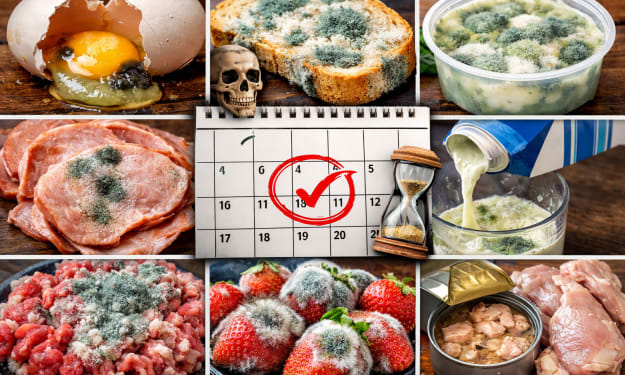
9 Foods You Should Never Eat Past the Expiration Date, No Exceptions
But certain foods cross a line where the expiration date becomes about more than just quality—it’s about safety. Eating past that line can expose you to dangerous bacteria, toxins, or nutrient loss you can’t see or smell. Knowing which foods to never push beyond their expiration dates is key to keeping your kitchen safe. Here are the nine foods that are not worth the risk.
By General gyan3 days ago in Lifehack
Wild Card Weekend Recap: What Happens Now?
I think I figured out why I love Wild Card Weekend so much. It's because it's the first playoff anything of the calendar year. The NFL season starts in the fall, and once upon a time, the champion was crowned either on or slightly before New Year's. The evolution of the NFL schedule has resulted in the playoffs starting just into the New Year, and currently, the final week of the season falls on the first weekend of the New Year, with Wild Card Weekend coming a week after that. So yes, chronologically, the NFL's Wild Card Weekend serves as the first playoff anything of the calendar year.
By Clyde E. Dawkins7 days ago in Unbalanced



Comments