
The Alarm Clock and the Concrete Floor
A raw and powerful story about discipline, sacrifice, and the quiet grind that turns struggle into legacy.

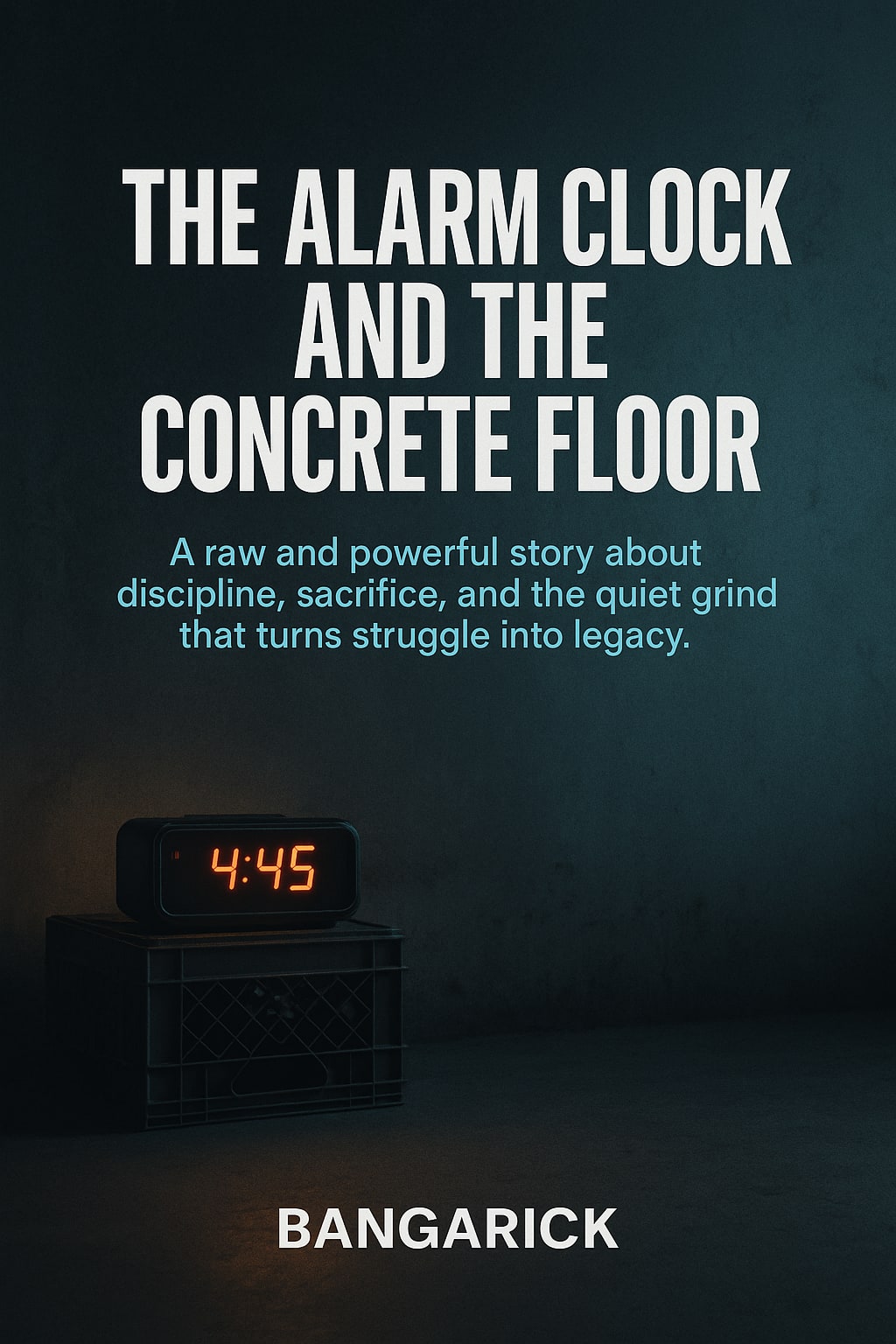
The first thing Malik heard was the alarm. Not the soft tone of a phone on a nightstand, but the sharp buzz of an old digital clock sitting on a milk crate next to a worn-out mattress on the floor. 4:45 a.m. Like clockwork—because it was clockwork.
He sat up, the chill of the concrete floor under him reminding him of exactly where he was—and where he wasn’t. He wasn’t in a high-rise condo, or a downtown loft, or even a finished basement. He was in a one-room studio with paint-chipped walls, one flickering ceiling bulb, and a dream so big it barely fit in the space.
Malik didn’t have a trust fund. No generational wealth. No investor. Just grit, a refurbished laptop, and an idea that wouldn’t let him sleep.
Every morning started the same way: prayer, pushups, black coffee, and purpose. Then he’d clock in to his 6 a.m. warehouse job, stacking boxes heavier than his unpaid bills. Eight hours of physical labor, then straight to his side hustle—designing logos, editing videos, recording voiceovers, selling merch out the trunk, or meeting artists who needed direction but didn’t know where to begin.
He was tired—but he was building something. Something no one could see but him.
That’s the thing about hustling for a dream: it looks like madness to everyone else… until it looks like genius.
One night, Malik stayed up editing a promo reel for a local rapper who barely had $50 to his name. It wasn’t about the money—it was about the movement. He finished at 3 a.m., eyes red, back aching, knowing in two hours that alarm would buzz again. He didn’t care. When the rapper went viral the next week, he shouted Malik out. Suddenly, Malik had 14 DMs from people asking for help with branding.
That was the crack in the wall.
Weeks passed. More gigs. More calls. Then came the big one—a mid-tier label reached out, offering him a contract to produce content for three of their new signees. He negotiated the deal himself. Walked in with a thrifted blazer, walked out with a retainer check big enough to move into a better apartment.
But he didn’t.
He stayed. Same apartment. Same floor mattress. Same 4:45 alarm. Until the foundation was secure.
He reinvested everything—upgraded his gear, paid his debts, hired two interns. The dream was no longer just his; it was now a platform. A brand. A business.
People called him lucky. They didn’t see the years he spent alone. The nights he went hungry. The work he did while others were binge-watching shows or sleeping in on weekends. They didn’t see him typing up brand strategies in his phone while riding the city bus. They didn’t hear the sound of his stomach growling while he turned down quick cash jobs that didn’t align with his vision.
But he remembered every bit of it. And he wore that struggle like armor.
Malik didn’t make it because he had the perfect setup. He made it because he showed up every day, regardless of the setup. He didn’t wait for a spotlight—he built his own. Didn’t beg for a seat—he crafted his own table and pulled others up with him.
That’s the hustle. That’s the motivation.
It’s not loud. It’s not glamorous. It doesn’t always post well on Instagram.
But it works.
If you keep showing up—when you’re tired, broke, overlooked, or doubted—eventually, something breaks open.
Not because luck showed up.
But because you did.The first thing Malik heard was the alarm. Not the soft tone of a phone on a nightstand, but the sharp buzz of an old digital clock sitting on a milk crate next to a worn-out mattress on the floor. 4:45 a.m. Like clockwork—because it was clockwork.
He sat up, the chill of the concrete floor under him reminding him of exactly where he was—and where he wasn’t. He wasn’t in a high-rise condo, or a downtown loft, or even a finished basement. He was in a one-room studio with paint-chipped walls, one flickering ceiling bulb, and a dream so big it barely fit in the space.
Malik didn’t have a trust fund. No generational wealth. No investor. Just grit, a refurbished laptop, and an idea that wouldn’t let him sleep.
Every morning started the same way: prayer, pushups, black coffee, and purpose. Then he’d clock in to his 6 a.m. warehouse job, stacking boxes heavier than his unpaid bills. Eight hours of physical labor, then straight to his side hustle—designing logos, editing videos, recording voiceovers, selling merch out the trunk, or meeting artists who needed direction but didn’t know where to begin.
He was tired—but he was building something. Something no one could see but him.
That’s the thing about hustling for a dream: it looks like madness to everyone else… until it looks like genius.
One night, Malik stayed up editing a promo reel for a local rapper who barely had $50 to his name. It wasn’t about the money—it was about the movement. He finished at 3 a.m., eyes red, back aching, knowing in two hours that alarm would buzz again. He didn’t care. When the rapper went viral the next week, he shouted Malik out. Suddenly, Malik had 14 DMs from people asking for help with branding.
That was the crack in the wall.
Weeks passed. More gigs. More calls. Then came the big one—a mid-tier label reached out, offering him a contract to produce content for three of their new signees. He negotiated the deal himself. Walked in with a thrifted blazer, walked out with a retainer check big enough to move into a better apartment.
But he didn’t.
He stayed. Same apartment. Same floor mattress. Same 4:45 alarm. Until the foundation was secure.
He reinvested everything—upgraded his gear, paid his debts, hired two interns. The dream was no longer just his; it was now a platform. A brand. A business.
People called him lucky. They didn’t see the years he spent alone. The nights he went hungry. The work he did while others were binge-watching shows or sleeping in on weekends. They didn’t see him typing up brand strategies in his phone while riding the city bus. They didn’t hear the sound of his stomach growling while he turned down quick cash jobs that didn’t align with his vision.
But he remembered every bit of it. And he wore that struggle like armor.
Malik didn’t make it because he had the perfect setup. He made it because he showed up every day, regardless of the setup. He didn’t wait for a spotlight—he built his own. Didn’t beg for a seat—he crafted his own table and pulled others up with him.
That’s the hustle. That’s the motivation.
It’s not loud. It’s not glamorous. It doesn’t always post well on Instagram.
But it works.
If you keep showing up—when you’re tired, broke, overlooked, or doubted—eventually, something breaks open.
Not because luck showed up.
But because you did.
About the Creator
Rick Brown
Founder of Bangarick Entertainment, I empower artists and entrepreneurs through creative storytelling and strategy. I share insights on hustle, culture, and growth to inspire passion-driven success.
Keep reading
More stories from Rick Brown and writers in Lifehack and other communities.
The Shift
The Shift Rain tapped against the windshield like a ticking clock. Detective Marcus Lane adjusted the rearview mirror and stared at his own tired eyes. It was 11:43 p.m.—the final hour of his last night shift. After twenty years with the 7th Precinct, he had turned in his papers. Retirement loomed ahead, but so did the eerie quiet of tonight’s silence.
By Rick Brown9 months ago in Lifehack
You Won't Believe How Easy it is to Get 100,000 Miles Between Brake Jobs
Most drivers are destroying their brakes prematurely — and it has nothing to do with speed. As a Master Mechanic for 25 years, I’ve seen every driving style imaginable. And nothing reveals a driver’s habits faster than how often they need brake work.
By Jack Martina day ago in Lifehack


Comments
There are no comments for this story
Be the first to respond and start the conversation.