
Text Neck Syndrome:Combatting it with 4 Exercises and Lifestyle changes
Tips and Strategies


Text neck is a term used to describe the pain and strain that can occur in the neck and shoulders as a result of looking down at a phone or other mobile device for extended periods of time. With the increasing use of smartphones and other mobile devices, text neck has become a common problem that affects people of all ages. In this article, we will discuss the causes, symptoms, and exercises to alleviate pain from text neck.
Causes of Text Neck
Text neck is caused by the repetitive forward head posture that occurs when looking down at a phone or other mobile device. The head weighs about 10-12 pounds and for every inch the head is forward, the weight on the cervical spine doubles. As a result, the muscles in the neck and shoulders have to work harder to hold the head up, leading to pain and strain.
Symptoms of Text Neck
The symptoms of text neck can vary from person to person, but common symptoms include:
• Neck pain
• Shoulder pain
• Headaches
• Tightness in the neck and shoulders
• Limited range of motion in the neck
These symptoms can range from mild to severe and can last for a short period of time or become chronic.
Exercises to Alleviate Pain from Text Neck
There are several exercises that can help alleviate pain from text neck. These exercises focus on strengthening the muscles in the neck and shoulders and improving posture.
Chin Tucks:
Chin tucks are a simple yet effective exercise for addressing text neck, which is a common condition caused by the forward head position while using phones and other electronic devices. Chin tucks help to strengthen the muscles in the neck and upper back, and improve posture, which can alleviate pain and discomfort caused by text neck.
To perform a chin tuck,
Sit or stand in a comfortable position with your shoulders relaxed.
Gently tuck your chin in towards your chest, as if you were trying to make a double chin.
Hold this position for a few seconds, then release.
Repeat this exercise 10-15 times, and try to do it a few times a day.
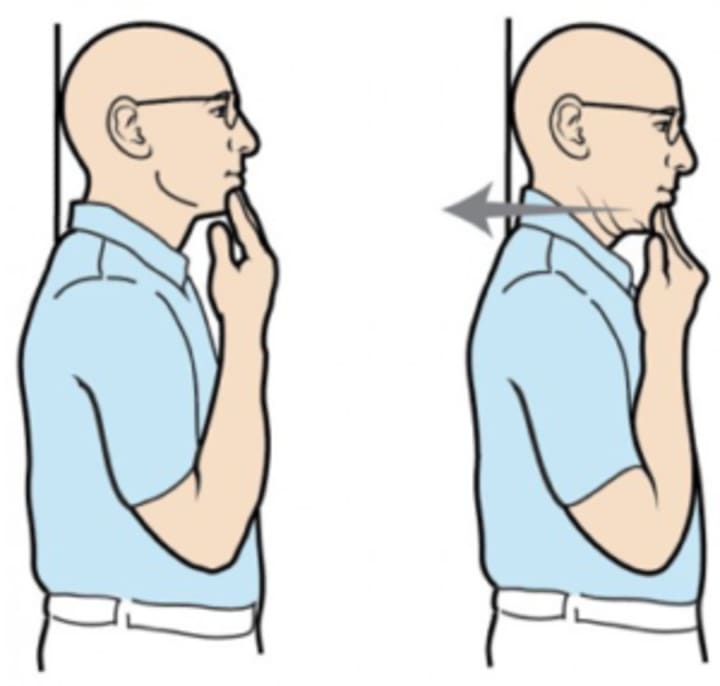
As you perform the chin tucks, it's important to keep your shoulders down and relaxed, and focus on using the muscles in the back of your neck to move your head. It's also important to keep your spine in a neutral position and avoid straining the neck or shoulders.
Chin tucks can be done in any position, whether sitting or standing, and can be done throughout the day, whether you are at work, watching TV or using your phone.
Downward-Facing Dog:
Downward-Facing Dog, also known as Adho Mukha Svanasana in Sanskrit, is a common yoga pose that is considered a staple in many yoga practices. It is an inversion pose, meaning that the head is lower than the heart, and it is a full-body stretch that strengthens and tones the muscles.
To perform Downward-Facing Dog,
Begin on your hands and knees on a mat.
Place your hands shoulder-width apart and your knees hip-width apart.
Tuck your toes and lift your hips up towards the ceiling, straightening your arms and legs as you do so. Your body should resemble an inverted "V" shape.
Press through the heels of your feet, making sure they are parallel to each other, and engage your quads and core.
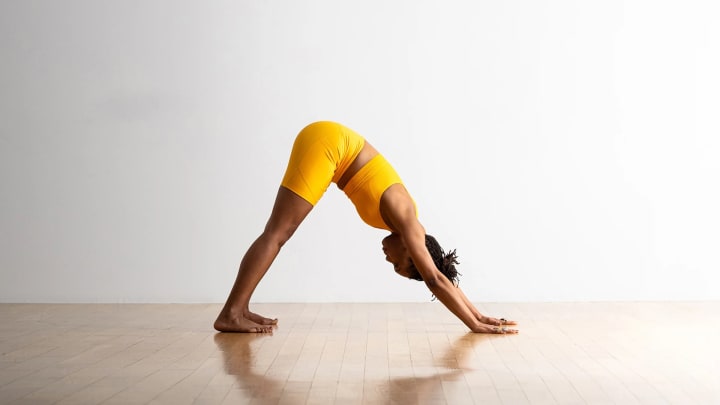
Downward-Facing Dog is a great pose for stretching the entire body, particularly the shoulders, spine, hamstrings, and calves. It also strengthens the arms, wrists, and hands. It is also a great pose to relieve stress and tension in the body and can help to improve circulation.
Padahastasana:
Padahastasana, also known as the Standing Forward Bend in English, is a yoga pose that can be beneficial for those experiencing pain and discomfort from text neck. This pose helps to stretch and release tension in the neck, shoulders, and upper back, which can help to alleviate pain caused by prolonged phone use.
To perform Padahastasana,
Begin standing in Tadasana (Mountain Pose) with your feet hip-width apart.
Inhale and raise your arms overhead, then exhale and bend forward from the hips, reaching towards your toes.
You can either bend your knees slightly or keep your legs straight, depending on your flexibility. Place your hands on the ground, beside your feet or on your shins.
As you exhale, release your head and neck towards the ground, relaxing your upper body.
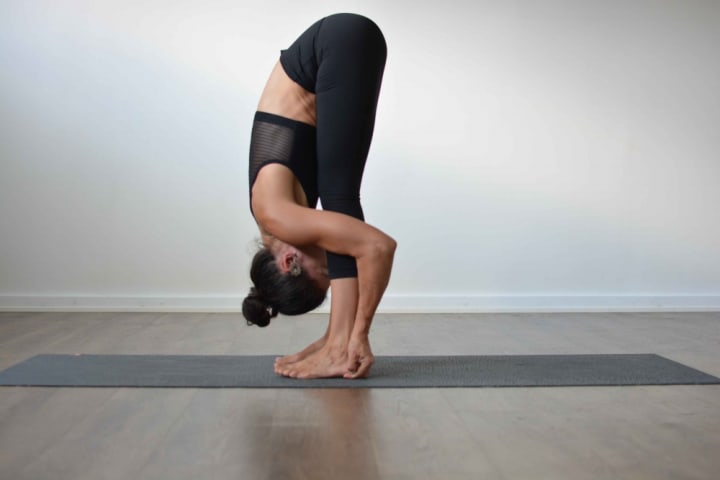
Padahastasana is a great pose for stretching the back of the legs, the spine and the neck. It also helps to improve digestion, relieve stress and anxiety, and calm the mind. It is important to note that people with hypertension, back or neck injury should avoid this pose or do it with caution.
Cat cow pose:
The Cat-Cow pose is a yoga exercise that can be beneficial for those experiencing pain and discomfort from text neck. This pose helps to stretch and release tension in the neck, shoulders, and upper back, which can help to alleviate pain caused by prolonged phone use.
To perform the Cat-Cow pose,
Begin on your hands and knees on a mat, with your wrists directly under your shoulders and your knees directly under your hips.
As you inhale, drop your belly towards the mat and lift your head and tailbone towards the ceiling, creating a gentle arch in your back. This is the cow pose.
As you exhale, round your spine towards the ceiling, tucking your chin to your chest, and pushing your sit bones towards your heels. This is the cat pose.
Repeat this movement, flowing between cow and cat pose, inhaling to cow and exhaling to cat for about 5-10 times.
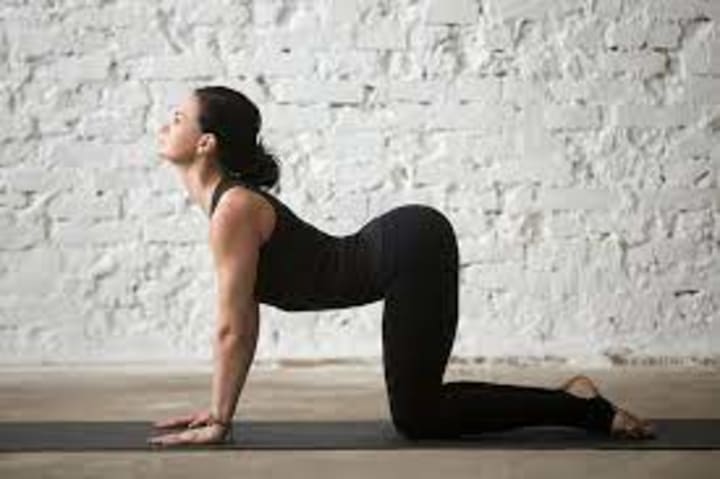
The Cat-Cow pose is a great exercise for stretching the entire spine, and it's particularly effective for releasing tension in the neck and shoulders. It's important to note that people with recent or chronic back injury should avoid this pose or do it with caution.
Take frequent breaks when using mobile devices, every 20 minutes and look up and stretch your neck muscles.
Preventing Text Neck:
Preventing text neck is important to avoid the pain and strain that can occur in the neck and shoulders. To prevent text neck, try the following:
• Hold your phone or mobile device at eye level instead of looking down at it
• Use a hands-free device or a headset to avoid holding the phone to your ear
• Take frequent breaks when using your phone or mobile device
• Improve your posture by sitting up straight and holding your head up
• Practice the exercises mentioned above to strengthen the muscles in the neck and shoulders
In conclusion, text neck is a common problem caused by looking down at a phone or mobile device for extended periods of time. The pain and strain that can occur in the neck and shoulders can be alleviated with exercises and by improving posture. It is important to take frequent breaks when using mobile devices, and if you experience persistent pain in the neck or shoulders, consult with a physical therapist or doctor.
About the Creator
Keep reading
More stories from The Story Teller and writers in Lifehack and other communities.
How to get rid of a Headache in 10 minutes?
Headaches can be a real nuisance and can affect your daily life. They can range from a mild annoyance to a debilitating condition that makes it difficult to focus and complete everyday tasks. But there are ways to alleviate the pain quickly and effectively. In this article, we'll be discussing 10 tips for getting rid of a headache in just 10 minutes.
By The Story Teller3 years ago in Lifehack
The Check-In Revolution: Moving From Constant Tracking to Scheduled Family Updates
There’s a low-grade hum of anxiety that comes with modern parenting. You can, at any moment, open an app and see exactly where your child is. So you do. Again. And again. What starts as a tool for peace of mind can quietly become a source of obsession for you and a point of resentment for them.
By Olivia Martinez4 days ago in Lifehack
How Scott Sellers Kyle Positioned Kyle, Texas for Economic Visibility
Economic visibility is one of the most important factors for a growing city. It determines how attractive a city appears to businesses, investors, and regional partners. For Kyle, Texas, building economic visibility was not about promotion alone—it was about preparation, planning, and leadership. Through a thoughtful and structured approach, Scott Sellers Kyle helped position the city as a reliable and forward-looking place for long-term economic growth.
By Scott Sellers Kyle5 days ago in Lifehack
Miss Persephone's Manual to a Seemingly Ordinary Life
Miss Persephone was found at the dining table, her blue eyes swollen, her tears arriving and retreating like the tides of the ocean. Earlier that day, her family had visited her in the retirement home where she had lived for eight years. It was her eightieth birthday.
By Imola Tóth3 days ago in Fiction


Comments
There are no comments for this story
Be the first to respond and start the conversation.