
Technology Was Supposed to Empower Us
So Why Do So Many Americans Question Their Worth?

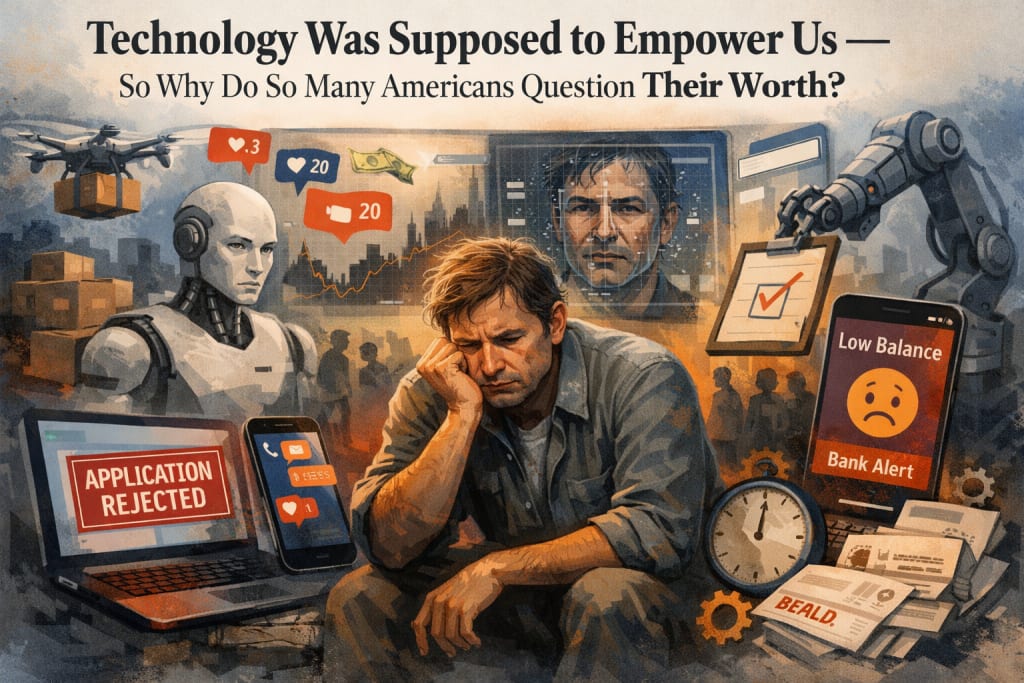
Technology Was Supposed to Empower Us—So Why Do So Many Americans Question Their Worth?
There was a period when technology seemed like a tool.
Something you utilized.
Something that helped.
Something that lingered in the background.
Today, it feels different.
Technology doesn’t only assist what we do—it silently influences how we view ourselves.
How productive we feel.
How relevant we feel.
How precious we feel.
And for many Americans, that change has generated an unpleasant question they seldom utter out loud:
Am I enough if I’m not keeping up?
When Identity Became Tied to Output
In the U.S., identity has long been related to labor.
What do you do?
How busy are you?
How successful are you?
Technology increased that link.
Now, productivity is evident.
Online profiles demonstrate accomplishments.
Platforms reward activity.
Metrics measure engagement.
If you’re silent, it looks like stagnation.
If you’re slow, it appears like slipping behind.
Technology didn’t create this pressure—but it made it continuous.
The Subtle Way Tech Turned Performance Into Worth
Many individuals don’t consciously think:
“My value depends on my output.”
But conduct reveals a different story.
Feeling bad for relaxing.
Feeling uneasy during downtime.
Feeling anxious while not learning anything new.
These sensations aren’t random.
They arise from living in a system where:
visibility equals relevance
activity equals value
optimization equals success
When technology records everything, self-worth quietly becomes quantified.
And assessed value is flimsy.
Why Being “Offline” Can Feel Like Disappearing
For many Americans, breaking away from technology doesn’t seem tranquil.
It feels dangerous.
What if people forget you?
What if chances pass?
What if you lose momentum?
Technology generated a dread of invisibility.
If you’re not publishing, replying, or participating, it seems like you’re steadily slipping from importance.
That concern isn’t about attention.
It’s about identity.
Social Media Didn’t Create Comparison—It Made It Personal
Comparison existed before technology.
But now it’s continual and individualized.
You’re not simply comparing lifestyles.
You’re comparing timeframes.
Someone younger is earning more.
Someone newer is advancing quicker.
Someone else appears effortlessly confident.
And even when you realize it’s crafted, the emotional effect lingers.
Technology didn’t alter facts.
It altered exposure.
And exposure without context erodes self-worth silently.
Why “Learning More” Doesn’t Always Feel Empowering
Technology praises learning.
New talents.
New tools.
New updates.
Learning used to feel exhilarating.
Now, it frequently seems urgent.
If you hesitate, you feel outmoded.
If you slow down, you feel unimportant.
Instead of progress, learning becomes maintenance.
And upkeep doesn’t foster confidence—it retains fear.
The American Fear of Being Replaceable
Technology created a new vulnerability.
Not simply losing a job—but losing originality.
If technologies can copy talents rapidly, what makes you special?
That question goes deeper than professional worry.
It impacts identity.
People don’t only desire to earn.
They want to matter.
When technology crosses that divide, self-worth takes a knock.
Why Hustle Culture Feels Personal Now
Hustle culture used to be external.
Now it’s internal.
People push themselves to:
constantly improve
constantly optimize
always remain relevant
Even without anybody asking.
Technology developed an internal scoreboard.
And most individuals feel like they’re losing—even when they’re doing OK.
The Emotional Cost of Constant Self-Evaluation
Metrics are helpful.
But living within them isn’t.
Likes.
Views.
Responses.
Engagement.
These statistics silently impact mood.
A nice answer feels validating.
Silence seems intimate.
Over time, self-worth begins responding to feedback loops instead of internal grounding.
That’s exhausting.
Why Rest Feels Like Failure for Many Americans
Rest should feel neutral.
But in a tech-driven age, relaxation frequently seems like falling behind.
When others are learning, building, and publishing—stopping seems irresponsible.
Even rest becomes something to optimize.
And when rest contains guilt, it ceases repairing anything.
What People Are Actually Craving Right Now
Not more validation.
Not more metrics.
Not greater visibility.
They want:
steadiness in how they view themselves
value that isn’t continuously tested
identity beyond output
They want to feel human again—not like a machine that requires regular updating.
A Healthier Relationship With Technology and Self-Worth
Technology doesn’t need to determine identity.
But limits do.
Worth shouldn’t come from:
speed
visibility
continual improvement
It should originate from:
consistency
values
presence
When individuals separate who they are from what they create, pressure eases.
The Quiet Shift Already Happening
Many Americans are:
sharing less
measuring less
choosing privacy
redefining success
Not because they failed.
Because they realized something important:
Self-worth can’t be crowdsourced.
Concluding Remark
Technology provided us tremendous tools.
But it also whispered a frightening idea:
That worth must be shown continually.
The future doesn’t require technology that pushes people harder.
It requires technology that enables individuals to be adequate without performing.
Because a culture that connects value to production
gradually forgets how to cherish people at rest.
And repose is where identity stabilizes.
About the Creator
abualyaanart
I write thoughtful, experience-driven stories about technology, digital life, and how modern tools quietly shape the way we think, work, and live.
I believe good technology should support life
Abualyaanart
Keep reading
More stories from abualyaanart and writers in Lifehack and other communities.
SEO Mentor Nestor Vazquez and a Different Way of Understanding Search
In many discussions about digital marketing, search engine optimization is often presented as a technical discipline. Articles tend to focus on rankings, backlinks, analytics dashboards, and algorithm updates. While these elements are certainly part of the field, they do not fully explain how people actually learn to understand search.
By House Doctora day ago in Lifehack
How to Find Penny Items at Dollar General
Imagine walking into Dollar General and walking out with a cart filled with items that cost you a total of less than a dollar. The lucky few who snag penny items certainly have experienced the adrenaline and happiness it creates. If you want to feel like a Queen (or king) for a day, read below to learn how you can become a DG penny-aire.
By Criminal Mattersabout 23 hours ago in Lifehack



Comments
There are no comments for this story
Be the first to respond and start the conversation.