
Startup Mistakes When Hiring a Healthcare Application Development Company
Key Errors That Can Delay Your Healthcare Product and Drain Your Budget

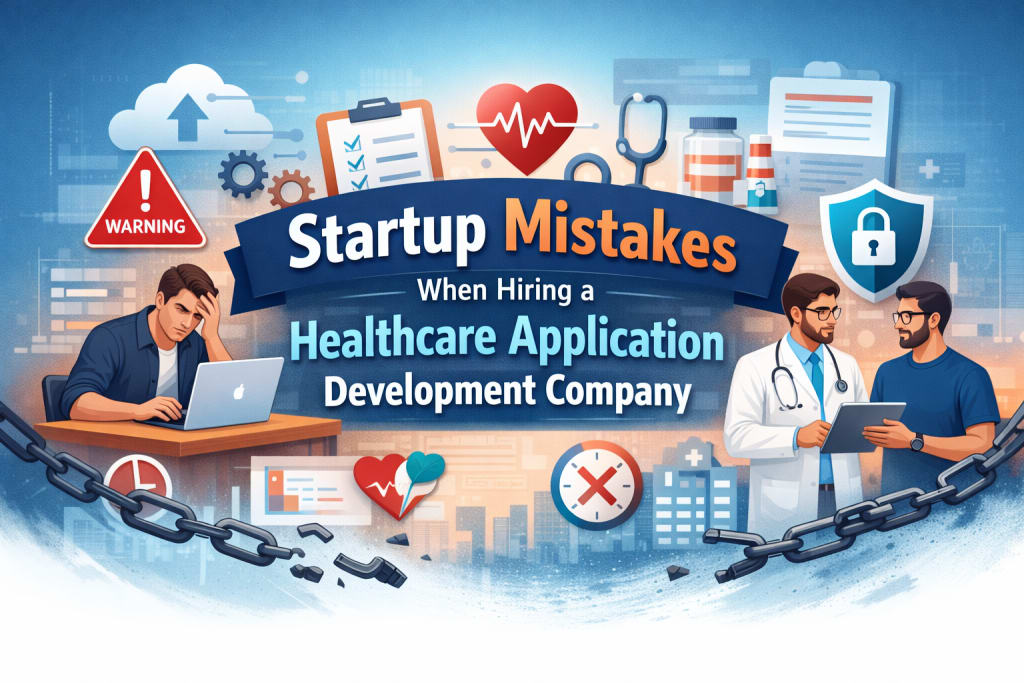
Launching a healthcare startup is never just about a good idea. It’s about execution, compliance, technology choices, and—most importantly—the people you partner with to bring your product to life. One of the most critical decisions founders make is choosing the right healthcare application development company. Unfortunately, many startups repeat the same costly mistakes during this phase, leading to budget overruns, delayed launches, or even regulatory risks.
Now breaks down the most common mistakes startups make when hiring a development partner and explains how to avoid them. If you’re planning to build a medical app, telehealth platform, EHR system, or wearable solution, these insights can save you months of frustration and thousands of dollars.
Why the Right Development Partner Matters in Healthcare
Healthcare software is not like building a food delivery or social media app. It involves sensitive patient data, strict regulations, complex workflows, and interoperability requirements. A poor hiring decision can result in non-compliant software, security breaches, or low adoption by clinicians and patients.
That’s why selecting a capable healthcare application development company is not optional, it’s foundational to your startup’s success.
Mistake #1: Prioritizing Cost Over Healthcare Expertise
Many startups operate on tight budgets, which often pushes founders to choose the lowest-priced vendor. While cost matters, healthcare is a domain where inexperience can become extremely expensive later.
A generic app development firm may not understand:
- HIPAA, GDPR, or local healthcare regulations
- Clinical workflows and patient journeys
- Medical data standards like HL7 or FHIR
Fixing compliance or architectural issues after development is far more costly than hiring the right team upfront.
How to avoid it:
Evaluate vendors based on healthcare-specific experience, not just pricing. Review their past work in medical software development and ask about real-world healthcare use cases they’ve handled.
Mistake #2: Not Verifying Compliance and Security Knowledge
Startups often assume that compliance is something that can be “added later.” This is one of the most dangerous assumptions in healthcare technology.
A reliable healthcare application development company should already be fluent in:
- Data encryption and secure authentication
- Role-based access control
- Audit logs and consent management
- Regulatory compliance requirements
Ignoring these factors early can lead to legal trouble or app rejection by hospitals and investors.
How to avoid it:
Ask direct questions about how the team handles patient data security, compliance documentation, and regulatory audits. Compliance should be built into the architecture, not patched afterward.
Mistake #3: Skipping Domain Discovery and Validation
Some startups jump straight into development without investing time in proper discovery. They assume developers will “figure it out” during coding. In healthcare, this approach often leads to products that don’t match clinical needs.
Without domain discovery, you risk:
- Poor user experience for doctors and nurses
- Features that don’t align with real workflows
- High rework and scope creep
How to avoid it:
Choose a healthcare application development company that offers discovery workshops, requirement analysis, and user journey mapping. This step ensures your idea is technically and clinically viable before development begins.
Mistake #4: Ignoring Scalability and Future Integrations
Many healthcare startups build for the present without considering future growth. They focus only on MVP delivery and forget about scalability, performance, and integrations.
Common oversights include:
- No plan for EHR/EMR integration
- Limited API architecture
- Infrastructure that can’t handle increased users
This becomes a serious issue when onboarding hospitals, clinics, or enterprise partners.
How to avoid it:
Discuss scalability from day one. A capable healthcare application development company will design your system to support future integrations, cloud scalability, and evolving business models.
Mistake #5: Choosing Technology Without Strategic Guidance
Startups sometimes dictate the tech stack based on trends rather than suitability. While modern frameworks matter, healthcare apps require stability, security, and long-term support.
Poor technology choices can result in:
- Difficult maintenance
- Limited compliance capabilities
- Performance issues with medical data
How to avoid it:
Rely on your development partner’s technical leadership. An experienced healthcare application development company will recommend technologies based on compliance needs, data handling, and long-term sustainability—not hype.
Mistake #6: Overlooking UX for Patients and Clinicians
Healthcare apps often fail not because of technology, but because users don’t like using them. Many startups focus on features and forget usability.
Doctors want speed and clarity. Patients want simplicity and trust. Poor UX leads to low adoption rates, even if the app is technically sound.
How to avoid it:
Ensure the company has experience in healthcare UX design. Ask about usability testing, accessibility standards, and design tailored for both patients and providers.
Mistake #7: Not Asking About Post-Launch Support
Some startups believe development ends at launch. In reality, healthcare applications require continuous updates, security patches, and compliance adjustments.
Without post-launch support, you may struggle with:
- OS updates breaking functionality
- New compliance requirements
- Performance issues at scale
How to avoid it:
Partner with a healthcare application development company that offers long-term support, maintenance, and upgrade plans. Healthcare software is a long-term commitment, not a one-time project.
Mistake #8: Failing to Evaluate Communication and Transparency
Technical skills alone aren’t enough. Poor communication leads to missed expectations, delays, and frustration, especially for non-technical founders.
Red flags include:
- Vague timelines
- Lack of documentation
- Irregular updates
How to avoid it:
Choose a team that values transparency. Clear roadmaps, sprint updates, and open communication channels are essential for startup success.
Mistake #9: Not Reviewing Healthcare Case Studies and References
Some startups rely on sales presentations instead of real proof. A polished pitch doesn’t always reflect real capability.
How to avoid it:
Ask for healthcare-specific case studies, client references, and live product demos. A credible healthcare application development company should confidently showcase real-world results.
Mistake #10: Treating the Vendor as Just a Service Provider
The most successful healthcare startups treat their development partner as a strategic collaborator, not just a coding vendor.
When the relationship is purely transactional:
- Innovation is limited
- Business insights are lost
- Long-term value declines
How to avoid it:
Work with a company that understands your business goals, not just your feature list. Strategic input can significantly improve product-market fit.
Final Thoughts
Hiring the wrong healthcare application development company can slow your growth, drain resources, and put your start-up at risk. The right partner, however, can help you navigate regulations, build scalable solutions, and create software that healthcare professionals and patients actually trust.
Avoiding these common mistakes requires due diligence, clear communication, and a focus on long-term value over short-term savings. With the right approach, your development partner can become a key driver of your healthcare startup’s success, not a setback.
If you approach the hiring process strategically, your product will be better positioned to thrive in the complex and highly regulated healthcare ecosystem.
About the Creator
Keep reading
More stories from Steve Waugh and writers in Lifehack and other communities.
EHR Interoperability and Data Integration: The Future of Connected Care
Electronic Health Record (EHR) integration has become a foundational requirement for modern healthcare organizations striving to deliver coordinated, data-driven care. As hospitals, clinics, and specialty practices increasingly rely on digital tools, the ability to seamlessly connect systems is no longer optional—it is essential. EHR integration enables disparate healthcare platforms to communicate with each other, ensuring that patient data flows securely and accurately across departments, facilities, and third-party applications. By eliminating data silos and enabling real-time access to critical medical information, integrated systems significantly improve clinical decision-making, operational efficiency, and patient outcomes.
By Steve Waugh18 days ago in Lifehack



Comments
There are no comments for this story
Be the first to respond and start the conversation.