
Starting your own beekeeping business
A sustainable business with recurring money

Starting your own beekeeping business
Starting a beekeeping business may sound exciting and fun, but in all reality it's a lot of work and is time consuming. Most people who are in this are actually doing this as a hobby. Having a hobby and a livelihood are two entirely different areas since one is something you invest time and in some cases money and one is when you're trying to make a living at. Beekeeping is like farming you have to stay on top of the market demands and be technologically savvy because much of the business is going to depend on how fast you can produce a single product.
Yet this is where you're going to learn that beekeeping isn't even like that because if you expect to make a profit you would have had to have been in the business for a long time and following the trends on what the market demanded of the time. Today if you don't even have a website consider yourself a fossil in the area of business because that's your only link to the rest of the world by having a website or even a page.
Most of the companies today are commercialized because the small businesses today are just not equipped to handle the mass production of honey and small businesses won't make a lot giving the fact you are paid by the pound and the average amount after weighing the whole season isn't a whole lot. Commercial beekeepers average a couple thousand pounds, but farmers have to really push production if they want to average at least $15-30 a year. This is a competitive field to be selling honey and producing beeswax products since the beekeeping industry doesn't function as a co-op like many organic farmers do in this day and age where they work together beekeeping is sub-contract work and many of these small businesses are sub-contracted by these major corporations to produce honey under their label and their food line.
Sub-contracting may sound good and all, but you are also competing for these contracts as well with other small businesses and the high risk is that you can lose your contracts if the companies who hire you aren't happy with something for whatever reason it could be the quality of the product to anything. That's why this is a risky business to get into because you never know what the outcome is and how the market will fair during the season since this is what a beekeeper bases their financial output by which is how much they anticipate to make on a seasonal basis.
Beekeepers almost have to base their financial gain through good weather and season with the market demand, but you can't always predict good weather, which is what many worry about. They have more to worry about than crop farmers since they can make the difference when they get rain and lower climate suitable to the food they're growing. Beekeeping is dependent on the activity of the bees and how well they produce honey since bees produce in certain climates and temperatures. If you're expecting to thrive in this business understand that it's a lot of work and a lot of time invested into making this work for the long run.
Acquiring the Bees
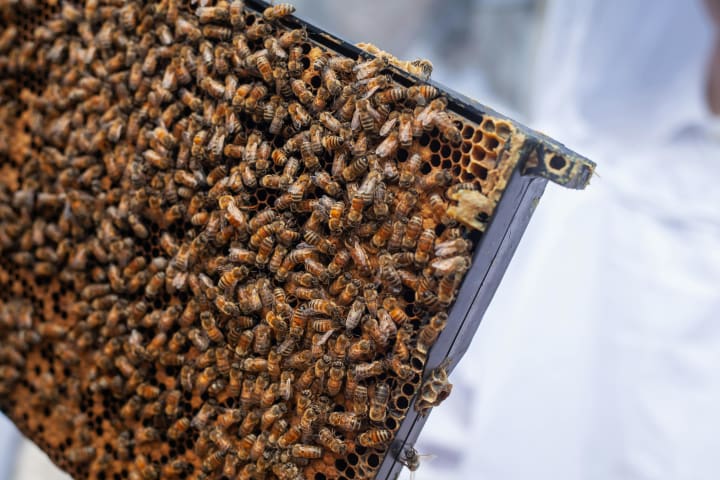
As long as you aren't allergic to bee stings beekeeping is a way for someone who doesn't have a great deal of money and acres of land to take an active role in agriculture. The start up expense of the average hive is approximately $300 per hive (you only need one to get begin with). Once you have purchased a hive it can be kept in a remote corner of your back yard, it is not uncommon to see some suburban homes with a bee hive.
If you are considering starting a beehive the first thing you should do is call your local Cooperative Extension office. They will be able to tell you if you live in an area that restricts keeping bees. They will also be able to give you the contact information of your states beekeeping organization where you can become a registered beekeeper.
The next thing you need to do is select a site for your potential honey bee hive.
Once you have selected a site for your beehive you will need to go about acquiring the equipment needed to successfully maintain a beehive. Some of the equipment you will need can be purchased used on EBay. If you are unable to find the equipment you need on EBay there are several on-line sites where you can purchase equipment. If you need further assistance finding and purchasing a beehive and other beekeeping equipment call your local Cooperative Extension office or the Federation of American Beekeepers.
Before acquiring bees for your hive it's important to make sure that you are properly protected, this means you have to purchase beekeepers gear.
Once your hive is in place and you are confident that everything is in working order it's time to order your honey bees. The easiest way is to order Honey Bees from an established Apiary. You should plan on placing you bee order early in the winter, the average beekeeper orders their bees in January and February. The order is typically shipped in March and April. Most Apiary's ship their bees through the U.S. postal service. When the bees arrive at the post office your mail carrier will call and ask that you pick up the bees. Very few mail carriers are comfortable driving all over the county with a car full of young angry bees in their car and most bees are healthier if they don't have to spend several hours in a hot car.
When you pick up your bees they should have been packaged in a special carrying case that is designed just for bees. This package will be a wooden framed "house" that has a screen covering the outside. This packaging allows air to circulate to the travelling bees and keeps handlers, such as post office employees, from getting stung.
When you get your bees, do not be surprised if you see a few dead bees laying in the bottom of the package. Traveling is hard on bees and they can't all be expected to live through the trip. The rest of the bees should be clutching the sides of the container.
You will notice that one bee in the container has been separated from the rest of the hive. This is your queen bee. The rest of the bees in the container will make up the rest of your bee hives hierarchy. Some Apiaries ship the queen with a couple of nurse bees. The top of the queen's container will be covered with piece of sugar candy.
You should also see a container that is filled with a sugar solution. This sugar solution is what the bees feed on while they are travelling. Once you get your bees home offer them something to drink. You do this by taking a spray bottle and covering the container with a very fine covering of water.
Transferring Your Bees to Their New Home

You've done your beekeeping homework. You've chosen a site for your beehive where it won't be knocked down in a strong wind, or be bothered by pets and humans. You've purchased all the right equipment and are comfortable using it. You've tried on all your beekeeping gear and are comfortable that it fits you properly and are confident that you are reasonably protected from bee stings. During the cold winter months you placed an order for your bees and were notified that your bees were successfully shipped. Now you have gotten the call from the post office where a frazzled postal worker has politely asked you to please come and remove your package of angry stinging insects from their work environment.
You've picked up your bees and noted that other then a few dead ones at the bottom of the container (you should really be prepared for a few to not survive the stressful travel routine they have been asked to endure) the bees look healthy. Now all you have to do is transfer the new bees from the screen container they were shipped in to the hive you have set up for them.
Have your smoker handy when you are ready to transfer your new bees from their shipping container to the hive. Also make sure you have your beehive gear on.
You should notice a small container within the bee's shipping container. This small container is where your new queen is being kept. The top of her personal shipping container is covered with a cork. Remove the cork and you will see a second cap that is made out of sugar.
Hang the queen's container in your hive. Your going to want to put it in between the two frames that are in the center of your newly constructed hive. Pierce the top of the candy top with a nail. The worker bees will have an easier time freeing the queen if there is already a small hole in the sugar barrier. When using the nail be very careful that you do not inadvertently stab the queen. You won't be able to purchase a replacement queen after the winter months. Once the workers have chewed through the sugar barrier the queen will be able to escape into the hive.
Once you have the queen in the hive use your smoker and place a puff of smoke into the shipping package. Gently shake the bee's shipping container, gently allowing the bees to spill out of the container and into the hive. When you are no longer able to coax any bees out of the container, set the container down near the hive, any bees that are still in it will eventually find their way out of the container and into the hive. Make sure you inset a feeder filled with a simple sugar recipe into the hive.
Leave your new bees alone for a week. During this week the bees will become acclimated with their new home. The queen will start laying eggs and the bees will start to make honey.
Bees like to be transferred from their shipping container to the hive either early in the morning or late evening
About the Creator
Cyri K Mababu
Hi! Welcome! I'm Cyri a freelancer, passionate to delivering insightful information on health, arts and designs. Please do not forget to subscribe my stories. Give me a hand to keep me and my reseach alive. you will always be informed.
Keep reading
More stories from Cyri K Mababu and writers in Lifehack and other communities.
Appropriate Eating Habits Before Competitions or workouts
As athletes or a jimy guy work to prepare for competitions and tournaments, it is very important that nutritional needs be met. This includes both in eating habits, what is consumed, and when it is eaten. The old saying that you should not eat before swimming is a very real concern for athletes regardless of which sport they are involved in.
By Cyri K Mababuabout a year ago in Lifehack




Comments
There are no comments for this story
Be the first to respond and start the conversation.