
Social Psychology
Understanding Social Psychology


**Understanding Social Psychology: The Science of Human Interaction**
### Introduction
Social psychology is the scientific study of how people's thoughts, feelings, and behaviors are influenced by the actual, imagined, or implied presence of others. It bridges psychology and sociology, focusing on how individuals interact within a social context. By understanding social psychology, we gain insight into human behavior in various social settings, from personal relationships to large-scale group dynamics. This field has practical applications in areas such as marketing, politics, health, and interpersonal communication.
### The Core Principles of Social Psychology
Several fundamental principles guide research and theories in social psychology:
1. **Social Influence**: The ways in which individuals change their behavior to meet the demands of a social environment.
2. **Social Cognition**: How people process, store, and apply information about others and social situations.
3. **Social Interaction**: The ways in which people relate to one another, including cooperation, conflict, and competition.
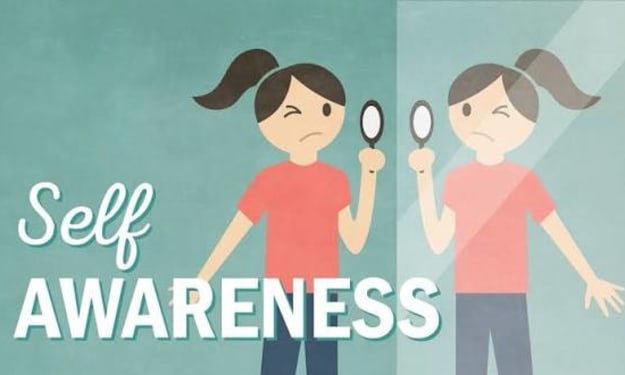
4. **Self and Identity**: How individuals develop and perceive their self-concept in a social context.
5. **Group Dynamics**: The ways in which individuals behave in groups and the impact of group membership on individual behavior.
### Social Influence: Conformity, Compliance, and Obedience
One of the most well-studied aspects of social psychology is how people are influenced by others. Social influence manifests in various forms, including conformity, compliance, and obedience.
#### Conformity
Conformity occurs when individuals adjust their behaviors, attitudes, or beliefs to align with those of a group. Solomon Asch’s famous conformity experiments demonstrated that people often conform to group norms even when those norms contradict their own judgments.
#### Compliance
Compliance involves changing behavior in response to a direct request. Robert Cialdini's principles of persuasion—such as reciprocity, commitment, social proof, authority, liking, and scarcity—explain why people comply with requests in different situations.
#### Obedience
Obedience is following the directives of an authority figure. Stanley Milgram’s obedience experiments revealed that people are surprisingly willing to follow orders, even when those orders conflict with their personal values and ethical standards.
### Social Cognition: How We Think About Others
Social cognition involves understanding how people form impressions and make judgments about others. Two key concepts in social cognition are:
- **Attribution Theory**: Proposed by Fritz Heider, this theory explains how individuals infer the causes of behavior. People attribute actions to either internal factors (personality) or external factors (situational influences).
- **Cognitive Biases**: Common errors in thinking, such as the fundamental attribution error (overestimating personality factors while underestimating situational influences) and the self-serving bias (attributing successes to personal traits and failures to external factors).
### Attitudes and Behavior
Attitudes are learned predispositions to respond favorably or unfavorably to certain stimuli. The relationship between attitudes and behavior is complex. While attitudes often predict behavior, situational factors can lead to inconsistencies. The **Theory of Planned Behavior** suggests that behavior is influenced by attitudes, subjective norms, and perceived behavioral control.
### The Power of Groups: Group Dynamics and Behavior
Groups significantly influence individual behavior, decision-making, and performance.
- **Social Facilitation**: The presence of others can enhance performance on simple tasks but hinder performance on complex ones.
- **Social Loafing**: Individuals may exert less effort when working in a group than when working alone.
- **Groupthink**: A phenomenon where the desire for harmony in a group leads to poor decision-making.
- **Deindividuation**: The loss of self-awareness in groups, leading to impulsive and sometimes deviant behavior.
### Prejudice, Stereotypes, and Discrimination
Social psychology examines how and why individuals categorize others, often leading to stereotypes, prejudice, and discrimination.
- **Stereotypes**: Generalized beliefs about a group.
- **Prejudice**: An emotional response to a group, often negative.
- **Discrimination**: Unjust behavior toward individuals based on group membership.
Reducing prejudice requires strategies such as intergroup contact, education, and cognitive reconditioning.
### Prosocial Behavior and Altruism
Prosocial behavior includes actions intended to benefit others. Theories explaining prosocial behavior include:
- **Evolutionary Theory**: Suggests helping behavior increases survival chances.
- **Social Exchange Theory**: Proposes that people help when the benefits outweigh the costs.
- **Empathy-Altruism Hypothesis**: Argues that empathy leads to selfless helping.
### Applications of Social Psychology
Social psychology has practical applications in numerous fields:
- **Marketing**: Using principles of persuasion to influence consumer behavior.
- **Politics**: Understanding voter behavior and political attitudes.
- **Health Psychology**: Encouraging positive health behaviors through social influence.
- **Conflict Resolution**: Applying group dynamics theories to mediate disputes.
### Conclusion
Social psychology provides invaluable insights into human behavior, explaining how social environments shape thoughts, emotions, and actions. By applying these principles, we can foster better relationships, reduce prejudice, and improve social interactions in both personal and professional settings.
About the Creator
Jeno Treshan
Story writer Jeno Treshan creates captivating tales filled with adventure, emotion, and imagination. A true lover of words, Jeno weaves unforgettable stories that transport readers to far-off lands.
Keep reading
More stories from Jeno Treshan and writers in Lifehack and other communities.
Successful Startup
# The Ultimate Guide to Launching a Successful Startup in 2025 Starting a business is an exciting yet challenging journey that requires careful planning, execution, and perseverance. With the evolving business landscape, entrepreneurs must adapt to new trends, technologies, and market demands. If you're considering launching a startup in 2025, this comprehensive guide will provide you with actionable insights to help you navigate the entrepreneurial journey successfully.
By Jeno Treshan 11 months ago in Lifehack



Comments
There are no comments for this story
Be the first to respond and start the conversation.