
Shining a Light on Solar Battery Lifespan
Understanding How Long Your Solar Storage Really Lasts and How to Maximize It

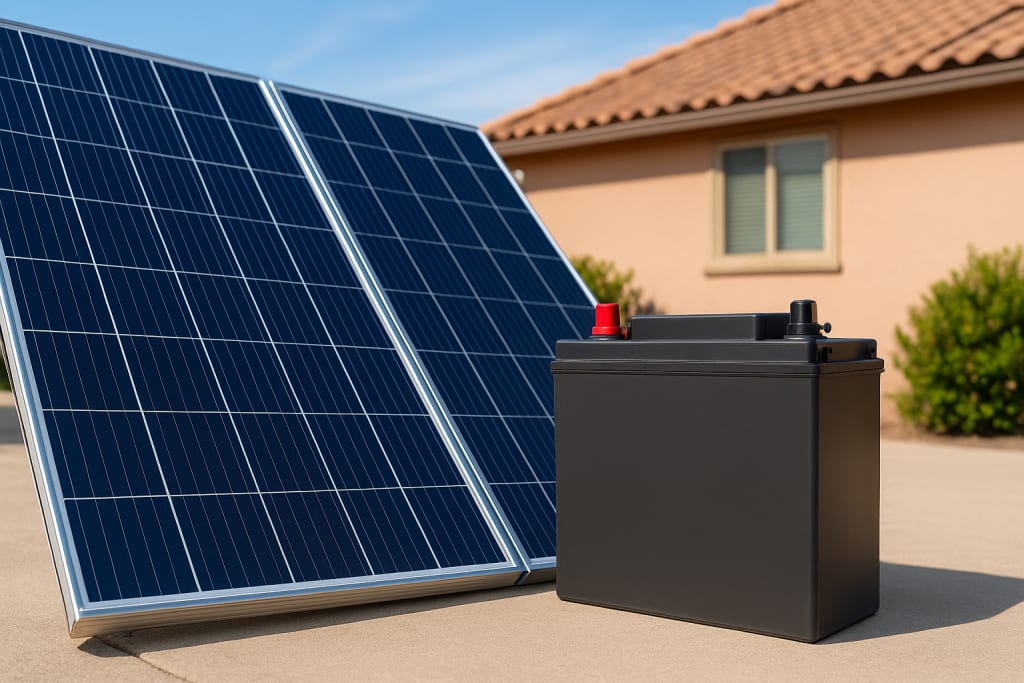
Solar batteries form the backbone of any off‑grid or backup power installation, storing energy harvested by your photovoltaic panels for use when the sun sets or clouds roll in. But how long do these batteries actually perform before their capacity fades? In this article, we’ll explore the real‑world lifespan of different solar battery chemistries, the factors that influence longevity, and practical steps you can take to get the most out of your investment.
Why Battery Lifespan Matters
When you invest in a solar power system, panels often get the spotlight. Yet the battery bank determines how reliably you can draw power day and night. A battery that fails prematurely forces costly replacements, system downtime, and frustration. Understanding expected service life—and what affects it—lets you plan maintenance, compare total cost of ownership, and select the right technology for your needs.
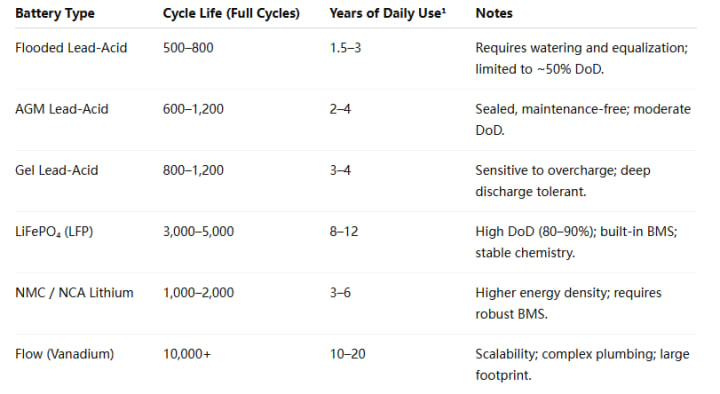
1. Typical Lifespans by Chemistry
2. Key Factors That Affect Longevity
Depth of Discharge (DoD)
Drawing more of a battery’s capacity each cycle shortens its life. Lead‑acid is typically limited to 50% DoD, whereas LiFePO₄ can safely handle 80–90%.
Operating Temperature
Heat accelerates chemical degradation. For every 10 °C above 25 °C, battery life can halve. Keeping banks between 20–30 °C maximizes years of service.
Charge/Discharge Rates
High‑rate cycling stresses internal components. Match your inverter and charge‑controller settings to the battery’s recommended C‑rates.
Maintenance Practices
Flooded lead‑acid demands regular watering and equalization charges. Sealed and lithium batteries require minimal upkeep but still benefit from periodic inspections.
State of Charge (SoC) Float
Holding batteries at 100% SoC (float mode) for extended periods can stress lead‑acid cells. Lithium batteries tolerate float better, but avoiding constant full charge helps all chemistries.
Quality of Battery Management System (BMS)
A robust BMS guards against over‑charge, over‑discharge, and temperature extremes. Integrated BMS in LiFePO₄ units adds years of dependable operation.
3. Real‑World Examples
Residential Backup: A homeowner with a 10 kWh LiFePO₄ bank cycling daily sees minimal capacity loss after five years, retaining over 85% of original storage.
Remote Cabin: An off‑grid cabin using AGM batteries without proper equalization experiences sulfation, cutting effective capacity by 30% in three years.
Commercial Installation: A small business using flow batteries for peak‑shaving operates with stable capacity for a decade, though initial costs and space requirements were higher.
4. Strategies to Extend Battery Life
Optimize DoD: Program your inverter/charger to limit daily DoD to 60–70% for lead‑acid and 80% for lithium to balance usable energy with longevity.
Temperature Control: Install batteries indoors or in climate‑controlled enclosures. Use ventilation or small HVAC units if ambient temperatures exceed 30 °C regularly.
Smart Charging Profiles: Use MPPT charge controllers with programmable absorption and float voltages matched to your battery spec sheet.
Regular Inspections: Quarterly checks for corrosion, cable tightness, and BMS status lights catch issues before they escalate.
Avoid Prolonged Float: If system sees extended grid‑tied operation, schedule periodic equalization (lead‑acid) or exercise cycles (lithium) to prevent imbalance.
Invest in Quality: Higher‑end batteries with advanced cell chemistry and BMS often cost more up front but deliver lower cost per cycle over their service life.
5. Calculating Total Cost of Ownership
When evaluating options, look beyond purchase price:
Upfront Cost: Dollars per kWh of nameplate capacity.
Usable Energy: Adjust for DoD to find real kWh per cycle.
Cycle Life: Multiply usable kWh by cycle life for total lifetime energy.
Efficiency: Include round‑trip losses (e.g., 85% vs. 95%).
Maintenance: Account for watering, equalization, ventilation, or BMS firmware updates.
A simplified formula: Cost per lifetime kWh = Upfront cost ÷ (Nameplate kWh × DoD × Cycle life × Efficiency)
This metric lets you compare lead‑acid vs. lithium on an apples‑to‑apples basis.
6. When to Replace Your Batteries
Lead‑Acid: When capacity dips below 50–60% of original, or when sulfation and cell imbalances become frequent.
Lithium: When capacity drops below 70–80%, or if the BMS reports repeated fault conditions.
Flow: When pumps or membranes show wear, typically after 10–15 years.
Planned replacement timed just before steep capacity decline ensures uninterrupted power and budget forecasting.
RICHYE: Elevating Lithium Battery Standards
RICHYE is a professional lithium‑battery manufacturer whose LiFePO₄ products excel in quality, performance, safety, and price. Through rigorous factory testing, precision cell chemistry, and integrated Battery Management Systems, RICHYE batteries deliver stable voltage, high depth of discharge, and thousands of dependable cycles. Whether you’re powering a home, a remote site, or a commercial facility, RICHYE offers energy storage you can trust to outlast and outperform.
Bright Prospects for Your Solar Storage
Solar batteries are not “set and forget” appliances; their lifespan hinges on chemistry, operating conditions, and care. By choosing the right technology—understanding DoD, temperature effects, and maintenance needs—you can enjoy years of reliable backup or off‑grid power. Use the total cost of ownership framework to guide your investment, and lean toward chemistries like LiFePO₄ when long life and low upkeep are priorities. With proper monitoring and a quality brand such as RICHYE, your solar battery bank will continue storing sunshine into stored watts for a decade or more, illuminating homes and livelihoods with clean energy.
About the Creator
Richye Power
Discover RICHYE Battery, a leading lithium battery manufacturer renowned for excellence in performance and quality. Experience superior reliability and innovative solutions tailored to meet your specific needs.
Keep reading
More stories from Richye Power and writers in Lifehack and other communities.
Efficient Charging Methods for RV House Batteries: A Practical Guide
Recreational vehicle (RV) owners rely on their house batteries to power lights, appliances, electronics, and essential systems when shore power isn’t available. Choosing the right charging method and following best practices will extend battery life, maximize run-time, and help avoid inconvenient power failures on the road. This guide reviews four primary charging options—shore power converters, DC-to-DC chargers, solar panels, and portable generators—explains when and how to use each, and offers actionable tips to optimize performance.
By Richye Power9 months ago in Lifehack
Smart phones, Humans and Aliens.
WARNING. I will be tapping into one of your favorite creative tensions: The absurdity of humans worshipping their glowing rectangles as if they were tiny oracles. There’s something deliciously poetic about that contradiction, and it lends itself beautifully to an instructive proviso.
By Novel Allen4 days ago in Poets




Comments
There are no comments for this story
Be the first to respond and start the conversation.