

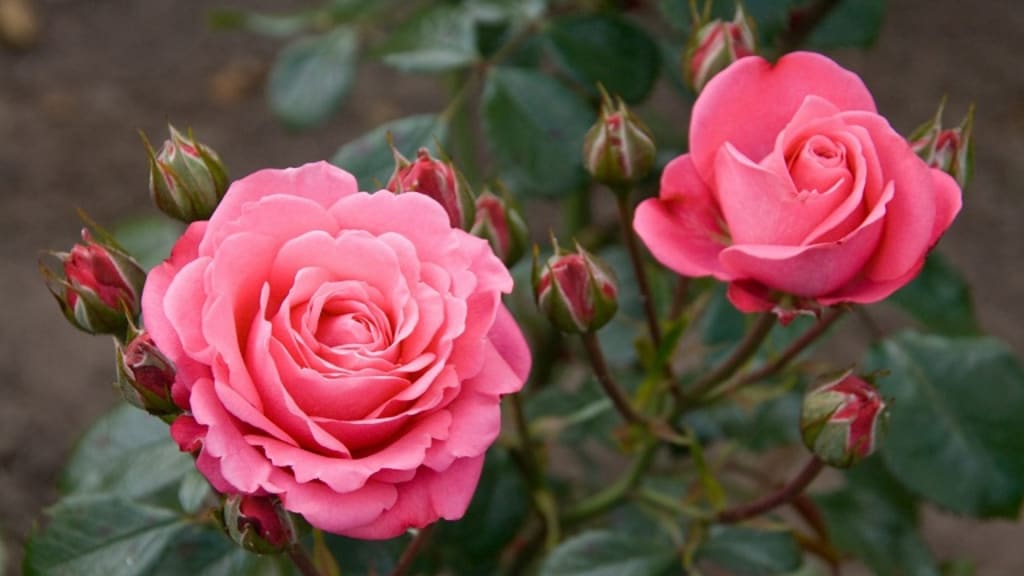
HOW DO WE PREPARE ROSE WATER AT HOME AND WHAT ARE ITS BENEFITS
The rose stopped being a simple flower offered as a gift, and became a symbol of beauty, health and freshness. Although rose petals began to be used in medicine, cosmetics and food hundreds of years ago, only recently have rose petals come to be in great demand in the pharmaceutical industry.
The healing power of the rose lies in the fragrance and petals rich in citric acid, flavonoids, saponosides, sterols, cyanine, fructose, malic acid, sucrose, tannin, vitamins A, B, C, D, E, P and K, as well as calcium, phosphorus, iron, volatile oil, geraniol and citonellol.
You will definitely like the scent of garden roses. But did you know that this perfume alleviates anxiety, headaches, helps you concentrate better and even banishes stress? In addition, rose essential oils, perfumes and room candles confer a state of harmony, fight insomnia and stimulate good mood. Rose petals are not only used to make creams, soaps, lotions, shower gels and lipsticks, but also to make perfumes.
SHORT HISTORY
The rose is by far the oldest and best known ornamental plant. The origin of the rose is lost before antiquity, somewhere on the border between history and mythology. Fossils of an ancestor of the rose that grew 35 million years ago, in a period when the human species did not exist, were discovered. The first roses close to the species known today are mentioned in China, 5,000 years ago. From here, they spread first to India, then to the Middle East.
A legend says that Alexander Macedon himself brought it, but, according to Herodotus, the mythical king Midas cultivated it for the first time in Greece, on European soil. The truth is somewhere in the middle and it seems that the rose spread in Europe through trade, through the Phoenicians and the Greeks.
A special development was experienced by the rose between the borders of the Roman Empire, here where it was said that this flower was born from the same white foam of the sea from which Venus, the goddess of love, was born. Roman gardeners knew methods of forcing the rose to bloom, they knew grafting and since then there have even been treatises on their cultivation, written by authors such as Columella, Varro or Plinius Secundus. Later, in the Middle Ages, the rose remains just as appreciated and is present as a symbol on the coat of arms of many noble families. Although the flower was always associated with purity and love, in 1455 it would know other meanings. During this period, it is at the center of the "30-year war", also called the war of the two roses.
BENEFITS OF THE ROSE
1. Rose water prevents skin aging, reduces and prevents the appearance of wrinkles and reduces the size of dilated pores. Due to the fact that it has the effect of softening the skin and provides firmness to the skin, it is very effective in reducing fine lines, but also the effect of sagging and wrinkling of the skin. Also, like other natural astringents such as orange blossom water and green tea, rose water has excellent qualities to slow down the skin aging process. If you use it as a make-up remover, to remove dead cells, you will find that your skin will be radiant.
2. Dry skin can be hydrated with the help of rose water, which you can use instead of moisturizing cream, and it also has a nourishing effect at the same time
3. Did you know that rose water is, at the same time, also a good disinfectant? It has the ability to destroy some bacteria, which are responsible for the appearance of certain skin conditions.
4. Rose water reduces the appearance of marks and scars on the skin, cleans the skin and removes dirt, excess sebum, and other polluting substances inside the skin pores. It can be used for all skin types, as it does not cause irritation. It helps to clean the pores clogged with sebum and impurities, which are the main reason for the appearance of acne and pimples. It acts as a purifying agent, but also as a toning lotion.
5. Rose water and skin conditions – Rose water stimulates blood circulation in the capillaries immediately under the skin, thus helping to reduce the appearance of small broken veins (cuperosis). It also maintains the pH balance of the skin. It stimulates the regeneration process and has a calming effect on acne, seborrheic dermatitis and eczema. The regular use of rose water has the effect of preventing these ailments, but also of calming them, if they have already appeared. It has the same action as rose essential oil (which is much stronger), helping to prevent and heal scars, but also small cuts and wounds.
6. One of the most well-known beneficial effects on the skin that rose water has is skin toning. Rose water is a natural astringent that tones the skin. Its regular use, every evening, before going to bed, has the effect of reducing dilated pores and preventing the appearance of wrinkles. It is the best solution to maintain the youthful appearance of your skin.
7. Rose water is also famous for its healing effects, but also for its antiseptic, antibacterial and anti-inflammatory properties.
8. Inflamed pimples will reduce in size if you dab the affected area with rose water. Moreover, the scars left behind by acne will fade and even disappear if you make a mixture of sandalwood essence, lemon juice and rose water, which you will apply to the skin in the affected areas.
9. Rose water can also be used to soothe insect bites, but also to soothe sunburned skin. To be even more effective in soothing the pain caused by sunburn, put rose water in a sprayer, put it in the refrigerator to cool, and then spray on the affected areas. In this way, the inflammation will be reduced and you will also prevent the appearance of blisters on the skin.
10. Rose water can remove redness of the skin (erythema) from irritated areas or those that have been exposed to excessive heat.
HOW TO PREPARE ROSE WATER
We need:
- Rose petals (preferably garden roses, those from the trade are mostly artificially dyed; If you still opt for the ones from the florist, choose the white ones).
- Still water.
- A glass jar or a ceramic container with a lid.
What we have to do:
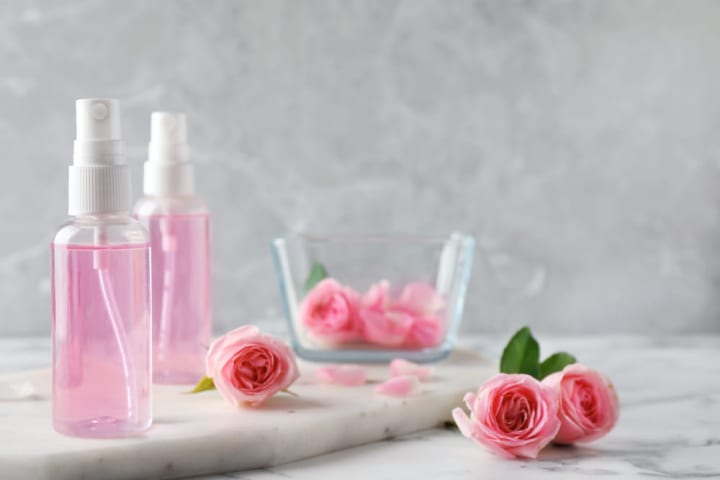
- To 1/2 glass of rose petals, add a glass and 1/2 of plain or tap water, but only if you have a filter.
- Place the petals in a glass or ceramic/porcelain container with a lid. - Add warm, not hot, water over the rose petals and let them cool to room temperature.
- After the water cools down, strain it into another glass or porcelain container with a lid.
- The water is kept in the refrigerator, but not more than 7 days.
About the Creator
MGS
Web Content Writer
No Word Comes Near Enough
The English language has its limits. I learned this when I became a student of the Bible and looked up the Greek and Hebrew definitions behind the Scriptures I loved. Some languages have so much more depth and power than the one I use to convey my thoughts. But, even so, I don't think any word could ever come close to describing this void and pain I am journeying through. I don't know how to swim through its murky waters.
By Shirley Belk6 days ago in Poets




Comments
There are no comments for this story
Be the first to respond and start the conversation.