
"Rise, Because You Can"
"The Silent Power of Believing in Who You Are"

For most of her life, Meera lived in the background of her own story.
She was the dependable one—the person who remembered birthdays, helped others study for exams, stayed late to clean up after events, and nodded along politely in conversations. But somewhere along the line, her quietness was mistaken for insignificance. People appreciated her, but rarely listened to her. They loved her help but never asked her opinion. Meera had dreams, but they were neatly folded and tucked away like letters never sent.
In her journal, she once wrote:
“I don’t want to be the echo of other people’s voices. I want to hear mine.”
But then, as always, she closed the book, shoved it into a drawer, and went back to blending in.
One day, while walking home from the library, she noticed a poster on the wall of a local studio. It was simple—orange and warm like the rising sun. In bold black letters it read:
RISE, BECAUSE YOU CAN
The Silent Power of Believing in Who You Are
She stared at it for a long time.
It didn’t shout at her. It didn’t command. It invited.
Something in her chest stirred—not loudly, but deeply. She snapped a photo of the poster and saved it to her phone as her lock screen. Every day, she saw those words. And every day, something within her grew a little stronger.
A few weeks later, her university announced a campus-wide initiative for student-led ideas that could improve mental well-being. They were accepting proposals, and the selected students would receive funding and mentoring to bring their ideas to life.
Meera stared at the email for hours. Her fingers hovered over the keyboard, thoughts tangled in fear.
Who would listen to me? I’m not a speaker. I’m not a leader.
But then her eyes drifted to her phone, where the same warm orange glow stared back at her:
“Rise, Because You Can.”
She took a breath and opened a blank document. Her idea was simple—a quiet room on campus where students could journal, reflect, draw, or just breathe. No pressure to perform. No talking required. Just a space to reconnect with themselves.
"She called it “The Still Room.”
When Meera submitted the proposal, she expected nothing. But to her shock, two weeks later, she was called in for an interview. And then came the announcement: her project was selected.
The day she stood on the small stage to present her vision, she trembled. Her voice was soft, but it did not falter. She spoke about how quiet people often carry the heaviest thoughts, how healing doesn’t always happen through noise, and how powerful it is to believe in yourself—quietly, steadily, silently.
The room was still when she finished.
Then came applause—not thunderous, but sincere. Some people stood. Some smiled through tears.
Months later, The Still Room opened in a quiet corner of campus. Students began to visit. Notes were left in the guestbook:
“Thank you. I finally felt heard—even in silence.”
“This place reminded me of who I am.”
“I didn’t know how much I needed this.”
Meera visited often, but never announced herself. She simply sat in the corner, grateful that something she once buried in silence now helped others find their peace.
Years later, the same orange poster still hung in her room.
Framed.
Not because it gave her the power—but because it reminded her she always had it.
And when young students came to her for guidance, nervous about their voice or their place in the world, she would smile and say:
“Power doesn’t always roar. Sometimes it whispers. And sometimes, the bravest thing you’ll ever do is to believe in who you are—even when no one else sees it yet.”
Then she’d point to the framed words:
Rise, Because You Can
The Silent Power of Believing in Who You Are
About the Creator
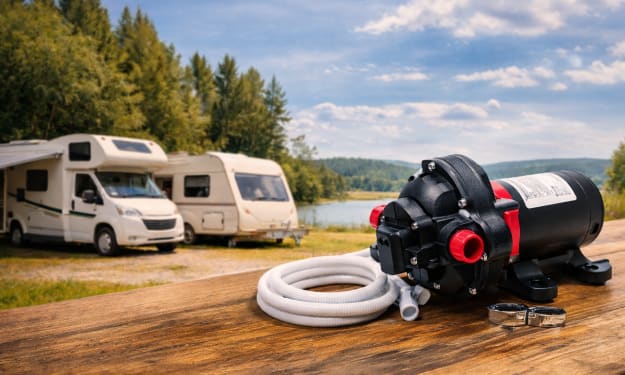
How to Choose the Right 12V Water Pump for a Campervan or Caravan (Flow Rate, PSI, Noise & Cycling)?
A good 12V pump should feel simple: you open the tap, water comes out, and the pump doesn’t annoy you in the background. You don’t need technical knowledge to choose well. You just need to understand four things:
By Bishal Khadka7 days ago in Lifehack
I Stopped Chasing Money—And This One Lifehack Quietly Made Me Richer
For years, I believed making money was about working harder, longer, and pushing myself to the limit. I thought if I just stayed busy enough—if I said yes to every opportunity and filled every hour of my day—money would naturally follow.
By Lukáš Hrdlička4 days ago in Lifehack



Comments
There are no comments for this story
Be the first to respond and start the conversation.