
Practical Drills for the Home Defense Shotgunner
"For the homeowner on a budget, the shotgun provides a valuable and powerful tool to protect their loved ones."


In this modern era, tactical rifles and carbines are in vogue and yes there are certain times where the carbine specifically in 5.56 is the better choice for the home, but everyone should learn to run a pump gun. You see, for many people a shotgun is a better choice as you can usually find a good one for much less than you would pay for an AR or other modern sporting rifle. Guns such as the Mossberg 590 or 500, Bennelli Nova and SuperNova, and the Remington 870 will give you a good working gun straight from the box with enough money left over to buy plenty of birdshot for practice and a good mix of slugs and buck. The value priced AR's may or may not run from the box and may or may not have good iron sights on them. Either way, the shotgun will be quicker to present to the target than AR iron sights at the close ranges found in a home.
In certain homes, an AR will be safer for your neighbors than a shotgun—a 556 firearm loaded with something like Speer Golddots or Hornady Tap will serve you well and pose less risk to the neighbors but round for round won't have the same terminal effect as a good load of buckshot. There are many arguments to be made for the Modern Sporting Rifle, the shotgun, and the handgun in the home defense role. I like them all but have a preference for the shotgun.
After carrying and using Mossberg 500's, M4's, Mk18's, M14's, and numerous other small arms in Iraq and Afghanistan, I have developed a strong love of the 12 gauge pump for Close Quarters Combat. The shotgun simply works. A good shotgun from 0-45 meters can be relied upon to get the job done very efficiently. Furthermore, it is a versatile system and versatility is always good. Whether we are talking about shotguns, mortar systems, or grenade launchers the ability to handle multiple tasks with a change of ammo should not be discounted.
For the homeowner on a budget, the shotgun provides a valuable and powerful tool to protect their loved ones. Some loads that I have found to be excellent in this role are Federals 00 Buck Tactical LE loads with flight control wad, Remingtons 8 pellet 00 Law Enforcement load that comes in 25 round boxes and is marked reduced recoil, Hornady TAP 00, Remington Express 00 9 pellet, Federal Classic 00 9 pellet. These are just some of the very good choices that are out there today. I have found out of my own shotguns that the Federal patterns are the tightest, followed by Hornady, then the Remington 8 pellet load.
I haven't noticed much difference in the patterns between the Federal 8 pellet and 9 pellet Law Enforcement loads at distances 25 meters and in so I prefer the 9 pellet. This ammo is also available in the Personal Defense line. The Federal Premium 00 loads with flight control are also excellent as is the Federal Classic 000 2 3/4 load, even though it lacks the flight control wad. Remington also has the TAC-8 Law Enforcement load that I have not tried nor do I know if there is any difference between it and the Remington Reduced Recoil Law Enforcement load.
Other rounds to be considered are Remington's 2 3/4 12 pellet 0 buck, Federal LE132 #1 Buck round with flight control. Another round that might be considered depending on your home's construction are the Winchester PDX 1 Defender. Featuring a 1 oz slug and three copper plated 00 pellets, it will definitely make short work of a close range threat. Any of the loads previously mentioned would be excellent choices for your home defense gun. For training, the Winchester "Military" 00, Sellier & Bellot, Fiocchi, Wolf, and Estate loads work great and could be pressed into service if need be for serious work.
Essentially any Buckshot load of #1 Buck or larger will suffice if it patterns well and you can actually purchase it. I would avoid overly open patterns and anything other than 2 3/4 inch loads for home protection. For my own home defense shotgun I keep it stoked with Federal Tactical LE12700 full power 9 pellet loads with three Remington Express 00 and two Federal Vital Shok Truball Rifled Slugs as back up on my homemade sidesaddle. Depending on where you live, your needs may vary. When I used to live in a much more rural setting, my sidesaddle and the round in my chamber were Brenneke K.O. slugs as I was concerned with threats of the ursine variety in addition to two legged ones.
No matter what gun you choose—pistol, rifle, or shotgun—for home defense, it is essential that you regularly practice and train with your firearm. I don't mean just firing a few rounds and calling it good. It is even more essential if you are running a pump gun or handgun to get regular practice in. Most of your training with your shotgun can be done with birdshot. The Winchester or Federal 100 round value packs of #8 or #7 1/2 birdshot provides you with a good training option. There are many excellent drills you can find for your shotgun on Lucky Gunners website that are geared to home defense. Practice these and ignore the mall ninja talk you may hear. Attending a course by a reputable instructor, even if you have been duck hunting your entire life, will provide you that many more tools in your tool box.
The shotgun is a thinking man or woman's gun for self defense, but one that, when run properly and using good tactics, will carry you through any realistic home defense scenario.
Practical Drills
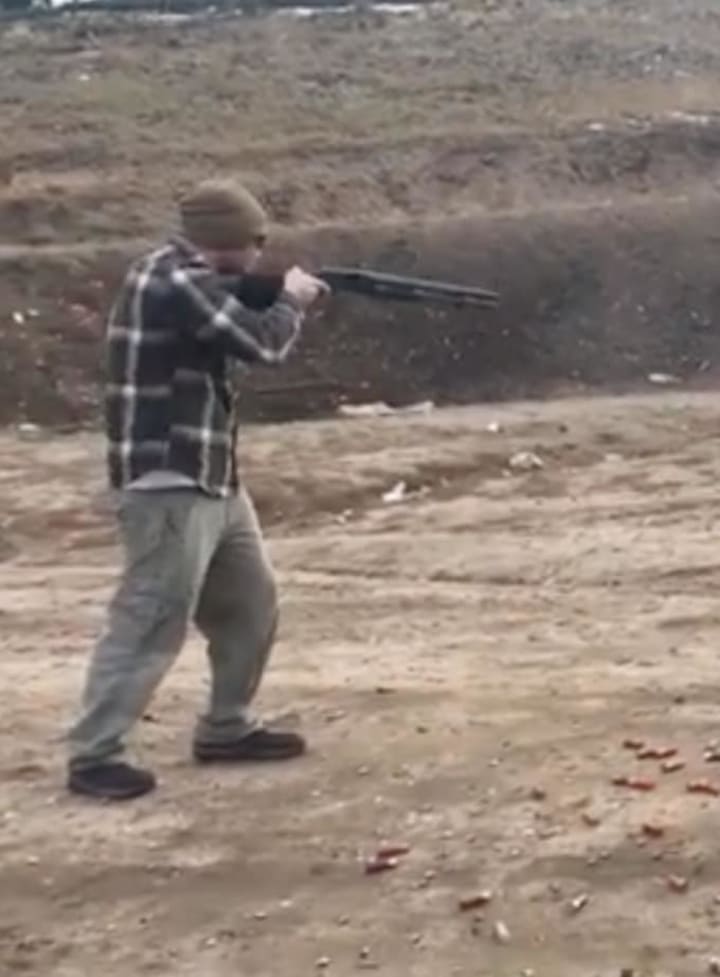
Although the home defender is unlikely to run his shotgun dry, it is still essential to practice drills like the emergency reload as it builds confidence and weapons handling skills. As soon as it is discovered that there are no more rounds in the magazine, the shotgunner should lock the breach open. From there, using their non-firing hand, they should locate a fresh round from their side saddle, butt cuff, or pocket. This is a compelling reason to have spare ammo attached to your shotgun as it is likely that this will be all the ammo you have in the fight.
From here, either overhand or underhand, simply place the round into the chamber. Do some experimenting and see which technique works best for you. Immediately close the action.
From here, you will reacquire the threat while scanning for any new or unseen threats. If needed, engage again. If no further engagement is necessary while covering the threat, begin reloading your magazine. This leads into the next drill, we will discuss.
Shoot one, load one.

For this drill, you will fire a round at the target, work the action to chamber a new round, make sure you don't need to fire again, and then immediately load a new round into your magazine while keeping the muzzle orientated towards the threat. Another version of this drill is shoot two load one, or shoot two load two, which is as simple as it sounds. The shotgunner must be cognizant of the fact that the shotgun doesn't have a huge reserve of ammunition and must be constantly fed.
Mounting the Gun
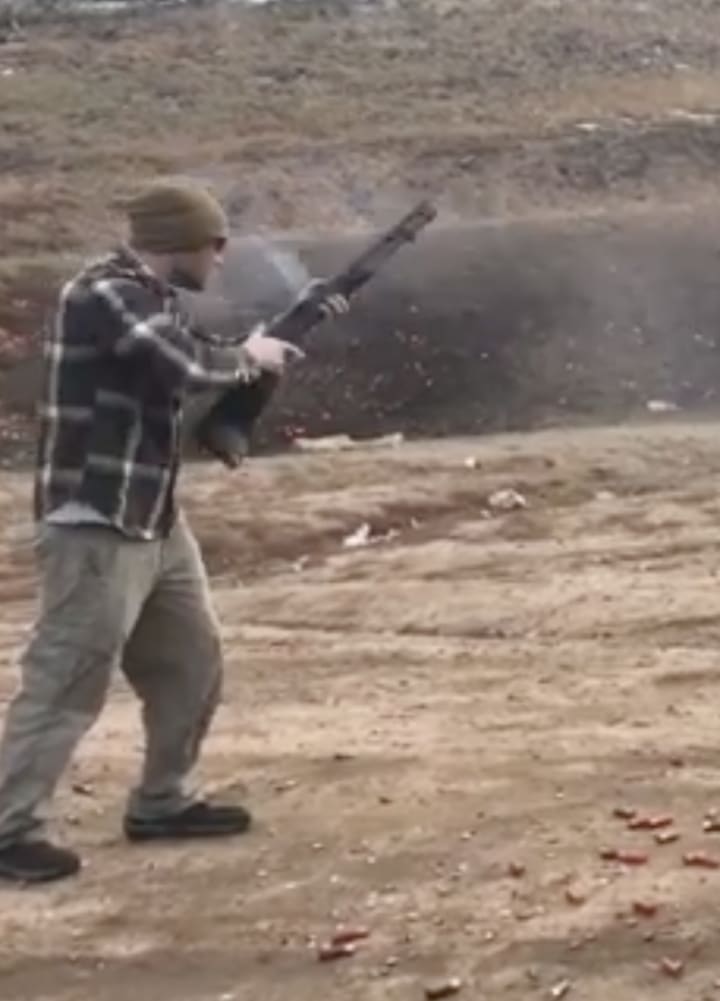
Mounting the gun should be practiced and the muzzle as quickly as possible presented to the target. Just like drawing a handgun, this is all about economy of motion. The ultimate goal is to get the muzzle on the target with as little wobble and as smooth and fast as possible. This drill is good practice before shooting as well as after conducting other training drills before leaving the range. You should also practice this drill where you engage the target and where you don't engage the target. That way, the shotgunner does not become conditioned to always engage the target. This is because the home owner may not always need to actually fire his shotgun. It is also good to introduce verbal commands into this drill.
Multiple Target Engagements
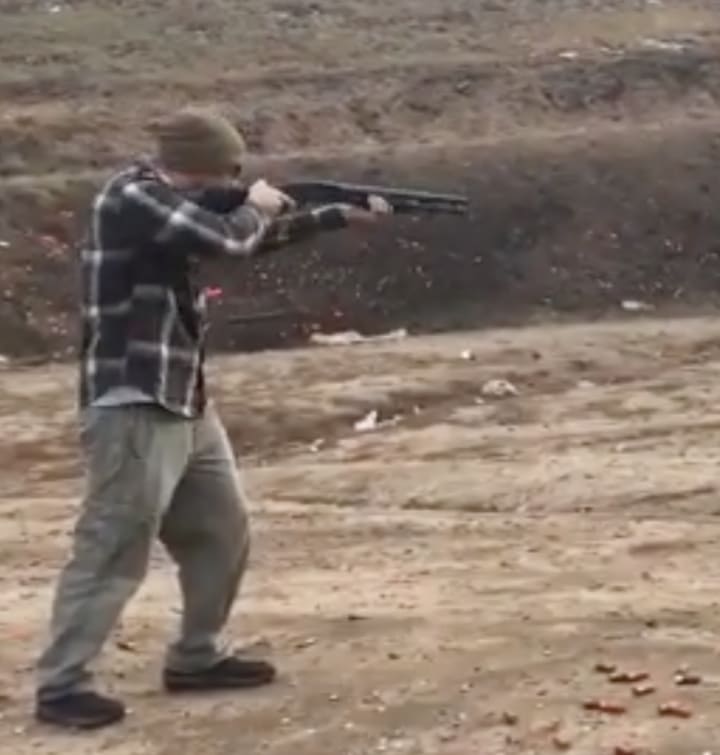
Another good drill for the homeowner to practice is engaging multiple targets quickly transitioning from one to another. This drill can be done with paper or steel targets depending on safety constraints. All of these drills should be practiced by themselves and integrated into each other as well. All of these drills can be practiced with snap caps after you ensure that there is no way any life ammo can find its way into the gun. However, live fire is still a must to get used to the recoil and noise of your shotgun. All of these drills can also be adapted to a semi auto shotgun. These drills are not all inclusive nor are they going to turn you into a gunslinger. They will, however, make you intimately familiar with the operation of your shotgun and give you a building block for further training. Although not directly related to these drills, shooting clay birds with your home defense shotgun will also help build familiarity and allow you to practice shooting moving targets and multiple moving targets with your shotgun. Drills such as select slug, although helpful for law enforcement or military users, are not really needed for the home defender. Above all else, train as you fight and practice, and don't baby your pump gun when working the slide.
About the Creator
Paulgman
Father, Fighter, Proud husband, sometimes writer. Student of the world observer of humanity.
10 Simple Habits for Strong Teeth and Healthy Gums
Maintaining good oral health is essential not only for a bright smile but also for overall well-being. Your mouth is the gateway to your body, and poor oral hygiene can lead to various health problems such as gum disease, tooth decay, and even infections that may affect other parts of the body. Fortunately, taking care of your teeth and gums does not require complicated routines. With a few simple daily habits, you can keep your mouth healthy for years.
By Nenci Gajera 5 days ago in Lifehack
How AI-Native Browsers are Redefining Digital Freedom and Productivity in 2026
The Evolution of the Modern Browser By 2026, the concept of a web browser has expanded far beyond its original purpose of simply loading web pages. Over the past decade, the internet has evolved into a highly dynamic environment where users manage businesses, automate workflows, and interact with complex digital ecosystems directly from their browsers.
By Shahid Sipra2 days ago in Lifehack




Comments
There are no comments for this story
Be the first to respond and start the conversation.