
Most People Who Have Trouble Sleeping Do Not Consider This One Simple Thing
And it's one of the most important factors to a good night's rest


I've been fascinated with sleep and sleep research since I was a teenager.
Oddly enough, I've always wanted to be a participant in sleep studies.
When I used to travel long distances by bus or train, I've had people wake me up to tell me how well I sleep! Strange, but true.
There have been only a few times in my 45-year life that I've been unable to sleep more than a few hours at a time.
The last time was during the first 2 months of the pandemic. I had an outrageous amount of stressful things to do and they all had a relatively short time limit. The worst was finishing the last 2 months of my bachelor's degree.
So much was going on, the fate of the immediate future was completely unknown and I absolutely hated it!

Since then, I've had no problems sleeping well, although I haven't always gotten sufficient sleep for various reasons.
However, I have a few good friends who have trouble sleeping and know of many people who struggle with staying asleep once they do finally fall asleep.
I've suggested lavender essential oil, massage, yin yoga, chamomile tea, melatonin pills, and even acupuncture (best for pain management but can help with other ailments).
Some use medicinal marijuana to help them sleep.
One friend was on the medication Ambien, but her doctor told her that she needed to stop after 3+ years of taking it.
It's still a challenge for her to fall asleep and she follows just about all of the recommendations - same as the ones I've read over the years.
"Ambience can affect your sleep quality too. Make sure your bedroom is as comfortable as possible. Ideally you want a quiet, dark, cool environment."
I shared the part about a "quiet, dark, cool environment" because that's the closest anything I've read over the past 30 years has come to mentioning TEMPERATURE.
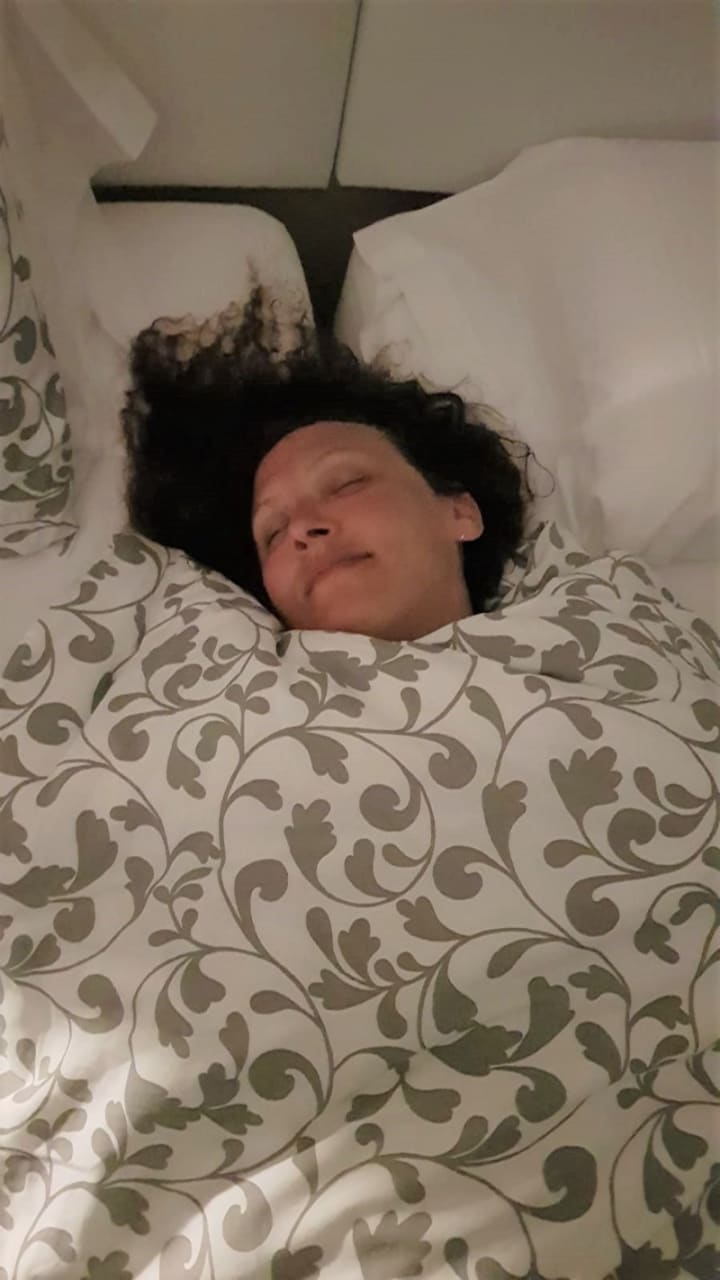
Ironically, the temperature of the bedroom has been a subject of great debate between my partner and me for quite a while since he likes to sleep in a cooler climate with "fresh air" around his nose, whereas I am lulled to sleep with a smile on my face when I'm warm and naked under the covers.
Last night, he and I were listening to a podcast that has been fascinating and enlightening to both of us:
It's a 4-hour podcast, but you can listen to the first 45 minutes or so via the link I shared or on Spotify.
Fairly early on, Walker, someone who has trouble sleeping at times, mentions the fact that TEMPERATURE plays a major role in our quality of sleep.

I was and am still floored by this fact, so, of course, I did some digging and look what I found:
The temperature of your bedroom can make a significant difference to your sleep quality. A National Sleep Foundation poll found that cool room temperature was one of the most important factors in getting a good night's sleep, with as many as four out of five respondents saying this was important to them.
The best bedroom temperature for sleep is approximately 65 degrees Fahrenheit (18.3 degrees Celsius). This may vary by a few degrees from person to person, but most doctors recommend keeping the thermostat set between 60 to 67 degrees Fahrenheit (15.6 to 19.4 degrees Celsius) for the most comfortable sleep.
Our bodies are programmed to experience a slight dip in core temperature in the evening. Turning the thermostat down at night may help with temperature regulation and signal your body that it's time for bed.
I'm not willing to shell out the money for one quite YET....However, did you know that there are now "smart beds" that can help with temperature regulation, among a host of other things, while you sleep?!
Considering how much of an impact our quality and quantity of sleep has on our quality AND QUANTITY of life (yes, better sleep helps us live longer), I strongly recommend taking this information seriously.
And to all a good night…

About the Creator
Marble Floor or Tile Floor: Which One Actually Works for Your Home?
You're renovating your home, the walls are done, the furniture is picked, and then you hit the floor decision. Suddenly you're standing in a showroom holding two samples: one gorgeous slab of marble and one sleek porcelain tile, completely stuck between choosing a Marble Floor or Tile Floor.
By Brijesh Agarwat3 days ago in Lifehack
Zojirushi BB HAC10 vs BB SSC10: Which One Should You Buy?
Choosing between the Zojirushi bb hac10 vs bb ssc10 can feel confusing when both promise great homemade bread in a compact size. I like how each model focuses on small 1-pound loaves, which fit typical U.S. households and reduce waste.
By Mohammed mamun6 days ago in Lifehack
Two Grumpy Old Men Solve the Problem
Marty and Steve were two grumpy old men who lived together. They had known each other for years. Marty had been a bachelor all his life. Steve said it was because no one could stand to ever live with. Marty’s standard reply was “Well, you are, so what sort of a moron does that make you!”
By Calvin Londona day ago in Humor



Comments
There are no comments for this story
Be the first to respond and start the conversation.