
Mindful Productivity at Work: What I Tell My Team When Everything’s on Fire 🔥 (Without Burning Out)
🧠 Can mindful productivity reduce burnout and boost results at work? Absolutely — here’s how I’ve led teams through chaos without burning out.

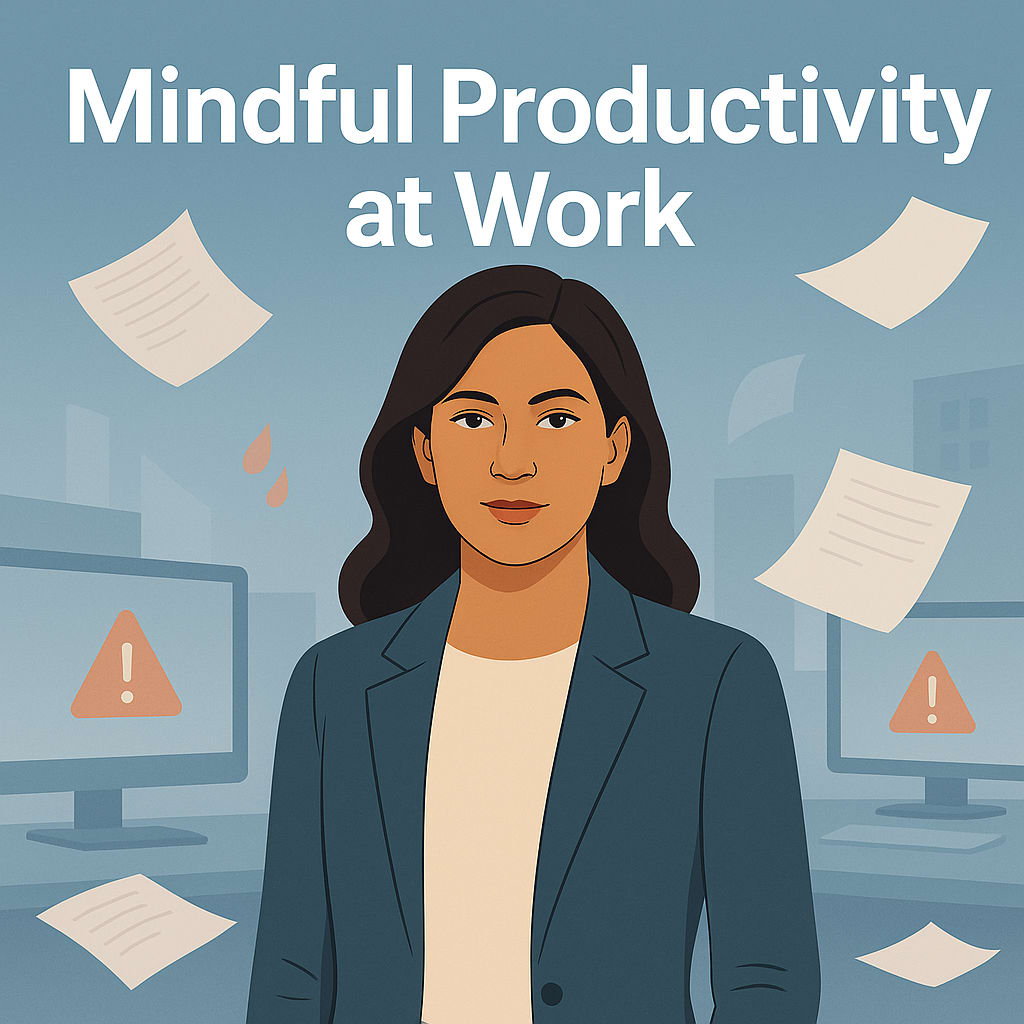
Let’s be real — whether you're a fresh hire or the one steering the ship, pressure isn't a glitch — it’s the entire operating system.
The inbox is groaning, deadlines are marching toward you like stormtroopers, and that one “low priority” task? Now it’s a five-alarm fire. Meanwhile, your brain feels like it’s stuck buffering on dial-up.
👋 Hi, I’m Deepika. I’ve spent 7+ years leading global teams across healthcare and tech, where pressure isn’t seasonal — it’s structural.
I still remember my first week managing a 40-member team — one client escalated, two employees quit, and I barely had time to eat. Back then, I thought stress was the price of success. Turns out, it was the cost of not building systems.
Early in my career, I believed staying calm meant I was slacking.
Now I know: stress isn’t the villain. Reactivity is.
If I let pressure shove me into panic mode, nothing meaningful gets done. No creativity. No clarity. Just survival mode.
The old me used to go into overdrive: skipping breaks, taking work home (mentally and literally), pushing through without pause. The result? Decision fatigue, short tempers, mediocre outcomes.
Now I know better. Mindful productivity isn’t about working less — it’s about working with clarity, not chaos.
Here’s what I’ve learned after managing high-stakes projects and 210+ team members through chaos, change, and client curveballs:
✅ 1. Calendar > Chaos
If it’s not on my calendar, it doesn’t exist. That goes for deliverables and downtime.
• 15 min buffers? Scheduled.
• “Think” time before a strategy call? Scheduled.
• Even breathing room after difficult 1:1s? Yep, scheduled.
🧠 Productivity isn’t about packing your hours. It’s about protecting your brain’s bandwidth for the work that actually matters.
Since I started coaching teams on time blocking and bandwidth budgeting, our error rate dropped 19%, and no one feels guilty taking a breather.
✅ 2. Swap Panic for Process
Ever had a moment where a VIP client needed perfection, and panic started to take over? Me too.
Early in my career, I'd spiral:
“Oh no, we can’t afford a single mistake — what if we lose this client?”
Now, I slow the thinking down. Instead of letting panic take over, I teach my team to ask:
• What does 100% actually look like?
• What’s already working?
• What’s in our control today?
🧠 “You can’t solve chaos with speed. You solve it with systems.”
— Something I remind myself (and my team) weekly.
This habit builds critical thinking, emotional regulation, and consistency, which is exactly what high-stakes work demands.
✅ 3. Lead the Humans, Not Just the Metrics
I once had a team member message me at 11 PM:
“I know we’re in crunch mode, but I need a break — mentally I’m not okay.”
She didn’t lie. Didn’t fake a fever.
She trusted I’d care about the person, not just the performance.
That trust? It didn’t lower standards — it raised them.
• Because when people feel safe, they show up fully.
• When they feel seen, they step up more often.
🤝 Compassion and accountability are not opposites — they’re teammates.
✅ 4. Discipline That’s Gentle, Not Ruthless
Let’s be clear — this isn’t about being “soft.”
My team knows the standards are high. But they also know:
• Mistakes are discussed, not punished.
• Feedback is for growth, not guilt.
• Performance matters — but people matter more.
Mindful productivity means holding people (and yourself) to excellence — while also holding space for real life.
A Real-Life Reminder:
Just last quarter, we had a surprise escalation that could’ve derailed a major contract.
Instead of micromanaging or panicking, I paused.
• I reviewed what we had.
• Delegated with clarity.
• Took 15 minutes to breathe — and let my team breathe.
We fixed it. Fast. With no burnout, no blame game, and no 2 a.m. emails.
⚡ TL;DR: Mindful productivity isn’t about being soft — it’s about staying sane while staying sharp.
Your best work won’t come from a panic spiral. It comes from systems, clarity, and the kind of leadership that says:
“I’ve got your back — now let’s handle this like pros.”
_______________________________________________
💬 Let’s Talk
• What’s one practice that helps you stay productive under pressure?
• Ever worked in a culture that rewarded burnout? How did it feel?
_______________________________________________
🛠 Coming Next in This Series:
"What I Learned From Leading a Team Where Everyone Was Tired" — subscribe on [Vocal] or [Medium] to stay updated.
_______________________________________________
💼 For Hiring Managers & Collaborators:
7+ years in cross-functional leadership | Healthcare, Ops, and Tech
Now open to global project or team roles in Germany, UAE, or remote
📬 DM me on LinkedIn or email [[email protected]]
_______________________________________________
Written by Deepika — a global team leader building mindful teams and sustainable operations. Let’s connect.
About the Creator
Deepika D.
✍️ Writer at Vocal & Medium | Sharing bold truths on careers, mindset & leadership. New stories weekly — for curious minds who love real talk & transformation.
🔗 Explore more stories & my portfolio → linktr.ee/unfilteredbydeepika
Keep reading
More stories from Deepika D. and writers in Lifehack and other communities.
I Lost Everything at 30. Here are the 3 Brutal Lessons Life Taught Me.
Last year, I considered giving up on everything - even life itself. I felt like a complete failure. No matter how much effort I poured into my work, my ambitions, or my personal life, nothing seemed to stick. Every application, every attempt, every carefully laid plan - all ended in painful rejection.
By Deepika D.4 months ago in Lifehack


Comments (1)
I can really relate to this. I've been in similar high-pressure situations at work. Like you said, stress isn't the problem, it's how we react. I used to be all over the place when deadlines loomed. Now, I'm big on time blocking. It's amazing how much more focused and productive I am. I'm curious, how do you deal with unexpected curveballs that throw off your carefully planned schedule? And do you have any other tips for staying calm under pressure?