
Medical Loans vs Health Insurance: What You Need to Know
This article discusses the differences between health insurance and medical loans, when each fits best and how they can complement your care costs.


When a medical emergency comes up, you typically have no choice but to pay the medical bill incurred, whether you have the funds to pay it or not. With the cost of healthcare in the US being what it is, you could rack up hundreds of thousands of dollars in medical expenses in no time. That’s why most people rely on their health insurance or medical loans to cover the cost. As a regular citizen looking for access to quality healthcare and to have your medical bills covered, which funding option is better between health insurance and medical loans? Let’s discuss.
Medical Loans vs Health Insurance: Definition
A medical loan is a personal loan taken out to cover medical expenses. The loan is disbursed in a lump sum to a borrower’s checking account, and they are obligated to repay it in monthly installments over a preset loan term. You don’t usually need collateral or a co-signer to apply for medical loans, which makes them a relatively accessible option for financing healthcare costs.
Health insurance is a type of coverage plan taken out to specifically cover medical costs. It requires you to pay a regular premium to the insurer, and in return, they help to cover your medical care when needed. Besides the monthly premiums, you’re also required to copay some of the medical expenses, depending on the insurance plan you pick, since not all medical expenses are eligible for coverage.
Which is Better? Medical Loans vs Health Insurance
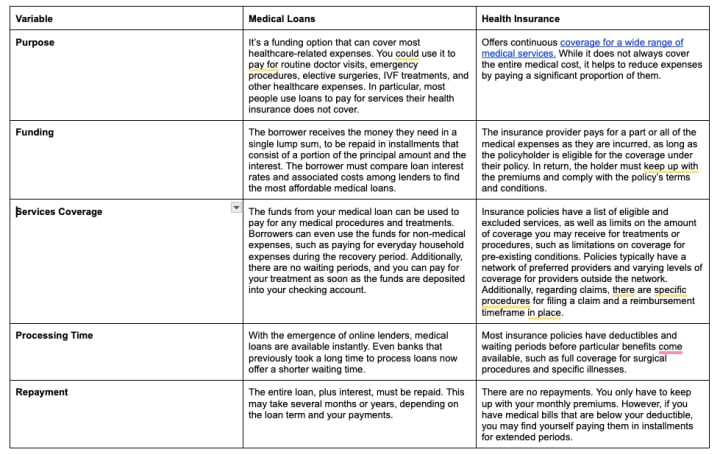
To decide which is the better option, let’s look at their key differences:
How to Choose Between Medical Loans vs Health Insurance

Medical loans and health insurance serve the same purpose of paying medical bills, but they are starkly different, as shown in the table above. Your decision on which option to take depends on what you want to achieve, because there are situations where one approach may be more useful than the other. For example, it’s best to use your health insurance when the treatment you’re seeking is available in a hospital within the network or when your coverage is adequate to meet all the expenses you will incur. Health insurance is ideal protection against unforeseen medical expenses, such as being in an accident. It can also help with planned surgeries and other expensive procedures that are covered under your policy.
A medical loan, on the other hand, provides ready cash to pay for urgent medical services and treatments, especially when your insurer won’t cover you, such as when the healthcare services you need are available at a hospital outside your network or during the waiting period, as you’re waiting for an insurance policy to be activated. A loan can also help cover your living expenses when you’re undergoing treatments or procedures.
Medical Loans and Health Insurance Are Complementary
From the comparison, you can see that these options aren’t mutually exclusive. Health insurance policies cushion you from some of the healthcare expenses, especially when the costs of services are significant. In contrast, medical loans offer you the flexibility and independence to access the best care when you need it. Unfortunately, people shy away from taking medical loans, worried that their health condition or credit status may disqualify them from getting a loan.
However, you may qualify for a loan even if your treatment or procedure is elective and not as ‘serious.’ You may also qualify for a loan with bad credit. So, can you get plastic surgery if you have bad credit? Yes, you can! So, find a suitable medical loan lender, tell them your intentions, and they will come up with a loan offer for you. In the meantime, your health insurance will keep you covered for life’s surprises, and let you see your in-network doctors when it matters most.
About the Creator
Aaron Smith
Aaron is a content strategist and consultant in support of STEM firms and medical practices. He covers industry developments and helps companies connect with clients. In his free time, he enjoys swimming, swing dancing, and sci-fi novels.
Keep reading
More stories from Aaron Smith and writers in Lifehack and other communities.
How to Create Impactful Merchandise Using Digital Printers
Digital printing has taken off in recent years and is now a mainstream option for creating merchandise with high-quality designs. Due to their versatility, digital printers are growing in popularity, enabling everyone from large-scale manufacturers to hobbyists with desktop printers to effortlessly enhance the look and appeal of their products.
By Aaron Smithabout a year ago in Lifehack
Top Things to Do in North Potomac for Families
Known for its quiet neighborhoods and welcoming atmosphere, North Potomac appeals to families who value space, safety, and a strong sense of community. Whether you are new to the area or have lived here for years, there are plenty of activities that families can enjoy together.
By House Doctor6 days ago in Lifehack
Ludacris and Nelly draw backlash over bookings at MAGA-coded music festival
Ludacris and Nelly headlining a mostly right-wing event is good for them. It’s also great for the genre of hip hop. The two rap veterans have showcased their talents on other stages. Why can’t they perform for mostly MAGA folks and grab that bag?
By Skyler Saunders3 days ago in Beat


Comments
There are no comments for this story
Be the first to respond and start the conversation.