
Mastering How to Clean a Plastic Cutting Board Safely
Practical Ways to Sanitize and Protect Your Plastic Cutting Board

Plastic cutting boards are everywhere. They’re affordable, lightweight, and durable compared to fragile wooden boards. But they also need proper care. If you don’t know how to clean a plastic cutting board, bacteria, stains, and odors can accumulate faster than you think.
In this guide, you’ll learn how to clean a plastic cutting board step by step, how to disinfect it, natural cleaning options, when to replace it, and why some alternatives may serve you better.
What Makes Plastic Cutting Boards Popular
Plastic cutting boards are widely used because they’re practical, budget-friendly, and easy to maintain. For many households, they strike the right balance between convenience and function.
- Affordable and easy to replace
- Lightweight and simple to move around
- Dishwasher safe in many cases
- Less likely to warp from moisture compared to wood
- Available in different colors to help separate food types
Despite their benefits, plastic boards scratch easily. Grooves trap food and moisture, encouraging bacteria. This is why knowing how to clean a plastic cutting board properly is essential for hygiene and safety in your kitchen.
Plastic boards seem convenient, but they can hide bacteria in cuts. Learning how to clean a plastic cutting board thoroughly prevents odors, extends its lifespan, and keeps your kitchen safe for preparing everyday meals.
Step-by-Step: How to Clean a Plastic Cutting Board

Keeping your board clean isn’t complicated, but it does take consistency. Follow these steps to learn how to clean a plastic cutting board effectively.
After Every Use
Wash with hot, soapy water using a sponge or brush, scrubbing every surface, including grooves. Rinse thoroughly and dry fully. Knowing how to clean a plastic cutting board this way prevents mold, bacteria, and lingering odors.
After Raw Meat or Seafood
Disinfect immediately. Mix one tablespoon of unscented bleach per gallon of water. Let your board sit for one minute, rinse thoroughly, and dry. If you want a gentler option, hydrogen peroxide or white vinegar works too.
Remove Stains and Odors
Plastic often absorbs odors. To restore freshness, spread a baking soda paste, or combine lemon juice with coarse salt. Let it sit for 10–15 minutes, scrub, and rinse. For tough stains, try hydrogen peroxide or a diluted bleach soak.
Inspect Regularly
No matter how well you know how to clean a plastic cutting board, some damage is permanent. If deep grooves, cracks, or warping appear, it’s time to replace your board.
Disinfection Techniques & Natural Methods
If bleach feels too harsh, natural cleaning solutions are effective, safer for frequent use, and gentle on the environment. They still disinfect well while reducing chemical exposure in your kitchen:
- Vinegar soak – Mix equal parts white vinegar and water, then soak the board for 10–15 minutes. Vinegar naturally kills many types of bacteria and also helps neutralize strong food odors.
- Hydrogen peroxide (3%) – Pour directly onto the surface, allow it to sit for several minutes, then rinse with hot water. This option works well after handling raw meat or seafood.
- Baking soda paste – Combine baking soda with a little water to form a thick paste. Spread it over stained areas, let it sit, scrub gently, and rinse to lift stains and lingering smells.
These natural cleaning methods are excellent if you’re concerned about harsh chemicals, but still want to know how to clean a plastic cutting board thoroughly and safely for everyday use.
Best Practices & Common Mistakes
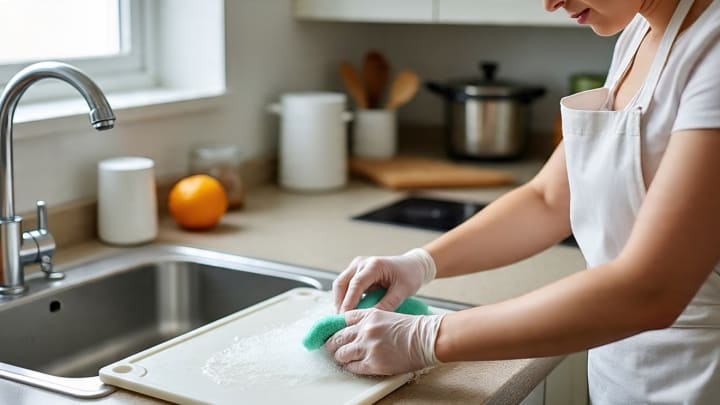
Even if you already know how to clean a plastic cutting board, small mistakes in everyday use can still make it unsafe. Following best practices ensures your board stays sanitary and lasts longer:
- Don’t leave food residue behind – Leftover particles feed bacteria and cause odors to set in. Rinse and scrub your board immediately after use for the best results.
- Use separate boards for raw meat and produce – Cross-contamination is one of the biggest risks in the kitchen. Keep one board for proteins and another for vegetables or bread.
- Avoid abrasive cleaners or steel wool – Scratching the plastic surface creates deeper grooves where bacteria can hide. Stick with soft brushes or sponges for gentle yet effective cleaning.
- Check dishwasher safety first – Not every plastic board can handle high heat. If your board isn’t labeled dishwasher safe, stick to hand washing to prevent warping or damage.
- Always dry thoroughly before storing – Moisture trapped in grooves encourages mold and bacterial growth. Air-dry upright or pat completely dry before putting the board away.
By practicing these habits, you’re not just learning how to clean a plastic cutting board, but also protecting your food preparation surfaces from long-term damage and hidden bacteria.
Why Some Alternatives Might Be Better
Plastic cutting boards are convenient and inexpensive, but they’re not always the best long-term choice. Knife cuts quickly create grooves that trap food and bacteria, making the board harder to clean properly. Even with good care, some germs can remain.
Another drawback is microplastic shedding. Over time, small bits of plastic can wear off into food. While often unnoticed, many cooks prefer to avoid this risk.
That’s why alternatives like titanium, stainless steel, or premium wood are gaining popularity. They’re more durable, non-porous, and easier to sanitize. If you want a non toxic cutting board with zero risk of microplastics, these options are safer upgrades.
ChopChop USA Premium Cutting Boards
Not all cutting boards are created equal. ChopChop USA Cutting Boards combine advanced materials with thoughtful design, giving you a safer and longer-lasting alternative to traditional plastic or wooden boards.
ChopChop USA Titanium Cutting Board

The ChopChop USA Titanium Cutting Board is designed for performance, hygiene, and long-term durability. Here’s why it’s a kitchen essential:
- Ultra-Durable – Won’t warp, crack, or deteriorate.
- Naturally Antibacterial – Non-porous surface resists bacterial growth.
- Effortless Cleaning – Just rinse, wipe, or run through the dishwasher.
- Gentle on Knives – Softer than steel, preserving knife edges.
- Non-Toxic – No microplastics or hidden chemicals.
- Cost-Effective – Lasts far longer than wood or plastic.
- Smart Investment – Combines safety with premium quality.
- Stylish Design – Sleek look that suits any modern kitchen.
For cooks who want the safest and most hygienic option, this is an ideal upgrade.
ChopChop USA Stainless Steel Cutting Board

If you prefer steel, the ChopChop USA Stainless Steel Cutting Board offers similar benefits with unmatched strength.
Key Benefits
- Incredibly durable—no warping or cracking
- Antibacterial surface for maximum safety
- Easy to clean with water or a dishwasher
- Knife-friendly despite its strength
- Zero risk of microplastic contamination
- A budget-friendly long-term solution
What Makes the ChopChop USA Cutting Board Stand Out
These boards feature an antibacterial cutting board surface that resists bacterial buildup and keeps your kitchen safer. The non-porous finish prevents odors and stains, while medical-grade stainless steel ensures they are lightweight, durable, and reliable for daily use.
When to Replace Your Plastic Cutting Board
Even when you know how to clean a plastic cutting board correctly, it won’t last forever. Over time, wear and tear can make your board unsafe, even with the best care. It’s important to replace your board if you notice:
- Deep grooves or cracks – These cuts trap food and bacteria in places you can’t scrub clean, no matter how hard you try.
- Persistent odor or discoloration – If strong smells or stains remain after thorough cleaning, the board’s surface may already be compromised.
- Warping or melting from dishwasher use – High heat can bend or weaken the plastic, making it unstable on countertops.
- Signs of plastic shedding – Tiny plastic shavings from knife cuts can mix with food, which is both unappetizing and unsafe.
Replacing your board at the right time prevents hidden bacteria from contaminating your meals. A fresh cutting board keeps your food safer, makes cleaning easier, and gives you a smoother, more enjoyable cooking experience.
Conclusion
Learning how to clean a plastic cutting board isn’t complicated, but it requires consistency. Wash after each use, disinfect after raw meat, remove stains regularly, dry thoroughly, and replace when damage appears.
If you’re ready for a healthier upgrade, ChopChop USA’s titanium and stainless steel boards deliver long-lasting durability, hygienic surfaces, and modern design. A clean cutting board means safe, delicious meals—and peace of mind every time you cook.
FAQs
Is bleach safe to use on plastic cutting boards?
Yes, diluted bleach (1 tbsp per gallon of water) is effective for disinfecting. Always rinse thoroughly to remove any residue.
Can I put a plastic cutting board in the dishwasher?
Yes, if marked dishwasher safe. But high heat cycles can warp plastic over time, so hand washing may help your board last longer.
Are stainless steel cutting boards safe?
Yes, stainless steel cutting boards are safe. Their non-porous surface makes them easy to clean, resistant to bacteria, odors, and stains, while offering a durable, hygienic option for food preparation.
Will the Titanium Cutting Board dull my knives?
No. Since titanium is softer than steel, it’s gentle on your blades. Unlike glass or stone surfaces, it helps maintain sharpness and minimizes frequent sharpening.
Is the Titanium Cutting Board dishwasher safe?
Yes, the Titanium Cutting Board is completely dishwasher safe. Its non-porous surface resists warping, stains, and moisture absorption, offering easier maintenance than wood or plastic boards.
About the Creator
Keep reading
More stories from Olivia Kim and writers in Lifehack and other communities.
This Is What I Do When People Throw Rocks At Me
Rocks have been thrown at me for a greater part of my life. Some have been small and missed hitting me. When people don't get a reaction from me, they throw bigger rocks with a better aim. Many have been hurled at me with precision over the years. For a long time, I thought my only options were to dodge them or be crushed by them.
By Margaret Minnicks4 days ago in Confessions


Comments
There are no comments for this story
Be the first to respond and start the conversation.