
Maps Don’t Show What We Heal
The Quiet Geography of Places That Changed Us
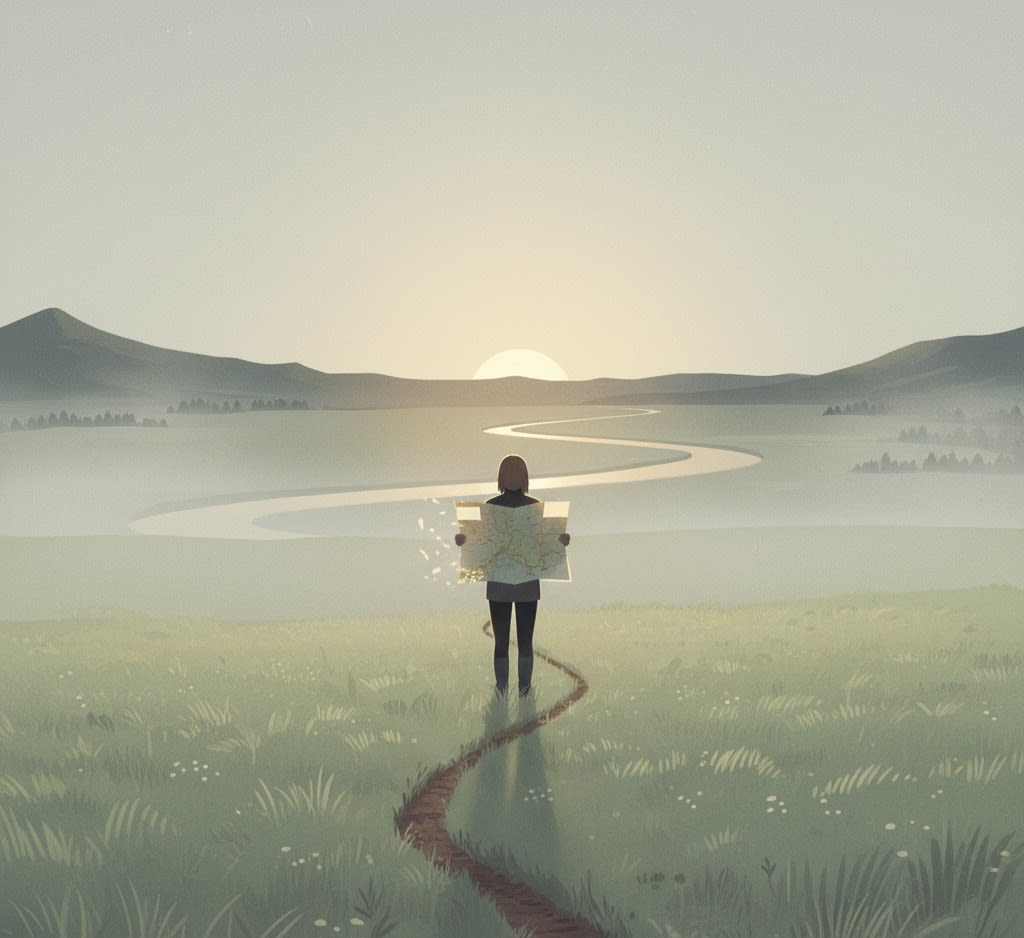
The first map I ever trusted was folded and creased, its corners softened by other hands before mine. It showed highways in confident lines, cities in bold dots, rivers that seemed to know exactly where they were going. I believed it the way children believe adults—completely, without suspicion. If a place existed, the map would tell me. If a road mattered, it would be drawn.
Years later, I learned how incomplete that faith was.
I learned it in a quiet town I never meant to stay in, a place so small it barely earned a name on any map. I arrived there tired, carrying a body that felt heavier than it should and a heart that had learned to brace itself before every morning. I wasn’t traveling for adventure. I was running—from grief I couldn’t name properly, from expectations I could no longer meet, from a version of myself that had gone silent somewhere along the way.
The map said this place was forgettable. One road in, one road out. No landmarks worth circling in red. But it was here that something inside me began to loosen.
Healing never announces itself. It doesn’t knock or send postcards ahead. It arrives quietly, disguised as routine. The sound of a kettle warming each morning. The same bench by the river where I sat every evening, watching the water carry reflections downstream. A neighbor who waved without asking questions. A stray cat that chose my porch like it had always belonged there.
None of this would ever appear on paper.
Maps don’t show the room where you finally slept through the night without waking up afraid. They don’t mark the sidewalk where you stopped crying because you realized you were tired of punishing yourself. They don’t record the exact mile where your breath returned to a steady rhythm after years of feeling chased by invisible clocks.
If someone looked at my journey from above, it would seem unimpressive. No dramatic crossings. No daring escapes. Just movement—slow, ordinary movement. But inside, continents were shifting.
There was a field outside town where the grass grew uneven and stubborn. I walked there often, especially on days when my thoughts felt louder than my footsteps. I didn’t know why that place mattered to me. It wasn’t beautiful in the way postcards promise. But standing there, I felt unobserved. Untested. The wind passed through without judgment. For the first time in a long while, I didn’t feel the need to explain myself to the sky.
That field doesn’t exist on any map I’ve seen. Yet it’s one of the most important places I’ve ever been.
We talk about travel as if it’s measured only by distance. Miles driven. Borders crossed. Time zones changed. But the most meaningful journeys rarely cooperate with geography. They happen inward, in moments so small they barely register while they’re occurring. A decision not to answer a message that hurts. A morning where you choose kindness toward yourself without negotiating for it. An evening where the future no longer feels like a threat.
Maps can’t chart forgiveness. They can’t outline the moment you stopped carrying someone else’s cruelty as proof of your worth. They don’t show the long, patient route back to yourself.
When I eventually left that town, the road out looked exactly like the road in. Same signs. Same bends. Same sense of leaving something unnamed behind. But I was not the same person who had arrived. The map hadn’t changed, but I had learned to read something else entirely—the quiet coordinates etched into my body.
Now, when I unfold a map, I still appreciate its certainty. I still admire how confidently it claims to know the world. But I no longer expect it to tell the whole truth.
The places that healed me live elsewhere.
They live in the sound of rain against a roof where I felt safe. In the smell of bread baking in a kitchen where I was allowed to be quiet. In the long pauses between thoughts where I realized I didn’t need to be fixed—I needed to be held, even if only by myself.
If someone were to ask me where I’ve been, I could name cities and roads. I could point to dots and lines. But the real answer would take longer. It would require silence. It would require telling them about the invisible landscapes—about how I learned that healing doesn’t demand grand gestures, only honesty and time.
Maps don’t show what we heal.
But we carry those places with us, folded carefully inside, creased by memory, softened by survival. And unlike paper, they don’t tear easily
About the Creator
Jhon smith
Welcome to my little corner of the internet, where words come alive
Keep reading
More stories from Jhon smith and writers in Lifehack and other communities.
This Story Has No Lesson
I should warn you upfront: nothing in this story is meant to improve you. There will be no quiet epiphany at the end. No line you can underline and carry like a talisman into Monday morning. No transformation arc, no wisdom harvested from pain like a crop. If you keep reading, it won’t be because you’re being guided somewhere useful. It will be because you chose to stay.
By Jhon smith2 months ago in Lifehack
When the Shelter Closes
Across the street from my house, a man slept under a tree, his dog by his side. My first, naive thought: he must be traveling through. But he kept coming back, often sleeping there during the day. Then it hit me—that person might not have a home.
By Bride of Sound2 days ago in Humans



Comments
There are no comments for this story
Be the first to respond and start the conversation.