
Japan Cultivates a New Era: The Hydrogen Autonomous Tractor Addresses a Shrinking Workforce
Cultivating the Future, Powered by Innovation.

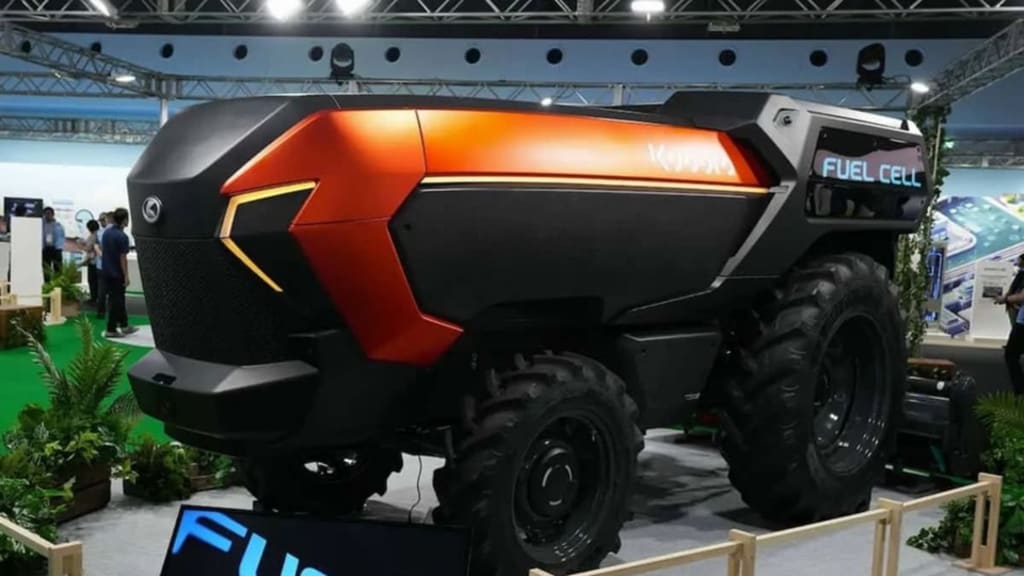
Japan’s agricultural sector, long revered for its meticulous craftsmanship and high-quality produce, is facing an existential threat. A rapidly aging and shrinking population has left vast swathes of farmland untended, threatening the nation’s food security and rural heritage. In response, a powerful symbiosis of necessity and innovation is taking root in its fields. The solution emerging is not merely a piece of machinery, but a vision for the future of farming: the hydrogen fuel cell autonomous tractor.
This technological marvel represents a dual-pronged attack on the industry’s most pressing challenges, addressing both the critical labor shortage and the global imperative for sustainable practices.
The "How": A Fusion of Autonomy and Clean Energy
The hydrogen autonomous tractor is a feat of engineering that combines two cutting-edge technologies.
First, its power source is the hydrogen fuel cell. Unlike conventional diesel tractors that emit carbon dioxide and particulate matter, these tractors generate electricity through a chemical reaction between hydrogen and oxygen, producing only water vapor and heat as byproducts. This "green" power train is not only zero-emission at the point of use but also offers a significant operational advantage: rapid refueling. A hydrogen tank can be replenished in minutes, akin to diesel, providing a crucial edge over battery-electric alternatives that require hours to recharge, a critical factor during short planting or harvesting windows.
Second, the tractor is equipped with a suite of autonomous technology. Using a combination of GPS, LiDAR, radar, and onboard cameras, the machine can navigate fields, avoid unexpected obstacles, and perform pre-programmed tasks like plowing, tilling, and seeding with sub-inch precision. A farmer can monitor and control a fleet of these tractors from a tablet, effectively multiplying the workforce without adding a single person.
The "Why": A Necessary Response to a Demographic Crisis
The impetus for this innovation is starkly demographic. Japan’s agricultural workforce is aging precipitously, with the average farmer now over 67 years old. Younger generations have largely migrated to cities, leaving fewer successors to manage family farms. This labor crunch makes it impossible to maintain current levels of production using traditional methods.
Furthermore, Japan has committed to achieving carbon neutrality by 2050. The agricultural sector, reliant on fossil fuels, is a contributor to the nation's emissions. The hydrogen tractor directly supports both national food security goals and environmental mandates, creating a sustainable and self-sufficient model for future food production.
The "When" and "Where": From Prototype to Proven Concept
The development of these tractors is already well underway. Major Japanese engineering and agricultural giants like Kubota have publicly demonstrated and tested prototypes. In 2023, Kubota announced its collaboration with Toyota to integrate Toyota's hydrogen fuel cell technology, the same used in the Mirai sedan, into its medium-sized tractors.
Real-world testing is occurring in strategic locations, particularly in Japan's northern island of Hokkaido. Known as the nation's breadbasket, Hokkaido features the large, flat fields ideal for broad-scale autonomous farming. These regions are at the forefront of proving the technology's viability in actual farming conditions. Commercialization is targeted for the late 2020s, with wider adoption anticipated in the following decade.
Voices from the Field
Industry leaders and researchers underscore the transformative potential of this technology.
Mr. Yuichi Kitao, President of Kubota Corporation, stated, “We are focusing on the realization of autonomous agriculture by combining AI and robotics technology. By utilizing hydrogen, a clean energy source, we aim to contribute to the realization of a decarbonized society and solve the issues of food and water.”
An agricultural researcher from Hokkaido University added, “This isn't just about replacing a driver. It's about creating a closed-loop system. We envision a future where hydrogen is produced using solar or wind power located on the farm itself, making the entire operation energy-independent and truly sustainable.”
Conclusion: Seeding a Sustainable Future
Japan’s hydrogen autonomous tractor is more than a piece of farm equipment; it is a symbol of national resilience. By confronting its demographic decline with technological brilliance, Japan is not only safeguarding its own food supply but also pioneering a model that nations worldwide may soon need to emulate. It represents a future where farming is smarter, cleaner, and less labor-intensive, ensuring that even with fewer hands, the fields will continue to yield their bounty. This quiet revolution in the countryside may well hold the key to cultivating a new era for global agriculture.
Frequently Asked Questions (FAQ)
1. How does a hydrogen fuel cell work in a tractor?
A hydrogen fuel cell generates electricity by combining hydrogen (stored in onboard tanks) with oxygen (from the air). This electrochemical process produces power for the electric motors that drive the tractor, with water vapor as the only emission.
2. Is it truly safe to have an autonomous, heavy machine operating by itself?
Safety is a paramount concern. These tractors are equipped with multi-layered safety systems, including 360-degree sensors, LiDAR, and cameras that can detect obstacles like people, animals, or debris. They are programmed to stop immediately if an unexpected object enters their path and can be remotely monitored and overridden by a human operator at any time.
3. Why use hydrogen instead of just large batteries?
While battery technology is improving, hydrogen offers a critical advantage for high-power agricultural work: speed of refueling. Refilling a hydrogen tank takes 3-5 minutes, similar to diesel, whereas recharging a large battery for a comparable tractor could take hours. This minimizes downtime during critical farming operations.
4. Where will the hydrogen come from?
Currently, most hydrogen is produced from natural gas ("grey hydrogen"). The long-term goal is to produce "green hydrogen" using renewable energy sources like solar or wind power to split water molecules. This would make the entire agricultural cycle carbon-neutral.
5. Will this technology make farmers obsolete?
No, it will change their role. Farmers will transition from manual laborers to managers and data analysts. Their expertise will be focused on overseeing autonomous fleets, analyzing field data collected by the machines, making strategic decisions, and handling complex tasks that still require a human touch. It is about augmenting, not replacing, the farmer.
About the Creator
Jacky Kapadia
Driven by a passion for digital innovation, I am a social media influencer & digital marketer with a talent for simplifying the complexities of the digital world. Let’s connect & explore the future together—follow me on LinkedIn And Medium
Keep reading
More stories from Jacky Kapadia and writers in Lifehack and other communities.
Nutritious vs. Healthy: The Critical Difference Your Diet Is Missing
In the pursuit of wellness, the terms "nutritious" and "healthy" are often used interchangeably. We strive to eat a "nutritious" salad for lunch and choose a "healthy" snack over a bag of chips. However, conflating these two concepts is a critical oversight that can keep you from achieving your true health potential. Understanding the nuanced yet powerful difference between them is the key to transforming your diet from a mere list of ingredients into a sustainable, life-enhancing practice.
By Jacky Kapadia6 months ago in Lifehack
Are LED downlights better than halogen for kitchens
When planning a kitchen, bathroom, or full home renovation in Sydney, lighting is one of those details that quietly decides whether the space feels amazing—or just “okay.” Cabinets can be beautiful, stone benchtops can look like art, but if the lighting is wrong, the whole kitchen suddenly feels flat.
By John Zhang5 days ago in Lifehack
Mother’s Day Gift Ideas for Garden Lovers
Mother’s Day is just around the corner, and there’s no better way to celebrate one of the most important women in your life than by giving her the perfect present. Have you decided what to give her this year? If your mom loves gardening and finds peace among her plants, there are plenty of meaningful gift ideas that can perfectly match her passion.
By Andrew Lemieux3 days ago in Lifehack


Comments
There are no comments for this story
Be the first to respond and start the conversation.