
I Upgraded Every Year—Then I Realized I Was the Product
How the upgrade cycle trains us to stay permanently unsatisfied

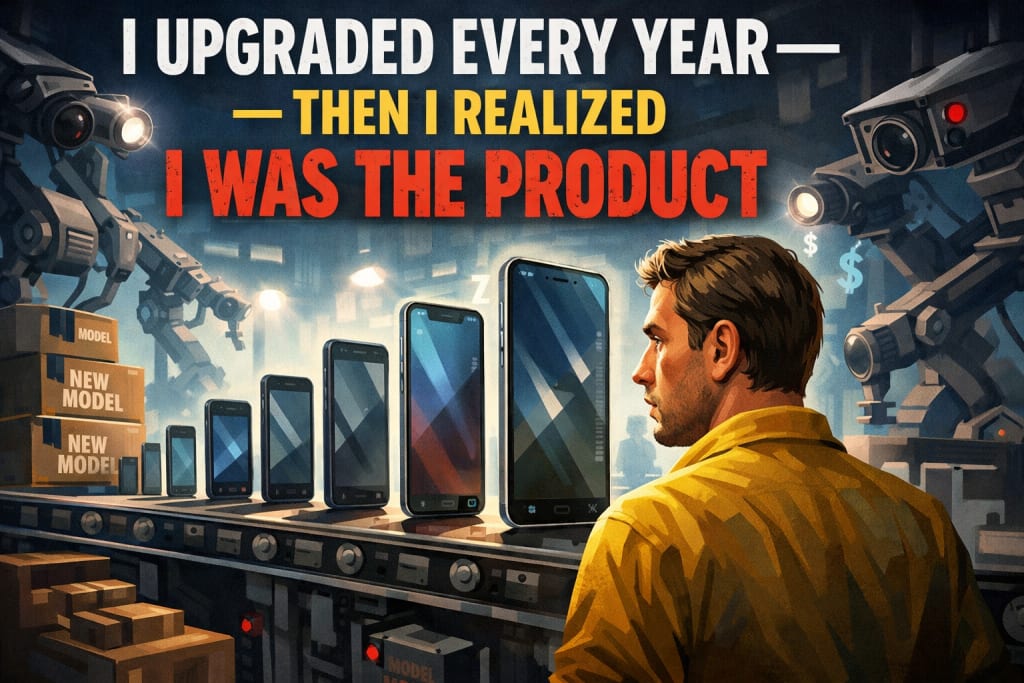
I Upgraded Every Year—Then I Realized I Was the Product.
For a long time, upgrading felt natural.
Every year, a new phone.
Every couple years, a new laptop.
Better specifications. Better performance. Better future.
I convinced myself I was being clever.
Staying updated.
Staying efficient.
Staying ahead.
But one day, while skimming through another launch event, a weird notion struck me:
What if I’m not the client anymore?
What if I’m the product?
How Upgrading Became a Habit, Not a Need
At first, improvements made sense.
The old phone slowed down.
The battery didn’t last.
Software updates ceased.
So I updated.
Then something changed.
Even when my equipment was OK, I felt nervous.
Reviews began surfacing.
Leaks began spreading.
Friends began updating.
Suddenly, “working fine” seemed obsolete.
Not because anything was wrong—
but because something fresh existed.
The Emotional Side of Tech Upgrades
Upgrading isn’t merely technical.
It’s emotional.
New gadgets bring:
excitement
validation
a new start
You unbox it.
Set it up.
Tell yourself, “This will be different.”
For a few days, it is.
Then life returns.
Same apps.
Same behaviors.
Same distractions.
The device changed.
You didn’t.
When Specs Stop Meaning Anything
After years of updating, I discovered something.
Each new gadget was:
faster
better
more powerful
But my everyday usage remains the same.
Messages.
Emails.
Browsing.
Work.
The improvements existed—
Yet they lived primarily on spec sheets.
In actual life, the gap seemed less every year.
The Upgrade Cycle Is Perfectly Designed.
Tech corporations didn’t unwittingly create this loop.
It’s deliberate.
Yearly launches.
Incremental improvements.
Just enough change to cause uncertainty.
Not enough to feel vital—
but enough to seem appealing.
And temptation works best when it seems rational.
How “Future-Proofing” Keeps Us Unsatisfied
Every upgrade is marketed as protection.
“This will last you years.”
“This is future-proof.”
“This can handle anything.”
But the future comes quicker than planned.
Suddenly:
new features emerge
new norms come
fresh comparisons begin
Instead of feeling comfortable, you feel behind again.
Future-proofing softly becomes future-worrying.
When Devices Stop Feeling Like Tools
At some point, my gadgets ceased feeling like tools.
They felt transitory.
Placeholders till the next version.
That perspective impacts how you utilize technology.
You cease settling in.
You cease learning thoroughly.
You cease feeling ownership.
Why commit to something you’ll replace soon?
The Moment I Questioned Everything
One year, I didn’t update.
Not deliberately.
I just… didn’t have the desire.
My phone worked great.
My laptop handled my work.
And something unexpected occurred.
Nothing broke.
Nothing slowed down.
Nothing fell apart.
Life carried on – normally.
That quiet was loud.
Who Really Benefits From Constant Upgrades?
Not the user.
Because of frequent upgrading:
increasing expenditure
raises anxiety
lowers satisfaction
The true winner is the system that lives on unhappiness.
When you’re never entirely satisfied,
You’re always ready to purchase.
The Hidden Cost: Mental Load
Upgrading bears mental weight.
You think about:
resale value
trade-ins
timing
comparisons
Even when you don’t purchase, you’re psychologically invested.
That continual examination distracts focus.
And attention is important.
Why Mid-Range and Older Devices Feel Peaceful
Here’s something ironic.
People using older or mid-range gadgets generally look calmer.
They:
upgrade less frequently
worry less
concentrate more on usage
Their gadgets are tools, not statements.
And tools don’t require validation.
The Truth About “Being Left Behind”
Tech marketing likes urgency.
“If you don’t upgrade, you’ll miss out.”
But miss out on what?
Slightly better performance?
Marginal improvements?
Features you may never use?
Most folks don’t fall behind—
They simply step off the treadmill.
What Changed When I Stopped Upgrading Regularly
I learned my gadgets thoroughly.
Optimized my setup.
Built familiarity.
Performance felt better—
not because it changed, but because I stopped questioning it.
Contentment returned.
Upgrading Isn’t Bad—Automatic Upgrading Is
This isn’t anti-technology.
Upgrades matter when:
your device no longer supports your requirements
something breaks
your workflow genuinely benefits
The issue is updating by default.
When updating becomes automated,
option vanishes.
Why This Realization Feels Uncomfortable
Because it challenges identity.
Many of us tie:
progress
success
relevance
to having the latest tech.
Letting go of it feels like letting go of control.
But power doesn’t come from possessing the newest item.
It comes from deciding purposefully.
What People Really Want From Technology
Not continual change.
They want:
reliability
confidence
tranquility of mind
And peace of mind doesn’t come from annual updates.
It comes from trusting what you already have.
Why This Story Connects With So Many People
Because many feel it but don’t express it.
They updated every year.
They anticipated fulfillment.
They felt transient pleasure.
When someone finally acknowledges,
“I realized I was the product.”
People comprehend quickly.
A Healthier Way to Think About Upgrades
Instead of asking:
“What’s new?”
Ask:
“Is something wrong?”
If the answer is no,
You already have plenty.
Concluding Remark
I didn’t stop updating because technology grew worse.
I quit because I understood something better.
Constant updates don’t enhance life.
They keep life unstable.
The instant I stepped off the bike,
my devices ceased feeling transient—
and began feeling complete.
Because the most powerful improvement
isn’t a new phone or laptop.
It’s learning that you don’t always need one.
About the Creator
abualyaanart
I write thoughtful, experience-driven stories about technology, digital life, and how modern tools quietly shape the way we think, work, and live.
I believe good technology should support life
Abualyaanart
Keep reading
More stories from abualyaanart and writers in Lifehack and other communities.
Through Every Storm, I Chose You
The first time I saw Lina, it was raining. Not the gentle kind of rain that people enjoy while holding coffee in a café. It was the kind that came with heavy clouds and cold winds, the kind that made people run for shelter. But Lina stood under a bus stop roof, laughing as the rain splashed around her shoes.
By Truth words 6 days ago in Lifehack



Comments
There are no comments for this story
Be the first to respond and start the conversation.