
I stopped buying things I didn’t need — and got back a life I loved
What started as a spending freeze became a lesson in self-worth, silence, and saying no.

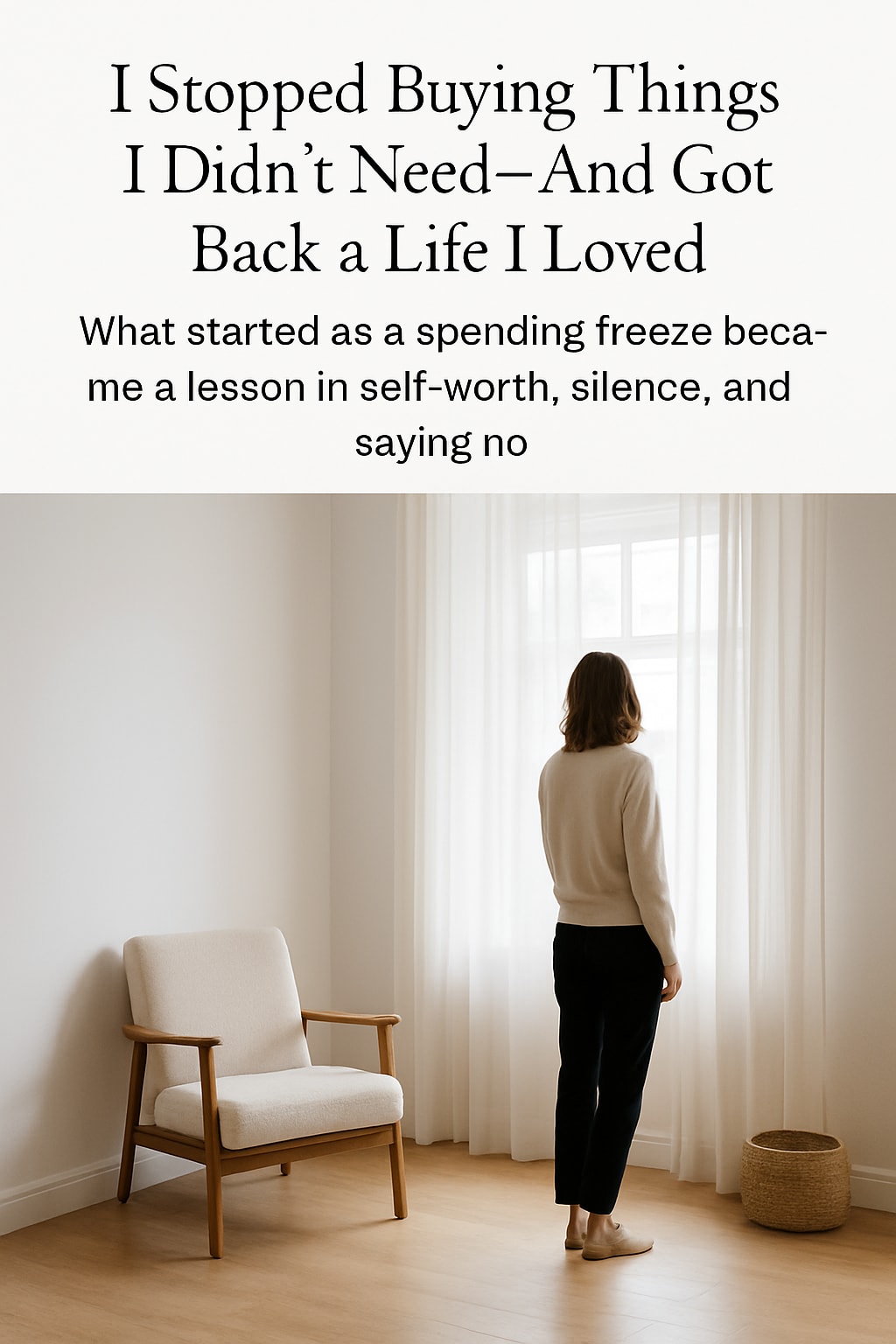
At first, it was just a challenge. A 30-day “no spending” month. No new clothes, no gadgets, no Amazon orders at 1:23 AM. Just the essentials — groceries, rent, gas. I’d seen it online, some reclaiming control with minimal influence. I figured I’d save a little money, maybe feel a little more productive. I wasn’t expecting to undo my entire lifestyle.
I didn’t expect it to change me.
Week One: Pause The first week was pretty easy. I avoided shopping malls, unsubscribed from marketing emails, and deleted a few apps. When I caught myself browsing online stores out of boredom, I closed the tab and went for a walk instead. I was proud of myself. Thrift-centric.
But by Day 9, I felt something deeper unfold.
I wasn’t just buying things to get things—I was buying things to feel something.
That blouse in my cart? It wasn’t about fashion. It was about confidence. That kitchen gadget? It wasn’t about cooking—it was about pretending I hosted dinner parties. I started to notice how often I equated spending with self-soothing. A bad day? Buy a candle. A boring night? Order something, anything. The dopamine hit of the delivery box made me feel like life was moving forward—even if I wasn’t.
Week Two: Mirror Without the distraction of new purchases, I had to sit with myself. There’s no new clothes to rebuild my identity. I don’t have any shiny gadgets to make me think I’m upgrading my life.
And it was uncomfortable.
I had to face the silence in my apartment and in my head. I realized how easily I filled the loneliness with swiping, scrolling, and shipping affirmations. It was never about the object—it was a ritual of reaching for something external to fix something internal.
So I started journaling.
A sentence a day at first. Then pages. And eventually, the truths came out—about how I was burned out, disconnected, ashamed of the debt I was silently accumulating. I was using it to distract myself from living.
Week Three: Shift That’s when everything started to change.
I stopped browsing altogether. I started reading books I already had. Cooking with what I had. To put on my favorite clothes again without worrying if anyone noticed. The strange thing was: no one did. The pressure to “have new things” was entirely internal.
Suddenly, I had more time. And more money.
But more than that, I had more clarity. I realized how much emotional clutter I had allowed into my life through physical things. My space began to lighten. I had fewer dishes to clean. Fewer options to overwhelm me. Fewer distractions to distract me from the person I wanted to be.
Week Four: The Decision By week four, I wasn’t counting the days anymore. I didn’t want to go back.
This wasn’t a temporary challenge—it was a reckoning.
I took a hard look at my finances. I calculated how much I had spent on unnecessary things over the past six months. The numbers made me nauseous. It wasn’t that I couldn’t afford the things—I couldn’t afford what they were emotionally costing me.
So I kept going.
I canceled three subscriptions I never used. I sold clothes I hadn’t worn in over a year. I deleted my “wish lists” and stopped treating my life like it needed constant upgrades. I started to wonder: What if I love what I have and don’t need it anymore?
Three months later: A life I love. Today, my closet is half the size it used to be. My apartment feels twice as open. I’m not “deprived.” I just don’t want what I used to have.
What I used to fill with shopping, I now fill with presence. I write more. I meditate. I take slow walks in the park without needing to buy anything to prove it. I find value in my time, not in the tags on my clothes.
Above all, I say “no” with more confidence now.
No, I don't need this sale item.
No, I don't need to prove anything with the purchase.
No, I don't need more to feel like I'm enough.
🧭 What I learned: 1. Shopping was a symptom, not a problem. I spent to satisfy emotional needs—loneliness, boredom, insecurity. Once I understood the root, I could begin to heal.
2. Things grow silently. Clutter doesn’t move. It creeps in. In the name of “deals” and “self-care.” But eventually, it takes up space you didn’t know you had.
3. Silence is powerful. Without the voice of consumerism, I heard my own voice again. It told me what I really needed—and it wasn’t a new lamp or a scented lotion.
4. Saying no is self-care. Every item you choose not to bring is a yes to simplicity, space, and autonomy.
People sometimes ask me if I ever feel the thrill of shopping.
Sure, it’s tempting to buy something shiny and new. But it fades. Quickly. What remains is the peace of not having to chase after too much. Waking up in a place that reflects your values, not your receipts.
I didn’t just save money this month — I found myself.
And that’s something that no amount of discounting can ever do.
About the Creator
Echoes of Life
I’m a storyteller and lifelong learner who writes about history, human experiences, animals, and motivational lessons that spark change. Through true stories, thoughtful advice, and reflections on life.
Keep reading
More stories from Echoes of Life and writers in Lifehack and other communities.
The Burnout Generation: Why I’m Rejecting Hustle Culture for My Mental Health
I used to believe that grinding—24/7, no breaks, no excuses—was the only way to succeed. Coffee in one hand, deadlines in the other, my brain constantly buzzing, my chest tight, my mind refusing to rest.
By Anie Liban5 days ago in Lifehack


Comments
There are no comments for this story
Be the first to respond and start the conversation.