
How to Tell If Your Baby Is Teething: Key Indicators and Helpful Advice
Baby Teething Signs: Symptoms, Timeline & Soothing Tips

Has your little one turned unusually fussy without warning?
Do you find yourself removing all sorts of items from their grasp as they gnaw on anything they can reach?
Throw in nonstop saliva, and you're left pondering: might this be the teething phase?
This milestone often catches new parents off guard. Your infant appears content one moment, then suddenly they're restless, picky with meals, or tossing and turning at night. That's why learning to spot teething in babies is essential for caregivers.
The good part? It's a natural, short-lived process. Armed with knowledge of genuine baby teething clues, you'll be better equipped to soothe your child.
When Does Teething Begin in Infants?
Typically, infants begin teething from 4 to 8 months, but the first tooth could emerge as soon as 3 months or not until past their first year.
Experts provide a wide window since each child's development varies. No need to worry if no signs appear by 12 months, though a visit to a children's dentist is advisable. Conversely, some precocious babies sprout a tooth early on, delighting (or startling) their families.
A teething timeline for babies helps monitor progress, outlining the sequence and approximate ages for primary teeth:
4–7 months: Lower central incisors typically emerge first.
6–10 months: Upper central incisors follow, creating that adorable grin.
9–16 months: Lateral incisors arrive next, flanking the fronts.
13–19 months: Initial molars push through, often with added discomfort due to their size.
16–23 months: Canine teeth (the sharper ones) make an appearance.
23–33 months: Final molars complete the primary set of 20 teeth.
Common Teething Indicators in Infants
Symptoms of teething differ widely, just like the schedule. Experiences may vary between siblings, yet certain hallmarks are commonly reported by families and healthcare pros.
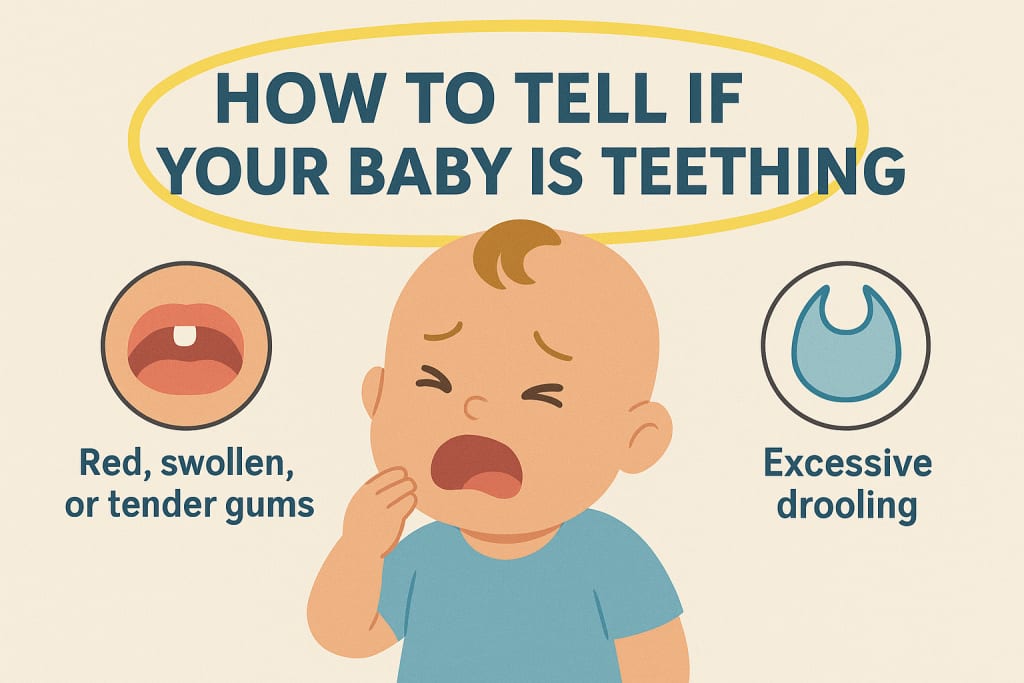
Inflamed, puffy, or sensitive gums – You might notice or palpate a budding tooth beneath, resembling a tiny pale bulge ready to surface.
Overabundant salivation – How is there so much? Expect to cycle through bibs at record speed. This excess can lead to a drool-related irritation on the face and neck.
Gnawing or chomping on objects – Beyond typical exploration, it becomes intense and urgent. The pressure relieves aching gums as teeth erupt.
Altered rest habits – A once-reliable sleeper may awaken frequently or resist bedtime. Horizontal positioning intensifies the ache, worsening nocturnal distress.
Moodiness and agitation – Babies grow irritable, particularly as fatigue sets in later in the day. Unable to verbalize, they may wail persistently to signal unease.
Decreased interest in food – Pain might deter eating, or they seek constant soothing feeds. Routines get disrupted either way.
Minor fever – A slight elevation, dubbed teething fever, may occur, often evenings. Monitor closely; if it exceeds 100.4°F (38°C), investigate further to rule out other causes.
Tugging ears or stroking face – Ear yanking, facial rubbing, or general distress signals. Gum soreness can refer pain elsewhere, prompting instinctive soothing attempts.
Typical Teething Signs vs. Red Flags Requiring Attention
Distinguishing standard baby teething effects from potential illnesses is crucial.
Standard includes:
Achy or enlarged gums
Heightened drooling, possibly with localized skin irritation
Biting nearby items, including during feeds
Fussiness, peaking at night
Sleep disturbances
Picky eating or feeding changes
Facial or ear rubbing
Low-grade temp increase
Seek medical advice for:
Elevated fever over 103°F
Intense or ongoing loose stools
Widespread rash beyond facial drool zones
Persistent ear tugging with fever, suggesting possible infection
Profound lethargy, fluid loss, or total aversion to intake
Duration of the Teething Process?
This ongoing phase can seem interminable amid the chaos. Per tooth, discomfort lasts roughly 1–7 days before breakthrough. Some infants sail through quickly; others endure longer per eruption.
Manifestations ebb and flow, calming post-tooth only to resurge with the next.
Front incisors generally bother less, whereas broader molars often provoke greater misery.
Assisting a Teething Infant with Rest?
Parents frequently battle to ensure restful nights during teething. We get it—when your baby hurts, sleep offers respite, yet it's elusive.
Try these suggestions:
Opt for soft gum rubs – A sanitized finger or moist fabric can gently massage to alleviate tension, ideal pre-sleep.
Provide chilled chewables – Refrigerated rings or cool cloths numb soreness effectively.
Maintain soothing rituals – Pre-bed baths, gentle songs, or subdued lighting promote relaxation.
Allow flexible bedtime tweaks – Extra nourishments or extended cuddles might help; adapt as needed.
Consult pros if needed – For prolonged severe insomnia, reach out to your doctor.
Soothing Strategies for Teething Babies?
Thankfully, numerous secure methods exist to ease this trying time.
Reliable relief ideas:
Cooled teething toys, icy cloths, or chilled produce in safe feeders for solids-eaters. Cold dulls pain on tender tissues.
Clean hands for tender gum massages.
Diversions to shift focus from discomfort.
Safeguard skin from drool damage with regular wipes or protective lotions to avert sore outbreaks.
Regarding baby teething jewelry?
Amber beads are popular online, but unsafe due to choke and strangle hazards. Specialists recommend avoiding them.
For intense pain, inquire about suitable infant pain meds like acetaminophen or ibuprofen. Steer clear of topical numbs, herbal tabs, or alcohol-based fixes—they're risky for babies.
Wrapping Up
Teething challenges everyone, but it's a universal parental rite. Success lies in tempered hopes and proven easing tactics.
You'll navigate it, teeth will arrive, and rest will return. Soon after, baby teeth shed begins! For tailored queries, chat with our kids' dentist—we're here to guide you assuredly.
FAQs
What indicators show a baby teething?
Puffy gums, profuse drool, constant chewing, grumpiness, ear tugs, facial rashes, and poor sleep mark typical teething.
Differentiating teething from illness?
Mild drool, mood swings, and gum pain suggest teething; high temps, bad diarrhea, or deep tiredness warrant a dental check.
Is fatigue common in teething?
Yes, pain disrupts slumber, leading to exhaustion and irritability.
Does teething cause 103°F fevers?
No, only mild rises; extreme fevers indicate other issues.
Improving sleep for teething babies?
Pre-bed cool chews, added comforts like swaying or feeds, and serene environments help. Routine bends are okay temporarily.
Safe teething remedies?
Doctors might suggest baby acetaminophen or ibuprofen for strong pain.
About the Creator
Dr. Al Gertani
The Dental Land in Calgary offers pediatric dentistry, cosmetic treatments, TMJ solutions, and root canal therapy. Enjoy exceptional care with our friendly team and advanced tech. Book today!
Keep reading
More stories from Dr. Al Gertani and writers in Lifehack and other communities.
Kids’ Dental Care: Simple Tips & Visit Guide
Maintaining healthy teeth and gums in childhood lays the foundation for a lifetime of good oral health. With the right habits, parents can help their little ones build strong smiles—and know exactly when to enlist professional dental care. Below is an easy‑to‑follow guide packed with practical tips, structured so you can quickly find the information you need.
By Dr. Al Gertani8 months ago in Education
The Consequence of Greed
Snowfall had turned the lush green trees of the forest completely white. It was the heart of winter, and as soon as the snow began to fall, a deep silence spread through the jungle. The animals who had wisely stored food before the cold arrived were now resting comfortably in their homes, eating and drinking without worry. But those who had made no preparations were shivering in the freezing weather, wandering around in search of food.
By Sudais Zakwan6 days ago in Lifehack
The Hidden Traps in UK VAT That Cost Small Businesses Thousands
Every year, thousands of UK small businesses face unexpected tax bills, penalties, and sleepless nights over VAT mistakes they didn't even know they were making. The numbers tell a sobering story: HMRC issued over £800 million in VAT penalties in 2023 alone, with small businesses bearing a disproportionate share of that burden.
By Saifullah Awan 23 days ago in Lifehack
The CEO of Everything
They say "jack of all trades, master of none," but they forgot to mention the part where the jack of all trades is also the camera woman, the makeup artist, and the person currently yelling at a tangled Wii microphone cable in a her own bathroom while recording herself singing and trying to make it look realistic and professional. (As professional as you can make it with nothing but a cell phone camera and a mic that doesn't work)
By Sara Wilson6 days ago in Humans




Comments
There are no comments for this story
Be the first to respond and start the conversation.