
How to Reduce Returns and Damages in Electronics Shipping
Reduce returns and damages in electronics shipping with better packaging, testing, and compliance strategies trusted by top US and European shippers.


Each broken delivery is a story – a story with a frustrating conclusion, refunds, and mistrust. There is also the electronics industry, where a slight dent or shock can convert a working gadget into a return. The good thing is that damage rates and return rates can be decreased significantly through the appropriate shipping strategy and design of the packaging.
In this guide, I’ll explain how to protect electronic goods during transit and implement proven methods to minimize return losses. By the end, you’ll have a clear plan to make your shipments safer and more reliable.
Why Electronics Face High Return Risks
Electronics are very sensitive products to ship. Minor transportation effects can loosen components, break screens, or get into circuitry. The temperature, moisture, or electrostatic discharge contributes to the risk. Simple mistakes are a source of returns, such as oversized boxes, ineffective internal cushioning, or improper handling instructions.
The trick here is to find out all the weak links in your chain of shipping. Every single improvement will decrease the chances of damaged or returned products. In the case of the businesses that are based in the US and Europe, where consumer protection laws are very stringent, it is not merely a best practice; it is a necessity.
The Foundation: Package for Transit, Not for Display
The greatest flaw that most firms commit is to make boxes that appear good, but when subjected to rough handling, they cannot survive. The protection is not merely a presentation of the job of the package. Use tough materials, vibration test materials, drop test, and check the weight of the structure under the stacking pressure.
Electronic shipping boxes should be used, which will be the same size as the product. A close fit does not allow internal movement during transportation. Where space cannot be avoided, stuff it with a cushion that can absorb a shock but not one that moves with pressure. The less the product in the box moves, the lower the damage rate.
Smart Internal Protection Techniques
The cushioning must be product-specific. A tablet that is delicate needs another internal support, compared to the earphones. Rigid corner protectors are used to protect against dropping, and soft foam sheets are used to protect against scratches on smooth surfaces. Desiccants should be used in moisture-sensitive devices, and inside anti-static bags should be static-sensitive parts.
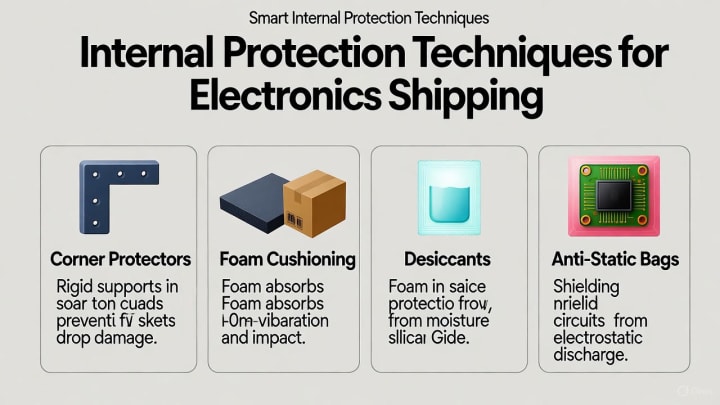
For premium or heavy devices, double-boxing works best. It adds a secondary layer of protection and disperses impact more effectively. Remember, protection from movement is more valuable than protection from appearance.
Legal and Safety Responsibilities for Shippers
Shipping electronics often means handling lithium batteries. These batteries are regulated for safety reasons and fall under specific international transport standards. Every lithium battery must meet the UN 38.3 testing requirement before being shipped. You must also label and declare the package correctly to avoid penalties or shipping delays.
Non-compliance can lead to carrier refusals, customs delays, or even fines. To stay compliant, classify your batteries correctly, follow the packaging instructions based on battery type and capacity, and work only with carriers approved for hazardous materials. It’s not just about following the law – it’s about ensuring safety throughout the supply chain.
Building a Consistent Packing Process
Unity of packages can be what makes the difference between effective and mediocre logistics activities. Create a step-by-step product packing procedure that your workers will follow for all products. Provide visual aids and brief checklists at packing stations so as not to get mixed up.
Before packaging, check power and functionality, take serial numbers and take photos of the product. These are easy measures that result in responsibility and offer records in the event of conflicts. With time, there is a steady process that minimizes mistakes and gains the confidence of customers.
Testing Your Packaging for Real Conditions
A controlled test is worth a thousand assumptions. Many companies now perform ISTA-style drop, vibration, and compression tests before launching a product. These tests replicate real shipping conditions and help identify structural weaknesses early.
Major breakages can be decreased by even a slight modification, like the foam density or the addition of a divider. Frequent testing not only enhances product safety, but it also enhances brand trust and eliminates money spent on returns and replacements.
Choosing the Right Carrier and Shipping Method
Not every carrier accepts electronics. There are special programs of high value or delicate goods offered by others, and others can also be significantly more restrictive in terms of lithium batteries. Compare carriers regarding scan precision, reliability in delivery, and timeliness of claims and conclude contracts.
Before every shipment, confirm three essentials: packaging integrity, regulatory compliance, and handling clarity. Make sure each electronic item is firmly placed inside the electronic shipping boxes, sealed with industrial-grade tape, and clearly labeled for orientation and battery content. Photograph packed goods for reference, and verify tracking with the carrier before dispatch.
A few minutes of careful checking can save days of claims, refunds, and lost sales later.
Managing Returns Efficiently
Ideally, carrier packaging services are to be used to make premium shipments. These typically entail compliance, production, and testing. When shipping to foreign markets, it is necessary to confirm that your shipment is either more convenient by air or by roa,d and you should never understate the content of the batteries, as this can create hold-ups at the ports of entry.
In case a product can be refurbished safely, then do it. It will save money and minimize wastage. In the case of warranty claims, transparency is very important. Easy communication and fast response time are helpful to maintain customer trust even in the case of returns.
A smooth reverse logistics flow reduces lost value:
- Require an RMA for high-value returns and include inspection criteria.
- Capture photos on the return receipt. Document faults clearly.
- If repair or refurbishment is feasible, do it. Resell refurbished units when safe.
- If refunding, use a policy that minimizes abuse while remaining customer-friendly.
How a Small Fix Cuts Returns

In Europe, a retailer of electronics received 12 percent of their portable speakers and found them damaged. With the adoption of double-wall boxes and with the introduction of molded corner inserts, the number of damages was reduced to less than 3% in a quarter. This increased the packaging price a little; however, the replacements and retention of customers compensated a great deal.
This proves how small improvements, when applied consistently, can lead to big reductions in return rates.
Can I ship electronics with lithium batteries internationally?
Yes, but only under strict conditions. Follow UN 38.3 testing, use proper markings, and check your carrier’s acceptance policy before dispatching.
Does using electronic shipping boxes really reduce returns?
Yes. The right wall strength, cushioning choices, and anti-static quality of boxes used specifically with electronics are designed to combat the most prevalent damage-causing factors.
How can I improve my return process?
Establish a recorded RMA system, sort all returned units, and isolate those that are repairable. Customer loyalty also increases with transparency and fast refunds, even after returning.
Coda
Minimizing returns and damage in the shipping of electronics is not a matter of perfection, but rather one of accuracy. It is based on the right-sized packaging, internal protection stability, and shipping regulations. The system is complete with testing, regular procedures, and selection of carriers.
Every package that arrives safely builds trust and brand value. With these practices in place, your shipments will travel smarter, arrive safer, and keep your customers satisfied.
About the Creator
Cristina Baker
I’m Cristina Baker, a business and market expert with 8+ years of experience helping brands and entrepreneurs grow. I share insights, strategies, and ideas that inspire growth, spark curiosity, and turn challenges into actionable results.
Keep reading
More stories from Cristina Baker and writers in Lifehack and other communities.
Smart Pricing: When and How to Reduce the Price Without Hurting Your Brand
You might be facing slow sales or fierce competitors offering lower prices. Cutting your own price feels like a quick win, but it can also damage profits and long-term brand value. The key is to reduce the price with a clear purpose and strategy, not emotion.
By Cristina Baker5 months ago in Journal
Between Places and Possibilities: The Human Experience of Moving in Rockville, Maryland
Moving often begins quietly. It starts with small decisions — sorting belongings, noticing how spaces feel different, imagining life somewhere new. Gradually, what once seemed distant becomes immediate. Rooms empty, routines shift, and the familiar begins to transform into memory.
By House Doctor5 days ago in Lifehack
Why Cold Exposure Is Gaining Popularity
From elite athletes to busy professionals, more people are stepping into tubs filled with icy water—and loving it. Ice baths, also known as cold plunges, have surged in popularity over the past decade. What was once a recovery tool reserved for professional sports teams is now a mainstream wellness practice.
By AnthonyBTV5 days ago in Lifehack
Pearl
1980 something. we all hung out at Pearl and you and i were nothing special, or so i thought. i mean we all danced, drenched in our own sweat, our own saline solution of fear, too many beers, shots, laughter, tears, fucks in the bathroom and i don't know when we began to be afraid. do you?
By ROCK aka Andrea Polla (Simmons)3 days ago in Fiction


Comments
There are no comments for this story
Be the first to respond and start the conversation.