
How to choose taps that are ergonomic for daily use
Sydney Renovation Guide on Kitchen, Appliances & Fixtures

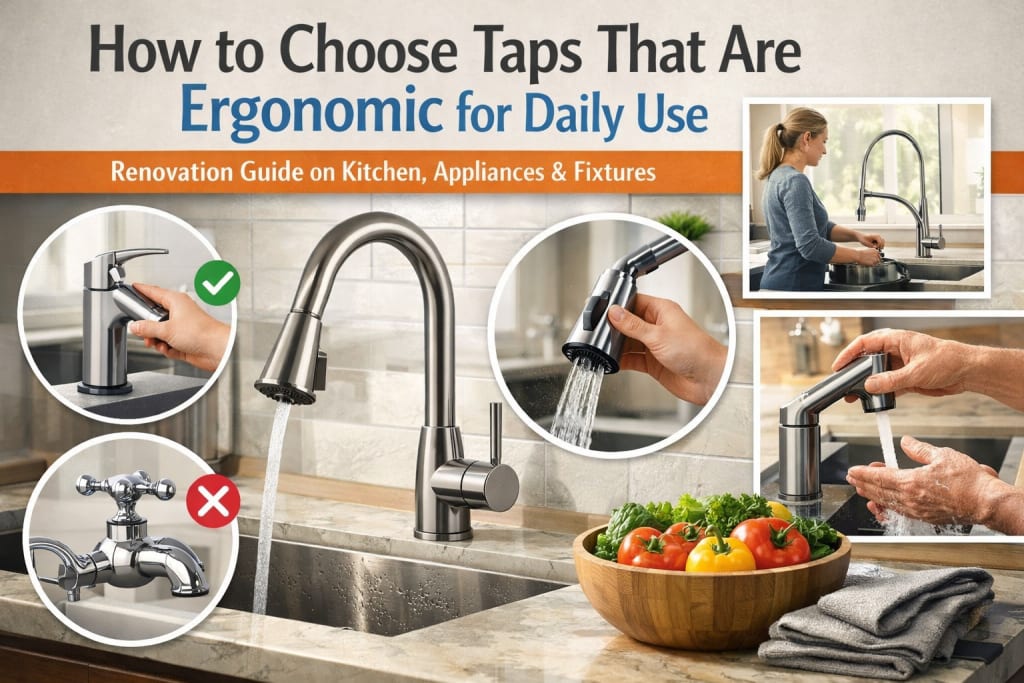
When planning a kitchen or bathroom renovation in Sydney, one of the often overlooked—but crucial—decisions is selecting taps that are not only stylish but also ergonomically functional. Ergonomic taps reduce strain on your hands and wrists, improve workflow, and elevate the overall usability of your home. Whether you live in the heritage homes of Balmain, the modern apartments of Barangaroo, or the family houses of North Shore, choosing the right taps can make a significant difference in your daily routines.
Understanding Ergonomic Taps
Ergonomics refers to the design and functionality of products in a way that minimizes discomfort and maximizes efficiency for human use. In the context of taps, this involves:
Comfortable grip: Easy to hold and operate even with wet or soapy hands.
Smooth operation: Handles that turn or lift without excessive force.
Optimal height and reach: Spout design that allows washing of hands, dishes, or filling pots without awkward angles.
Accessibility: Features suitable for all ages, including children and elderly family members.
When renovating kitchens and bathrooms in Sydney, prioritizing ergonomics not only improves your daily experience but also adds long-term value to your home.
Key Features to Look for in Ergonomic Taps
1. Lever vs. Knob Handles
For ease of use, lever-style handles are widely recommended over traditional knob handles. Levers require less grip strength, making them ideal for:
Elderly residents: Reduce joint strain in hands and wrists.
Families with young children: Easier for kids to operate independently.
Busy kitchens in Sydney apartments or homes: Quick, smooth operation when hands are wet or full.
Some modern lever taps also feature motion-sensor or touchless technology, which can be particularly useful in commercial-style kitchens in Surry Hills or Bondi for maintaining hygiene and efficiency.
2. Spout Design and Reach
The spout’s height, length, and shape play a critical role in ergonomics:
High-arc spouts: Provide ample space for washing large pots, pans, or multiple dishes simultaneously.
Swivel spouts: Allow flexibility for double sinks or corner installations commonly found in inner-west kitchens.
Pull-down or pull-out sprays: Offer convenience in cleaning and filling containers, reducing awkward bending or stretching.
Selecting a tap with the correct reach ensures that your workflow is natural, particularly in busy kitchens or bathrooms in homes around Mosman, Manly, or Double Bay, where kitchens may have specific layouts due to space constraints.
3. Single vs. Dual Function Taps
Single-function taps are simple and reliable, while dual-function taps with integrated mixers allow precise temperature and flow control. For ergonomic efficiency:
Single lever mixer taps: Enable easy one-handed control, reducing the need to adjust hot and cold separately.
Temperature memory taps: Maintain consistent water temperature, which is ideal in family bathrooms in Sydney’s Eastern Suburbs, where children or elderly users are frequent.
4. Material and Finish
The tap’s material influences grip, maintenance, and overall ergonomics:
Brushed or matte finishes: Reduce fingerprints and provide a better tactile feel.
Chrome or stainless steel: Sleek, durable, and easy to clean, common in modern Sydney apartments or renovated kitchens in Paddington.
Soft-touch materials: Improve comfort during extended use, particularly for high-traffic kitchens.
Practical Tips for Choosing Ergonomic Taps
1. Test Before Installing
If possible, visit a local showroom in Sydney CBD, Chatswood, or Bondi Junction to try taps firsthand. Check:
Ease of turning and lifting
Reach over sinks
Comfort when pressing or pulling
Testing taps helps you identify products that feel natural for your hand size and strength.
2. Consider Daily Usage Patterns
Your tap choice should reflect how your family uses the space:
Frequent cooking: A pull-down spray or high-arc mixer tap reduces strain during meal prep.
Kids and elderly users: Lever handles or touchless taps prevent injury and make operation intuitive.
Small apartments in Pyrmont or Glebe: Consider compact ergonomic designs to maximize space efficiency.
3. Match Taps to Sink Style
Different sinks require compatible tap designs:
Undermount sinks: Often benefit from single-lever, pull-down taps.
Double-bowl sinks: Swivel spouts or dual-function taps improve flexibility.
Farmhouse or freestanding basins: High-arc and wall-mounted taps reduce bending, a common consideration in renovated homes across Inner West Sydney.
4. Look for Water Efficiency
Ergonomic taps should also reduce effort in daily use, including water flow management:
Aerators: Maintain strong flow while conserving water.
Flow restrictors: Limit excess water pressure, avoiding splashing.
Eco-friendly options: Ideal for households in Bondi, Manly, and Mosman that prioritize sustainable living.
Advanced Features for Modern Sydney Homes
Recent renovations in Northern Beaches and Eastern Suburbs often include ergonomic taps with smart functionality:
Touch or sensor-activated taps: Operate without direct contact, perfect for busy kitchens or guest bathrooms.
Temperature memory taps: Provide a preset comfortable temperature for daily use.
Pull-down dual spray heads: Combine standard flow and spray functions for maximum flexibility.
360° swivel spouts: Useful in multi-sink setups common in large family homes in North Shore suburbs.
Maintenance Considerations for Ergonomic Taps
Even the most ergonomic tap can lose functionality if poorly maintained. Key tips:
Regular cleaning: Wipe with a soft cloth and mild detergent to maintain smooth operation.
Check aerators and cartridges: Prevent limescale buildup common in Sydney’s water supply, particularly in older homes in Balmain or Rozelle.
Professional servicing: A kitchen or bathroom renovation specialist in Sydney can adjust or replace internal components for long-lasting ergonomics.
Local Renovation Insights
When renovating in Sydney, the choice of taps should align with local home characteristics:
Heritage homes (e.g., Paddington, Balmain): May require traditional-style taps with modern ergonomic upgrades.
Contemporary apartments (e.g., Barangaroo, Pyrmont): Favor sleek lever taps with pull-down features for compact yet efficient spaces.
Family homes (e.g., Northern Beaches, North Shore): High-arc, pull-out spray taps reduce strain during frequent daily use, accommodating children and elderly family members.
Additionally, Sydney homeowners often prioritize aesthetic cohesion with other fixtures, including sinks, countertops, and cabinetry. Choosing taps that match the overall style while providing ergonomic functionality is a key factor in successful renovations.
Final Checklist for Choosing Ergonomic Taps
Before finalizing your tap selection, ensure the following:
Handle type: Lever or motion-sensor for ease of use.
Spout design: Height, reach, and swivel to suit your sink layout.
Material: Comfortable, durable, and easy to clean.
Compatibility: Works seamlessly with sink and countertop design.
Water efficiency: Conserves water while maintaining flow.
Advanced features: Consider pull-down sprays, touchless activation, or temperature memory.
Maintenance: Ensure tap is easy to service and clean.
By following this checklist, Sydney homeowners can select taps that are both ergonomic and visually appealing, enhancing daily comfort in kitchens and bathrooms alike.
Conclusion
Choosing taps that are ergonomic for daily use is an essential part of any kitchen or bathroom renovation in Sydney. By considering handle type, spout design, material, compatibility, and advanced features, you can ensure your taps enhance comfort, efficiency, and usability.
About the Creator
John Zhang
The driving force behind MB9 Australia — a licensed renovation builder who brought world class Italian designer kitchens to Australia, specialising in kitchen, bathroom and full home renovations across the entire Sydney area.
Keep reading
More stories from John Zhang and writers in Lifehack and other communities.
Do we really need AI videos?
By now, you’ve likely seen what the latest AI video model, Seedance 2.0, can do. If you haven’t, just look around. The videos flooding your feed—the ones with perfect lighting, cinematic depth, and hyper-realistic motion—they’re not real. They were all generated by AI.
By John Zhanga day ago in Critique


Comments
There are no comments for this story
Be the first to respond and start the conversation.