
How Marketing Is Changing in the Era of AI in 2026?
Learn how AI has affected the way people market products and will continue in 2026


Marketing in 2026 didn’t just “add AI.” It changed how the whole system works. The teams winning now aren’t the ones with the cleverest slogan; they’re the ones who treat marketing like an automated, learning machine instead of a series of one-off campaigns.
Let’s walk through how it’s actually changing and what that means in practice.
From Campaigns to Systems
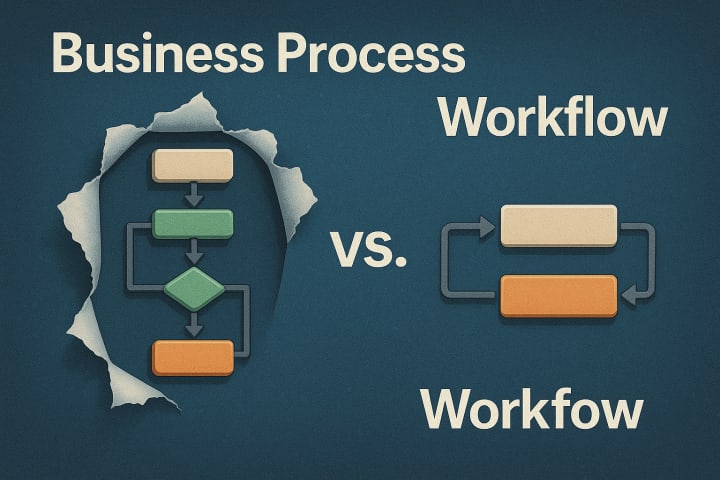
Old marketing revolved around big launches: you’d plan a campaign, run it, review results, and start over. In the AI era, the unit of work is the system, not the campaign. You build something that is always testing, always rebalancing spend, and always feeding new data back into itself.
Creatives get generated and iterated in near real time. Targeting uses a blend of first-party data, modelled audiences, and behavioral signals instead of simple demographic “personas.” Budgets move in response to performance data in days or even hours, not in quarterly syncs. You’re not starting from scratch each time; you’re tweaking a living system.
In practical terms, the input is ongoing data about audiences and product performance, and the output is a continuously optimized mix of messages, channels, and bids that evolves on its own instead of waiting for a meeting.
Creative: Infinite Variants Instead of One Big Idea
AI hasn’t replaced creative people, but it has destroyed the idea that you can run an entire quarter on three static concepts. Instead of hunting for a single perfect headline, teams now generate dozens of angles and formats, filter them, and then let the system stress-test what actually works.
A single concept often turns into a whole matrix: short and long versions, feed posts, stories, scripts, emails, ads tailored to different micro-segments. Designers spend more time building templates, systems, visual rules, and less time manually cranking out variants. AI fills those templates with copy, imagery, and tweaks in style, while humans decide what is on-brand and what is off-limits.
The result is a library of modular components that can be recombined. You don’t bet everything on one “hero creative”; you let the stack mix and match combinations and quietly double down on what performs.
Targeting: First-Party Modelling Instead of Third-Party Guessing
Because cookies are fading and regulations are tighter, you can’t lean on third-party data crutches the way you used to. The shift is toward making serious use of what you already own: CRM records, product usage, billing history, support tickets, and engagement data.
In 2026, strong teams build segments around behavior and value rather than mostly demographic guesses. They care about who is likely to upgrade, who is at risk of churning, who responds to discounts, and who is likely to refer others. AI models cluster users and accounts into patterns that would be almost impossible to define manually, then surface those clusters as audiences.
Instead of exporting “newsletter subscribers” as a blob, you export “users likely to convert in the next 30 days” or “high-value customers who are starting to slip.” The raw input is your product and customer data; the output is much sharper audience segments that you sync directly into ads, email tools, and sales outreach.
Measurement: From Attribution Fights to Probabilities
Accurate click-level attribution across all channels is mostly a fantasy now. Between privacy changes, walled gardens, and long buying journeys, arguing over which platform “owns” a conversion is a waste of energy.
Measurement in the AI era feels different. You accept that individual paths are flawed and noisy. You zoom out and use incrementality testing, media mix modelling, and cohort analysis to understand where money actually moves the needle. Models tell you how performance tends to change when you increase or decrease investment in a given channel or creative category, expressed as probabilities rather than absolute truths.
The core question shifts from “who gets credit for this sale?” to “when we change this input, what usually happens to revenue?” The input is combined spend and performance data across channels; the output is a decision framework for where budget should go next, based on lift and confidence rather than attribution politics.
Operations: From Manual Execution to Automated Pipelines
This is where AI plus automation quietly rewires marketing. A huge chunk of work used to be manual glue: routing leads, updating sheets, copying notes, nudging people, building reports. Now, much of that is orchestrated by workflows.
Leads can be scored, deduped, enriched, and assigned automatically. Nurture journeys are triggered by what people actually do—start a trial, ignore a key feature, look at pricing page three times—rather than by calendar dates. Sales and customer success get prioritized queues instead of raw export lists. Even creative operations become more structured: briefs, approvals, version control, and asset storage live in one flow instead of scattered inboxes.
AI supports this by summarizing call transcripts into structured CRM notes, generating first drafts of follow-ups and landing pages, and flagging anomalies you probably wouldn’t spot quickly: sudden drops in conversion rates, spikes in customer acquisition cost, weird churn patterns in a specific segment. The input is a stream of events from forms, apps, CRMs, and payment systems; the output is an orchestrated pipeline that moves data, tasks, and decisions with minimal manual intervention.
Content: Serving Human Intent with Machines in the Loop
Search is no longer just “10 blue links.” People type queries, talk to assistants, skim AI-generated summaries, and only then decide what to click. That means a lot of your audience meets your content through a model before they ever see your site.
Content strategies in 2026 tend to favor depth over volume. Instead of pushing dozens of thin posts, teams build fewer, well-structured pieces aimed at very specific questions and intents. They organize them so both humans and machines can understand the logic: clear sections, precise definitions, explicit “how to” steps, practical examples, and data that can be referenced.
Because AI systems chew through your content and repackage it, vague fluff is basically invisible. What surfaces is specificity. The more concrete and useful your content is, the more likely it is to be quoted, summarized, or recommended. The input is a clear map of the questions customers ask along their journey; the output is a compact, high-signal content base that real people find helpful and AI systems can safely include in answers.
Skills: From Channel Operators to System Designers
All of this changes who you actually need on the team. The most valuable marketers in 2026 don’t just “know Facebook” or “know email.” They understand how data travels between different AI tools and how entire workflows hang together.
They’re comfortable reading dashboards and sitting in creative discussions. They think in terms of “what happens after this event” and “what needs to happen every time this condition is true.” Automatable tasks are spotted and mapped without anyone needing to tell them. They can talk to engineers, designers, and sales without sounding lost.
Instead of a stack of narrow channel specialists, you see more marketing ops and revenue ops roles, product-aware marketers, and strategists who at least understand how AI models behave and where they fail. The human value migrates upward: deciding what should exist, what should be tested, and what should be shut down, while the machines handle most of the repetition.
Where Make.com Scenarios Help – And Where They Don’t?
Make.com sits in that interesting middle layer between “we need developers” and “we’ll just do it manually.” In marketing 2026, it works best when you treat it as orchestration glue, not as a magic brain. It’s great at moving data from node A to node B when specific events happen. It is not great at being the place where you hide all your core business logic.
The sweet spot is anything repetitive and rules-based that touches multiple tools. A new lead submits a form, Make.com enriches it, scores it, routes it to the right pipeline, creates tasks, and triggers the right nurture.
A new deal hits a certain stage, Make.com updates spreadsheets, pings finance, pushes a Slack summary, adds the account to a specific ad audience. A webinar registration happens, Make.com registers the user in your webinar platform, your CRM, and your email tool, and then keeps attendance data in sync afterwards. In all of these flows, you already know the rules, but manually coordinating them would be soul-destroying busywork.
Where Make.com does not help is when you try to turn it into your entire marketing brain. If your strategy lives as a mess of conditional branches inside automated Make.com scenarios, nobody will understand why anything is happening. Complex bidding logic, attribution decisions, or pricing rules that should live in a proper database or application layer become fragile when they’re scattered across a dozen scenarios. You also don’t want to hide critical compliance or finance logic inside a visual builder that only one person on the team understands.
The right way to think about it is inputs and outputs again. The input is a clear event coming from your stack: a form submission, a trial started, a feature ignored, an invoice paid, a churn signal detected. The output is a concrete operational action: a record created, a field updated, a message sent, a task assigned. Make.com is the conveyor belt between those two points. Strategy, pricing, brand, and measurement logic should live outside of it, in your data model and playbooks, not trapped inside a flowchart.
Used that way, Make.com gives you a huge operational edge. Non-engineers can ship and tweak workflows quickly, you can instrument your marketing system without waiting weeks for deployments, and you can keep your team focused on designing the system instead of doing manual glue work. Used as a dumping ground for “everything we don’t want to think through properly,” it just becomes a new, shinier version of the old spreadsheet hell.
What an AI-Ready Marketing Org Really Looks Like?
An AI-ready team in 2026 treats marketing as a system that learns. They treat data and documentation as assets. They draw and maintain diagrams of how a lead becomes revenue, how a free trial becomes an upsell, how an abandoned cart is recovered. They use AI as an amplifier of speed and clarity, not as a magic replacement for thinking.
They judge work by lift, efficiency, and compounding insight rather than by vanity metrics or how polished a single campaign looks. They focus on building loops: experiments that feed results into models, models that feed decisions, decisions that shape new experiments.
That’s the real shift.
“Marketing in the era of AI” isn’t just robots writing copy; it’s humans finally behaving like system architects and letting the stack do the grunt work, so they can spend their time on the parts machines still can’t do well: judgment, prioritization, and strategy.
About the Creator
Liz Kliko
I am a professional blogger, who teaches people to start a blog and use a bullet journal.
Why Smartphones in 2026 Will Feel Very Different From the Ones You Use Today
The top phones from 2024 and 2025 don't appear that different when you put them next to each other. The displays are a little brighter. The cameras are a bit clearer. The CPUs are a little speedier. But in real life, things haven't altered much. You still swipe. You still tap. You still plug in your phone every night. You still care about battery life.
By abualyaanart7 days ago in Lifehack
Understanding Fabric Durability: How the Martindale Tester Shapes Modern Textile Quality
In the textile industry, durability is one of the most important indicators of product quality. From everyday clothing and upholstery to industrial and protective materials, fabrics are constantly exposed to friction, pressure, and repeated use. To evaluate how well a material performs under such conditions, laboratories rely on standardized testing methods. One of the most widely recognized tools for this purpose is the Martindale Tester, an instrument designed to assess fabric abrasion resistance and pilling behavior in a controlled, repeatable manner.
By Shazad Khanabout 9 hours ago in Lifehack




Comments
There are no comments for this story
Be the first to respond and start the conversation.