
How hard is my water and should I look for a solution?
The signs and solutions of hard water problems
Water is an essential part of our daily lives, whether for drinking, washing, cooking, or cleaning. Yet one aspect of water that many homeowners experience is hard water. But what is hard water, why is it so bad, and should you look for a solution? Let’s take a look…
What is hard water?

Hard water contains high concentrations of dissolved minerals, mainly calcium and magnesium. The minerals dissolve into the water during the rain cycle and are present in natural water sources. Soft rainwater that comes into contact with limestone rocks causes the minerals to dissolve into the water.
While hard water is not harmful to drink, it does cause undesirable effects around the house and on our skin and hair health. That’s because the high mineral content leads to the formation of mineral deposits (or scale). This builds up inside pipes, appliances, and heating systems, gradually reducing their efficiency.
The mineral ions also badly react with fatty acids found in soap. This leads to the formation of sticky, insoluble soap scum that forms on the skin and scalp. This can lead to dry, itchy, sore, and cracked skin. Hair can also become dry, brittle, and frizzy as a result of the same effect on the scalp.
Hard water can either be permanent or temporary. Temporary hard water is caused by dissolved bicarbonate minerals, such as calcium bicarbonate or magnesium bicarbonate, that are removed by boiling the water.
Permanent hard water results from sulphates or chlorides of calcium and magnesium that cannot be removed by boiling. As a result, permanent hard water will require a more specialised form of treatment, such as water conditioning or water softening.
Hard water supplies are very common, with around 60% of the UK’s water supply being hard. Areas that have a water supply from limestone-rich regions will have hard water supplies. Typically, hard water supplies are permanent.
How is water hardness measured?
Water hardness is a measurement of the concentration of the dissolved minerals. Typically, when measuring water hardness, it measures the calcium and magnesium concentrations as these are the most prominent minerals.
Usually, water hardness is measured in milligrams per litre (mg/L) or parts per million (PPM). There are different measurements of water hardness depending on the PPM level:
- Soft water – up to 60 PPM / up to 100 mg/L
- Moderately hard water – between 61 and 120 PPM / between 101 and 150 mg/L
- Hard water – between 121 and 180 PPM / between 151 and 200 mg/L
- Very hard water – above 180 PPM / over 200 mg/L
The majority of the UK’s water supply (around 60%) is either classed as hard or very hard. Most regions of England experience hard water supplies, while Scotland and Wales have the softest water supplies.
Here is a list of some UK countries that have the hardest water supplies:
- Bedfordshire
- Buckinghamshire
- Dorset
- Gloucestershire
- Greater London
- Hertfordshire
- Kent
- Oxfordshire
- Surrey
The map below outlines the water hardness levels for different areas of the UK:

How can you tell if you have hard water?

It is possible to tell if you have hard water supplies by either testing your water or looking out for certain signs. Firstly, we will cover the common signs that indicate you have hard water.
Limescale build-up
Hard water will often leave chalky white residues on certain surfaces in the kitchen and bathroom. This is particularly prevalent on water outlets, such as taps and shower heads, or inside appliances, such as dishwashers or kettles.
Soap scum
The poor reaction between hard water minerals and fatty acids in soaps results in poor lathering and the formation of soap scum. This makes it difficult to get a good lather when washing, causing you to use more soap or detergent. Soap scum can also form on surfaces such as sinks and bathtubs.
Dry skin and hair
While you may not realise it, the cause of dry skin and hair can be due to hard water. The formation of soap scum on the skin and hair can strip natural oils, causing dry, irritated, or brittle hair after showering. It can also cause the scalp to become itchy and sore or cause dandruff.
Spots on glassware and dishes
Those with a dishwasher may notice that glassware or dishes sometimes have a dirty spot or a cloudy film. This is caused by the mineral deposits in hard water.
Decreased appliance efficiency
Gradually, mineral deposits form and build up inside a range of appliances where water is heated. Common examples include washing machines, dishwashers, heating systems, and piping. This causes the appliances to work harder, suffering from decreased efficiency and a shorter lifespan as a result.
Testing water hardness
While these common signs and symptoms are a good indication of whether you have hard water supplies, it does not provide a definitive answer to the extent of hardness. The easiest way for this is through testing:
- Water quality reports – many local water supplies often produce annual water quality reports, which provide details on water hardness.
- Home testing kits – it is possible to buy inexpensive water hardness testing strips that provide more personalised results. This involves dipping the strip into a clean water sample and comparing the colour change against a chart.
- Lab testing – it is also possible to have your water tested in a lab for a detailed report on hardness, including mineral content.
Should you look for a solution?
Once you’ve determined whether you have a hard water supply and the extent of hardness, you may be wondering if you should look for a solution.
Soft Water (0-60 ppm): Soft water has low levels of calcium and magnesium, so no action is needed. Enjoy the benefits of easier cleaning and better appliance efficiency.
Moderately Hard Water (61-120 ppm): You may notice minor issues, such as reduced soap lather or mild limescale buildup. However, this is nothing too severe, so a solution may not be necessary. If you start seeing signs of buildup, you might want to consider a hard water solution.
Hard Water (121-180 ppm): If your water falls into this category, you will experience noticeable limescale buildup, soap scum, and dry skin or hair. A hard water solution is recommended to protect your plumbing and appliances and improve your water quality.
Very Hard Water (181+ ppm): At this point, the high mineral content can cause significant damage to your home and appliances. Limescale can clog pipes, reduce the efficiency of water heaters, and cause reduced appliance lifespan. Opting for a hard water solution is highly recommended.
What solutions are available for hard water?
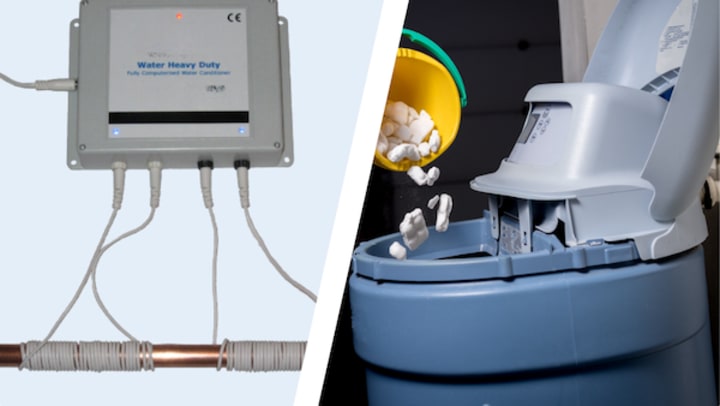
If you are experiencing the problems of hard or very hard water, you may want to look for a solution to overcome the associated problems. Fortunately, there are two solutions you can opt for depending on the severity of hardness: water conditioning or water softening. Both work differently and offer distinct results.
The most significant difference is water conditioners are salt-free, making the treated water safe for drinking and cooking. Unlike traditional water softeners, water conditioning doesn’t use ion exchange, where positively charged minerals are drawn to negatively charged resin beads to soften the water.
As the name suggests, water softeners soften hard water. However, they can be expensive to maintain, as the resin beads require frequent regeneration with salt pellets. In contrast, water conditioners don’t need regular upkeep and run on power.
Instead of using salt, they work by wrapping a coil of wire around the main water inlet pipe. This coil creates an electromagnetic field that alters the behaviour of mineral ions in the water. The field is completely safe for humans, and the water remains suitable for all household uses.
By changing how the mineral ions behave, the conditioner prevents them from forming solid deposits like limescale. Once installed, water conditioners require minimal maintenance, making them an easy solution. Many UK households find that water conditioning is sufficient for solving common hard water issues.
Water conditioners use very little power (about 2-9 watts), similar to a device on standby. This is in comparison to the ongoing cost of purchasing salt pellets for a water softener, ranging from £8 to £25 over time. Electronic water descalers are a popular method of water conditioning.
If you experience any of the signs and symptoms of hard water, it is well worth testing your water hardness. If you discover that hard water is the cause of undesirable effects, investing in a suitable solution for hard water can save you in the long term, protecting appliances, reducing bills, and minimising your cleaning efforts.
About the Creator
Keep reading
More stories from Aaron Middleton and writers in Lifehack and other communities.
The hard truth about hard water
Hard water accounts for the majority of the UK’s water supply. Despite this, many people are unaware of just how impactful it can be. We cover the hard truth about hard water by exploring the effects and impacts it can have in our daily lives.
By Aaron Middletonabout a year ago in Lifehack
Top 10 Questions to Ask Every Perth NDIS Service Before You Engage Them
Choosing the right National Disability Insurance Scheme (NDIS) provider shapes the quality of care, independence, and outcomes a participant experiences. In Perth, families and participants face a growing number of service options, which makes informed decision-making essential.
By Anshul Vijay4 days ago in Lifehack
Smart phones, Humans and Aliens.
WARNING. I will be tapping into one of your favorite creative tensions: The absurdity of humans worshipping their glowing rectangles as if they were tiny oracles. There’s something deliciously poetic about that contradiction, and it lends itself beautifully to an instructive proviso.
By Novel Allen5 days ago in Poets



Comments
There are no comments for this story
Be the first to respond and start the conversation.