
From Cluttered Closets to Conscious Choices: My Journey to a Zero-Waste Life (And the Products That Changed Everything)
How a Cluttered Closet Sparked My Zero-Waste Revolution (And the 3 Products That Kept Me Going)”
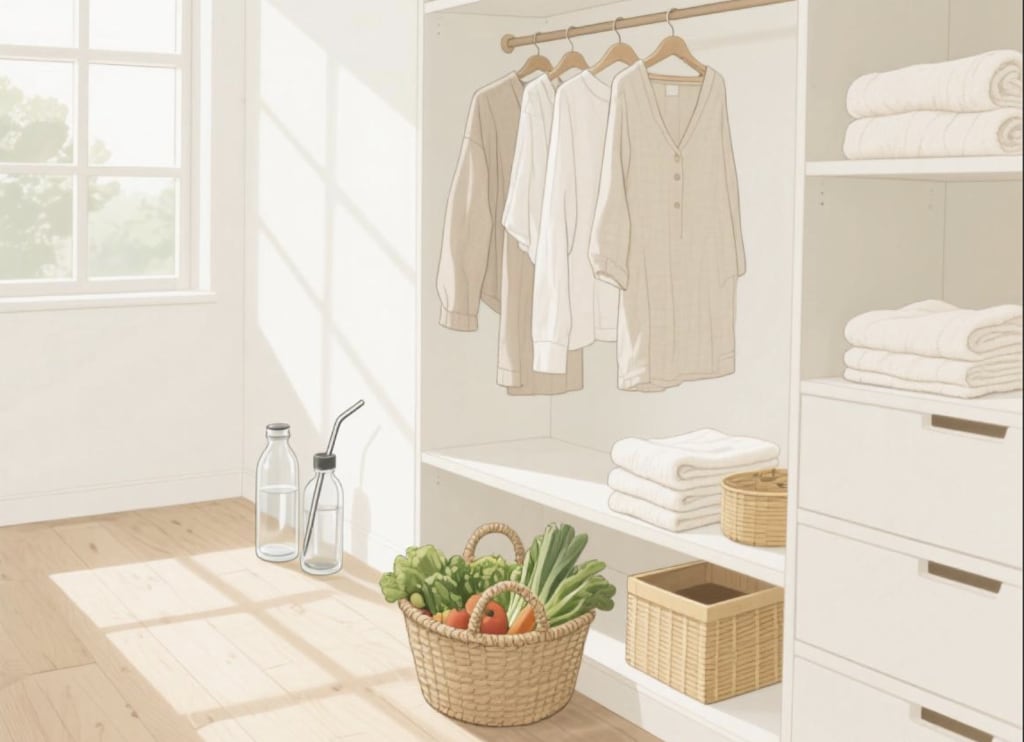
It’s 7:30 a.m. on a lazy Tuesday, and I’m standing in front of my closet, staring at a mountain of clothes I haven’t worn in years. There’s the sequined top I bought for a friend’s bachelorette party (I swore I’d “wear it again”), the oversized sweater that seemed like a good idea at the mall last winter (spoiler: it’s not), and a stack of fast-fashion jeans that have long since lost their shape. As I sift through the chaos, a crumpled receipt slips out—a $49.99 tag for a top I wore once. This isn’t just clutter, I realize. This is a symptom of a lifestyle I don’t even recognize anymore.
A year ago, I’d have shrugged this off. “Retail therapy,” I’d call it. But now? I’m holding a mason jar half-filled with plastic bottle caps—each one a relic of my old habit of grabbing bottled water on the go. Beside it sits a reusable coffee cup I’ve had for six months, its lid scuffed but loved. Somewhere along the line, my relationship with “stuff” shifted. What started as a vague interest in sustainability turned into a full-blown mission to live with less waste, more intention. And honestly? It’s been messy, expensive, and so worth it. If you’re curious about how to start (or even just dip your toes) into a more eco-friendly life without losing your mind, here’s what I’ve learned—and the products that made it possible.
The “Aha!” Moment That Changed Everything
Let’s backtrack to March 2024. I was scrolling through Instagram when a documentary recommendation popped up: Seaspiracy. I hit play, half-expecting another feel-good nature film. Instead, I spent the next 90 minutes reevaluating everything. Fishermen pulling “ghost nets” (abandoned plastic fishing gear) out of the ocean. Sea turtles tangled in plastic straws. Microplastics in the tap water I drank every day. By the end, I felt nauseous—not just from the visuals, but from the guilt of knowing I’d contributed to this mess.
That night, I dumped out my bathroom drawer. Inside: 12 plastic shampoo bottles, 8 tubes of toothpaste, and a lifetime supply of disposable cotton pads. I’d been buying “convenient” products without a second thought. But convenience, I realized, comes at a cost—one paid by the planet, not by me.
The Hard Part: Finding Products That Actually Work
Here’s the thing about sustainable living: it’s not as simple as swapping plastic for glass. For every “eco-friendly” product that lives up to the hype, there are five more that are overpriced, poorly made, or just… greenwashing. I learned this the hard way.
Take laundry detergent, for example. I wanted to ditch plastic jugs, so I bought a “biodegradable” powder from a trendy brand. It left my clothes smelling like wet cardboard and stained my favorite sweater. (Spoiler: “Natural” doesn’t always mean “effective.”) Or the time I tried reusable period products—my first pair of period underwear leaked through a work meeting, and I spent the afternoon hiding in a bathroom stall, mortified.
But slowly, I found products that delivered. Here are the ones that kept me from quitting:
1. Etee Zero-Waste Laundry Detergent Strips
If you’ve ever tried switching to a zero-waste laundry detergent, you know the struggle: most are either clumpy, smelly, or require you to pre-soak your clothes. Etee’s strips changed that. They’re lightweight (no plastic packaging!), dissolve completely in hot or cold water, and actually get out stains—yes, even coffee and red wine. I’ve been using them for six months, and my clothes still smell fresh without that overwhelming “laundry soap” scent. Plus, a single strip works for a full load, so I’m not wasting money on excess product. https://example.com/eteelaundry.
2. Thinx Ultra-Thin Period Underwear
I’ll admit it: I was skeptical. Reusable period products sounded like a recipe for disaster. But Thinx’s Ultra-Thin line is a game-changer. The fabric is soft, breathable, and holds a lot (seriously, I’ve tested it). Best of all, they look and feel like regular underwear—no bulky pads or awkward adjustments. I now own three pairs, and I only need to wash them every 3-4 uses. It’s saved me hundreds of dollars a year, and I no longer panic when my period arrives unexpectedly. https://example.com/thinx.
3. Dr. Bronner’s Organic Liquid Soap (Refillable Bottle)
I’ve been using Dr. Bronner’s for years, but it wasn’t until I switched to their refillable bottle that I truly understood the impact. The classic 18-in-1 soap works for everything—body wash, dish soap, even floor cleaner (diluted, of course). By refilling instead of buying new plastic bottles, I’ve cut my plastic waste by 70% in the last year. Pro tip: Pair it with a reusable sponge, and you’ve got a zero-waste cleaning kit. https://example.com/drbronners.
The Real Reward: More Than Just “Saving the Planet”
At first, I thought sustainable living was about “doing my part” for the environment. But it’s turned into something much bigger. My closet is now filled with clothes I love (not just “like”), because I only buy items I’ll wear at least 30 times. My bathroom smells like lavender and citrus, not harsh chemicals. And I’ve saved so much money by avoiding single-use products that I finally booked that trip to the beach—guilt-free, because I know my travel gear (a reusable water bottle and solar charger) won’t harm the places I’m visiting.
It’s not perfect. I still slip up (RIP the plastic wrap I used to cover a sandwich last week). But I’ve learned that sustainability isn’t about being flawless—it’s about progress. And the best part? You don’t have to do it alone. Every time I share a photo of my Etee strips or my Thinx underwear on social media, someone comments, “I need that too!” It’s a reminder that small changes add up, and together, we can make a difference.
So, if you’re ready to start your own journey—whether it’s swapping one plastic product or overhauling your entire routine—remember this: it’s okay to take it slow. Start with something small, like a reusable coffee cup or a pack of laundry strips. Celebrate the wins, learn from the mistakes, and trust that every step matters.
After all, the planet doesn’t need a few people doing sustainability perfectly. It needs millions of people doing it imperfectly.
What’s one small change you’re going to make today? Let me know in the comments—I’m here to cheer you on.
About the Creator
Keep reading
More stories from liang ming and writers in Lifehack and other communities.
I Was Burned Out at 28—These 5 Science-Backed Tools Saved My Life (And Might Save Yours Too)
The Day I Crumpled in the Bathroom Stall Let me paint you a picture you’ve probably seen before: It’s 2:17 p.m. on a Tuesday. You’re in a crowded office bathroom, leaning against a cold tile wall, staring at your phone—37 unread emails, 5 missed Slack messages, and a calendar alert blinking: “Final project due EOD.” Your chest feels tight, your palms are sweaty, and your brain? It’s a broken record of “I can’t do this. I’ll never catch up. What if I fail?”
By liang ming6 months ago in Lifehack
Top 10 Questions to Ask Every Perth NDIS Service Before You Engage Them
Choosing the right National Disability Insurance Scheme (NDIS) provider shapes the quality of care, independence, and outcomes a participant experiences. In Perth, families and participants face a growing number of service options, which makes informed decision-making essential.
By Anshul Vijay2 days ago in Lifehack
9 Foods You Should Never Eat Past the Expiration Date, No Exceptions
But certain foods cross a line where the expiration date becomes about more than just quality—it’s about safety. Eating past that line can expose you to dangerous bacteria, toxins, or nutrient loss you can’t see or smell. Knowing which foods to never push beyond their expiration dates is key to keeping your kitchen safe. Here are the nine foods that are not worth the risk.
By General gyan2 days ago in Lifehack



Comments
There are no comments for this story
Be the first to respond and start the conversation.