
Fat Loss Made Simple: The Science-Backed Guide to Losing Weight and Keeping It Off
Cut through the myths and learn the proven strategies to burn fat, boost metabolism, and maintain your results for life

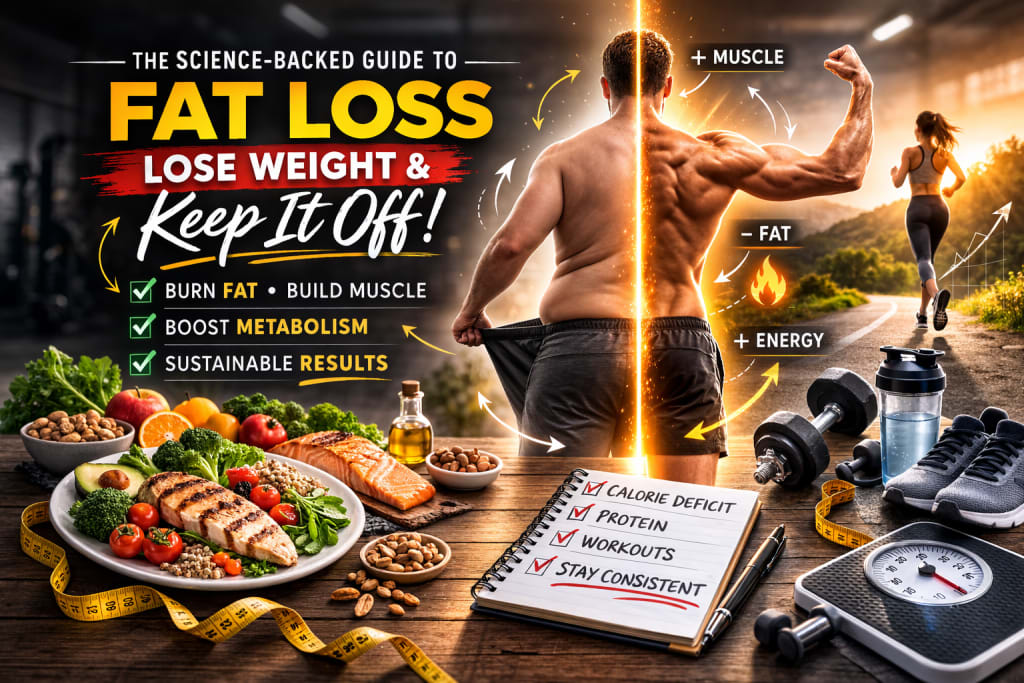
Getting lean is hard. Staying lean is even harder. Many people lose weight successfully, only to regain most of it within a few years. The internet is full of quick fixes, miracle hacks, and conflicting advice that leave people confused and frustrated.
The truth is refreshingly simple: sustainable fat loss follows predictable scientific principles. When you understand and apply them correctly, you can lose fat efficiently while preserving muscle and long-term health.
This guide breaks down the latest evidence into clear, practical steps you can actually follow.
The One Principle Behind All Fat Loss
Every effective fat loss diet works for the same fundamental reason:
You consume fewer calories than your body burns.
This is known as a calorie deficit. When your body doesn’t get enough energy from food, it turns to stored energy — ideally body fat — to make up the difference.
Different diets (keto, intermittent fasting, low-carb, etc.) only change how people achieve the deficit. The underlying mechanism is always the same.
Understanding Your Metabolism
Your metabolism, or total daily energy expenditure (TDEE), is the number of calories your body burns each day. It has four main components:
1. Basal Metabolic Rate (BMR)
The calories your body burns just to keep you alive at rest. This is the largest portion for most people.
2. Non-Exercise Activity Thermogenesis (NEAT)
Calories burned through everyday movement — walking, standing, fidgeting, chores.
3. Thermic Effect of Feeding (TEF)
Energy used to digest and process food.
4. Exercise Activity
Calories burned during workouts and cardio.
Most people focus too much on exercise and overlook how powerful daily movement (NEAT) really is.
Why Some People Lose Weight Faster Than Others
Metabolism varies significantly between individuals. Two people of the same weight can burn very different numbers of calories each day.
At 80 kg (176 lbs), for example:
• Some people may burn ~1,900 calories/day
• The average person ~2,600 calories/day
• Others may burn 3,800+ calories/day
This is why generic calorie targets often fail.
Important: Having a “slow metabolism” does NOT prevent fat loss. It simply means your calorie intake must be adjusted appropriately.
Does Building Muscle Boost Metabolism?
Yes — but not nearly as much as social media claims.
• 1 kg of fat burns ~4.5 calories/day
• 1 kg of muscle burns ~13 calories/day
Muscle is more metabolically active, but the overall effect is modest. Even gaining a large amount of muscle may only increase daily calorie burn by a few hundred calories.
Still, building muscle is valuable because it:
• Improves body composition
• Helps maintain weight loss
• Supports long-term metabolic health
The Most Underrated Fat-Loss Tool: Daily Movement
If there’s one habit that quietly drives fat loss success, it’s increasing NEAT.
Simple ways to boost daily movement include:
• Walking instead of driving short distances
• Taking the stairs
• Standing more often
• Doing household chores
• Cycling or gardening
A practical target for most people is:
6,000–12,000 steps per day
Unlike intense cardio, NEAT adds up without creating excessive fatigue, making it highly sustainable.
Diet vs. Exercise: What Matters More?
Research consistently shows:
• Cardio alone → small weight loss
• Diet alone → significant weight loss
• Diet + exercise → best results
You cannot out-exercise a poor diet. Nutrition drives fat loss; exercise supports it.
Avoid the Crash Diet Trap
Eating too few calories can backfire. Extremely low intake can lead to:
• Hormonal disruption
• Irritability and fatigue
• Higher injury risk
• Muscle loss
• Reduced performance
A useful guideline is to avoid dropping below roughly:
30 calories per kilogram of fat-free mass
For most people, a moderate, sustainable deficit works far better than aggressive dieting.
The Ideal Rate of Weight Loss
To maximize fat loss while preserving muscle, aim to lose about:
0.5% of your body weight per week
For example:
• 80 kg person → about 0.4 kg (0.9 lb) per week
Faster weight loss is possible but increases the risk of muscle loss and rebound weight gain.
How to Structure Your Macronutrients
Calories determine weight loss, but macronutrients help optimize body composition and performance.
Protein: Your Top Priority
High protein intake:
• Preserves muscle
• Increases fullness
• Slightly boosts calorie burn during digestion
A practical approach is to keep protein intake relatively high and consistent across meals.
Carbohydrates: Fuel and Health
Carbs support training performance and help you include nutrient-dense foods like fruits and vegetables.
A solid target during fat loss:
2–4 grams of carbs per kilogram of body weight
Aim for at least 400 grams of fruits and vegetables daily for health benefits.
Fats: Don’t Go Too Low
Fats support hormone production and overall health.
General minimums:
• Smaller individuals: ~40 g/day
• Larger individuals: ~60 g/day
How Many Meals Per Day?
Despite popular trends, intermittent fasting is not inherently superior for fat loss.
For muscle retention, many experts recommend:
Around four protein-containing meals per day
For example:
• Breakfast
• Lunch
• Dinner
• Protein snack (pre-workout or before bed)
Consistency matters more than meal timing perfection.
Training to Maintain Muscle While Cutting
Resistance training is essential during fat loss.
Minimum effective approach
• 3 workouts per week
• 5–10 sets per muscle group weekly
Optimal approach
• 5–6 workouts per week
• 10–20 sets per muscle group weekly
Key training principles:
• Train close to failure
• Use mostly 5–12 rep ranges
• Rest 1–2 minutes between sets
• Prioritize compound movements
Higher reps do not meaningfully increase fat loss.
The Real Secret: Maintaining Your Results
Most people focus only on losing weight — not keeping it off.
The key to long-term success is simple but powerful:
Keep the habits that helped you lose the weight.
Instead of stopping everything after your diet:
• Slightly reduce (don’t eliminate) extra steps
• Loosen calorie tracking without abandoning awareness
• Maintain regular training
Think of it as downscaling, not quitting.
Final Thoughts
Fat loss doesn’t require extreme diets, metabolic hacks, or endless cardio. The science is clear and surprisingly straightforward:
• Maintain a moderate calorie deficit
• Prioritize protein
• Lift weights consistently
• Move more throughout the day
• Lose weight at a controlled pace
• Keep your habits after the diet ends
Do this consistently for a few months, and you won’t just lose weight — you’ll finally keep it off.
Want faster results? Start by calculating your maintenance calories, set a small deficit, and focus on consistency for the next 12 weeks. Your future self will thank you.
About the Creator
Keep reading
More stories from Kamel Saidani and writers in Lifehack and other communities.
How to Retire Early: 12 Smart Money Moves to Secure Your Future
Introduction Retiring early is a dream for many, but it requires careful planning, smart financial decisions, and disciplined saving. The traditional retirement age is 65, but with the right strategies, you can achieve financial independence much earlier. In this comprehensive guide, we’ll cover 12 smart money moves that will help you retire early and secure your future.
By Kamel Saidani11 months ago in Lifehack
Why Oral Health Matters More Than You Think
Your mouth is one of the main gateways to your body. Everything you eat and drink passes through it first. When hygiene is neglected, harmful bacteria can grow quickly, forming plaque and irritating soft tissues. Over time, this can lead to inflammation, sensitivity, and infections that may even affect other parts of the body.
By Nenci Gajera a day ago in Lifehack




Comments
There are no comments for this story
Be the first to respond and start the conversation.