
Drumstick leaves
Moringa oleifera is considered a valuable plant because all its parts can be used for food, medication, and other industrial and household purposes.
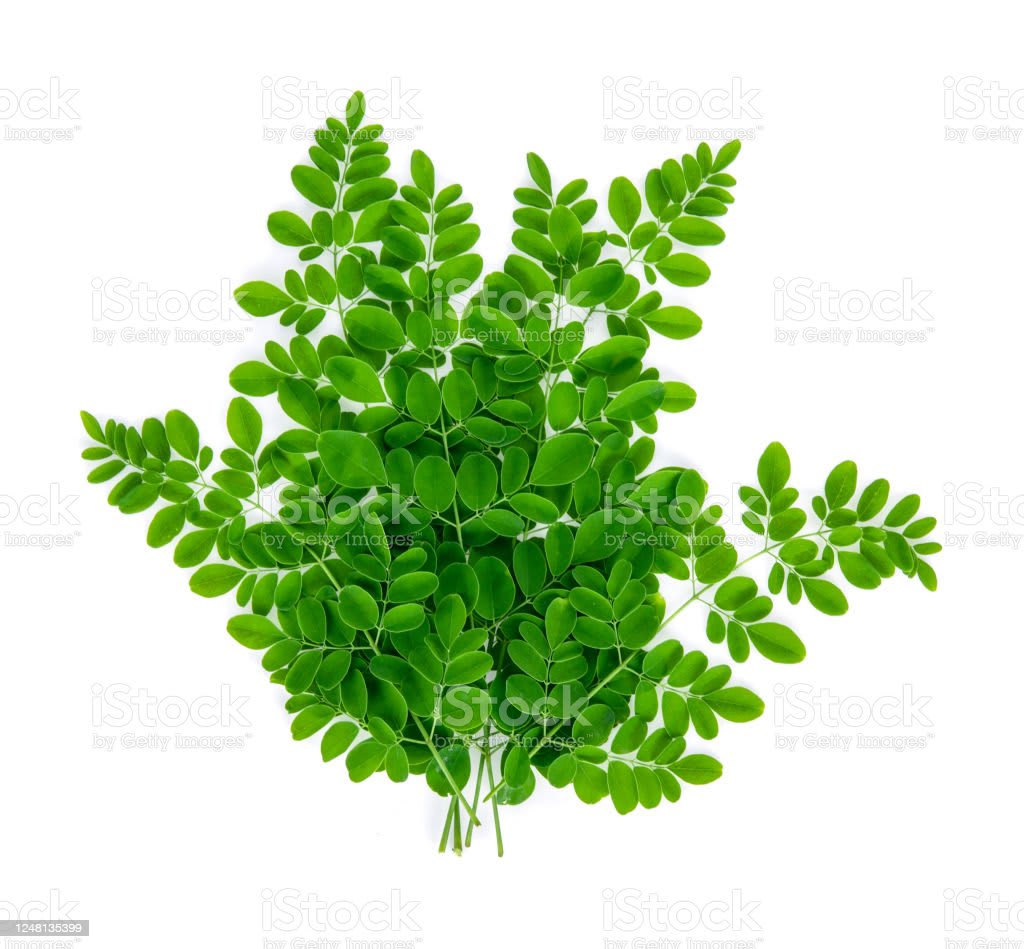
The Moringa oleifera Lam., commonly known as the drumstick tree and a member of the Moringaceae family, is a versatile plant utilized in various tropical and arid countries for food and medicine. This plant is known for its ability to grow well in drier regions due to its drought-resistant properties, such as water-logging of roots. While Moringa plants can grow on different soil types, well-drained loamy and sandy soil with a pH of 5-9 is best suited for their growth.
Moringa oleifera is considered a valuable plant because all its parts can be used for food, medication, and other industrial and household purposes. The leaves, in particular, are consumed as a salad, roasted, or stored as dried powder for an extended period without losing their nutritious content. The leaves also have potential applications as functional foods and nutraceuticals due to their phytochemicals, including phenolic acids, flavonoids, carotenoids, and glucosinolates. Some of the significant phytochemicals present in Moringa leaves are crypto-chlorogenic acid, is quercetin, and astragalin, which are attributed to the plant's antioxidant, anti-hypertension, and anti-inflammation activities.
Moringa oleifera is also known as the "Miracle Tree" or "Tree of Life" due to its excellent health, nutritional, and environmental benefits. Traditionally, Moringa leaves have been used in India to cure conjunctivitis, remove intestinal worms from the abdomen, and improve the milk production of pregnant and lactating mothers, and treat anemia. The juice of Moringa leaves is also believed to help diabetic patients control blood pressure and blood glucose levels.
As the usage of herbal medicine increases, Moringa leaves have become a suitable option in developing countries for quality health services that offer inexpensive and easily accessible treatment in places not accessible to Western medicine. However, moringa processing may sometimes alter the inaccessibility of nutrients and polyphenols, and new approaches are needed to increase their retention during processing and storage.
This review intends to fill a void in the scientific literature by providing current knowledge on Moringa oleifera leaves' nutritional content and composition of bioactive compounds, their bio-accessibility, and health-promoting effects. It is essential to understand the plant's bioactive components to explore its potential as functional foods in various food products and broaden the researchers' research.
The protein content of moringa ranges from 19% to 29%, while its fiber content ranges from 16% to 24%. Similar protein content levels were reported in Brazil and South Africa by Teixeira et al. and Mayo et al., respectively, with the leaves exhibiting approximately 28% to 30% protein. In terms of daily nutritional value, 100 g of fresh moringa leaves contain 17.5% of the required protein. Moringa leaves are rich in unsaturated fatty acids, particularly α-Linolenic acid, which is the most abundant among them. Recent research has identified a new polysaccharide, MOP-2, from moringa leaves using hot water extraction and chromatographic techniques. MOP-2 has potential as an immunoregulatory agent in various functional foods. Moringa leaves are a good source of polyunsaturated fatty acids, such as omega-3 and omega-6, which are essential for various cardiovascular functions and overall body health. Additionally, they have low levels of saturated fatty acids and high levels of monounsaturated fatty acids.
Moringa powder is an effective replacement for iron tablets to treat anemia, as the iron content in moringa leaf powder is 28 mg per 100 g, which is more than that found in beef and spinach. In addition to iron, M. oleifera leaves are also rich in fat-soluble vitamins like vitamin A (pre-cursor of beta-carotene), D, and E, water-soluble vitamin-B complexes such as folic acid, pyridoxine, and nicotinic acid, and vitamin C. Fresh moringa leaves contain 7564 IU of vitamin A and 145 µg of vitamin C, which is 252% and 235% of the daily recommended value of vitamin A and C, respectively. Malnourished children who were administered 10 g of dried moringa leaf powder daily showed significant weight gain and rapid recovery compared to the control group in 6 months. M. oleifera leaves contain an adequate source of phytochemicals such as phenolic acids, flavonoids, tannins, saponins, alkaloids, etc., and their derivatives are known for their anti-cancer properties. Fresh moringa leaves also contain carotenoids such as trans-lutein, trans-b-carotene, and trans-zeaxanthin, as well as tocopherol and ascorbic acid. M. oleifera leaves contain a trace amount of antinutrients such as phytates, saponins, tannins, and oxalates, which may interfere with the assimilation and ingestion of different supplements like zinc, iron, calcium, and magnesium when taken in large amounts. However, M. oleifera leaves and seeds contain less phytate and saponins than most legumes like soybean, making them nutritionally safer and healthier for consumption.
Moringa oleifera leaves contain several essential bioactive compounds such as folates, tannins, saponins, and fatty acids. Folates are crucial water-soluble vitamins that play a vital role in various cell metabolisms. Moringa oleifera leaves contain primary forms of folates, including 5-Formyl-5,6,7,8-tetrahydrofolic acid, 5,6,7,8-tetrahydrofolic acid, 5-Methyl-5,6,7,8-tetrahydrofolic acid, and 10-Formylfolic acid. These forms of folates have a higher bioavailability of 81.9% compared to natural folates, which have a bioavailability of only 50%. Therefore, Moringa oleifera and its derived foods are significant sources of folates.
The leaves of Moringa oleifera are also rich in polyunsaturated fatty acids, including ω-3 and ω-6, with α-linolenic acid and linoleic acid being the major forms. Among the saturated fatty acids, palmitic acid is the primary form. The leaves have higher polyunsaturated fatty acids and lower monounsaturated fatty acids compared to its pods. Tannins, which are water-soluble polyphenolic astringent biomolecules, and saponins, which are isoprenoid-derived aglycone covalently linked to sugar moieties, are also present in Moringa oleifera leaves. The concentration of tannins in dry leaves ranges from 13.2 to 20.6 g/kg, while saponins' content ranges from 64 to 81 g/kg dry weight. Both tannins and saponins have various therapeutic properties.
A study conducted by Aja et al. [71] investigated the effects of methanol extract from moringa leaves on the heart of diabetic rats that were experiencing oxidative stress due to streptozotocin. In this 60-day study, rats were given a concentration of 300 mg/Kg body weight of moringa leaves orally and were separated into six groups: normal control rats (group 1), normal rats treated with moringa leaves (group 2), high energy diet control rats (group 3), diabetic control rats (group 4), diabetic rats treated with moringa leaves (group 5), and diabetic rats treated with metformin and atorvastatin (group 6).
The results showed that there was a significant decrease in the activity of antioxidant enzymes such as catalase (CAT), glutathione (GSH), glutathione peroxidase (Gaps), and superoxide dismutase (SOD) in rats from groups 3 and 4. Conversely, antioxidant enzyme activity in the heart of rats from groups 2, 5, and 6 was increased. This indicates that the various antioxidant compounds found in moringa leaves, including hexatonic acid, phytol, DL-alpha-tocopherol, and other compounds, were responsible for the leaves' antioxidant potential.
About the Creator
Prabu S
I became a blogger..
Mother’s Day Gift Ideas for Garden Lovers
Mother’s Day is just around the corner, and there’s no better way to celebrate one of the most important women in your life than by giving her the perfect present. Have you decided what to give her this year? If your mom loves gardening and finds peace among her plants, there are plenty of meaningful gift ideas that can perfectly match her passion.
By Andrew Lemieux4 days ago in Lifehack
I Quit LinkedIn — Here’s Why Smart Entrepreneurs Are Leaving
It was a Tuesday morning, right around 8:30 AM, when I finally snapped. I was sitting at my kitchen table, nursing my first cup of coffee, mindlessly scrolling on my phone. I stopped on a post from a guy I used to know a few years back.
By John Arthor6 days ago in Lifehack


Comments
There are no comments for this story
Be the first to respond and start the conversation.