
Don't Just Sit, Move
The Dangers of Prolonged Sitting (… And What to Do About It)

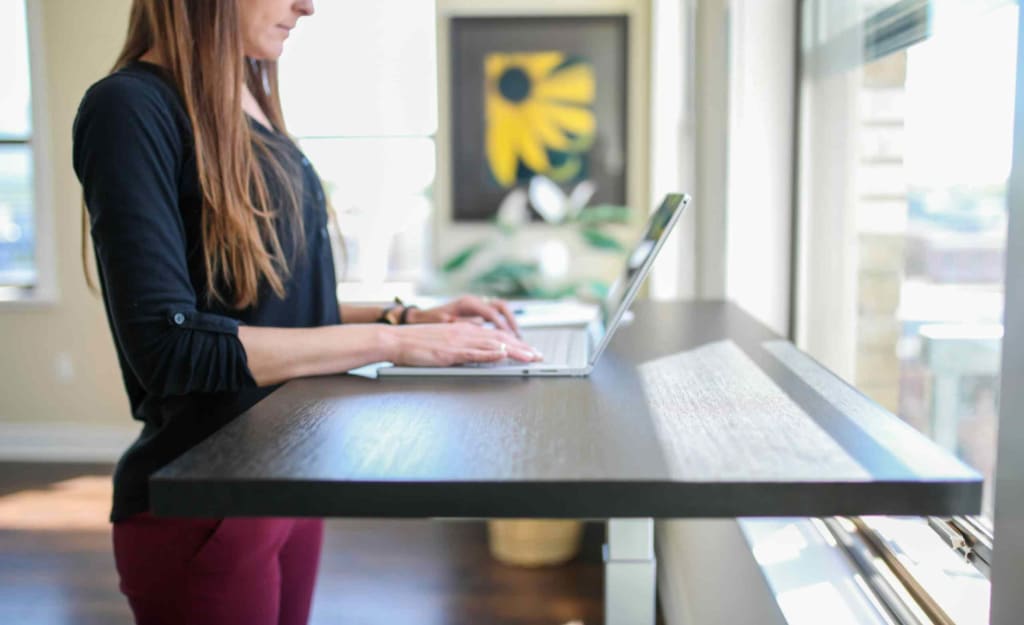
You might exercise, watch your diet, and watch your weight. You generally lead a healthy life.
Therefore, you’d imagine you’re free of lifestyle diseases. Well, not entirely. Not if, after your morning workout, you sit at your desk for eight to ten hours.
The dangers of prolonged sitting
According to a study published in 2010 in the British Journal of Sports Medicine, prolonged sitting puts you at risk of obesity, cancer, cardiovascular disease, diabetes, and early death.
The 2009 study, by Elin Ekblom-Bak and colleagues at the Swedish School of Sport and Health Sciences, concluded that protracted sitting cancels all the benefits of exercise. Sitting puts you at as much risk of these conditions as someone who didn’t exercise at all, according to the researchers.
Then a 2013 paper titled “Sedentary Behavior and Mortality in Older Women”, observed that women who sat for more than 11 hours a day bore the highest risk of dying from cancer and heart disease.
Other studies have confirmed the risks of extended sitting. A January 2015 study published in the Annals of Internal Medicine corroborated that prolonged sitting raises your risk of premature death, diabetes, heart disease, and cancer.
The dangers of prolonged standing
Now you know the dangers of sitting. What’s the solution? Working on your feet? No.
Standing for long is not only tiring but could invite foot and back pain, and a disorder known as chronic venous insufficiency (CVI). The condition causes blood to collect in the veins. This may result in swelling and skin ulcers, accompanied by pain and varicose veins.
Extended standing can also lead to heart and circulatory problems. It also increases the risk of stroke and heart attack, due to blocked arteries.
So, what’s the solution? Do the following:
1. Take breaks
Don’t sit continuously for more than an hour. Walk around. Fetch yourself some drinking water, take a bathroom break, stretch, and get moving. Stand and stretch your legs and get the circulation moving.
2. Work while standing
Whenever you can, perform some tasks while standing. Place your laptop at a level that allows you access from a standing position. In addition, you could stand as you answer your phone, and so on.
3. Adjust your sitting position
Adjust your chair to a comfortable position that is neither too high nor too low. Ensure your feet are planted firmly on the floor, not dangling in the air. Consider using a lumbar support pillow for your back.
4. Move and stretch
Keep moving in your sitting or standing position. Don’t allow your muscles to become stiff. Stretch your muscles after every hour or so of sitting. If your hips feel stiff, do some lunges. Hold the stretches for about 20 seconds and repeat until you feel better.
5. Exercise and get moving
Work movement into your life. Take the stairs instead of the elevator; walk to talk to your colleague in the next office instead of calling them; take a walk during your lunch break. Just do anything that gets your body moving. You can even do short walk-on-the-spot exercises on video.
If you have not done so yet, start an exercise routine. For adults aged 18 - 64, the World Health Organization recommends a minimum of 150 minutes of moderate-intensity aerobic physical activity spread throughout the week.
Alternatively, you could do 75 minutes of vigorous-intensity aerobic activity, again spread throughout the week. You could also do an equivalent combination of moderate- and vigorous-intensity activity.
6. Switch to a standing desk
You may take the bold step of acquiring a standing desk, which allows you to work while standing. You could procure a standing desk or convert your current desk into a standing one. Better still, you could choose a desk that's adjustable for both sitting and standing use.
If you take this route, wean yourself into working while standing. Don’t jump into the deep end or you’ll end with joint and muscle pain and swollen feet. Start by standing for an hour or so at a time, and work your way up.
Create a standing schedule and increase the standing time gradually. Standing for eight or 10 hours is just as bad as sitting for the same period.
The bottom line
It’s not just enough to exercise. You need to watch the amount of time you spend sitting. However, since standing for long hours could be just as harmful as prolonged sitting, you need to strike a balance. That way, you’ll enjoy the health benefits you crave.
About the Creator
Wanjiru Ciira
I'm a story-teller with an interest in the human condition. I write on relationships, health, aging, parenting, travel, and fiction. I've a background in journalism - feature-writing, reporting, and investigative journalism.
Keep reading
More stories from Wanjiru Ciira and writers in Lifehack and other communities.
How to Save Battery on iPhone
How to Save Battery on iPhone Smart Settings, Habits, and Fixes Saving power on an iPhone isn’t about shutting everything off and living in Low Power Mode forever. I’ve tried that method. It works—briefly—but it makes the phone seem compromised, like you’re always arguing with it instead of utilizing it.
By abualyaanart7 days ago in Lifehack
Bruce Lee and The God of War: Kuan Ti
It starts with love.. The Power to the God Of War and Wealth Walk into a Chinese restaurant (even in Oklahoma, USA), a Chinese police station, a kung fu martial arts studio or even a Chinese temple and you often see a red faced warrior holding a heavy quan-do (spear like weapon).
By WILD WAYNE : The Dragon King4 days ago in Chapters


Comments
There are no comments for this story
Be the first to respond and start the conversation.