

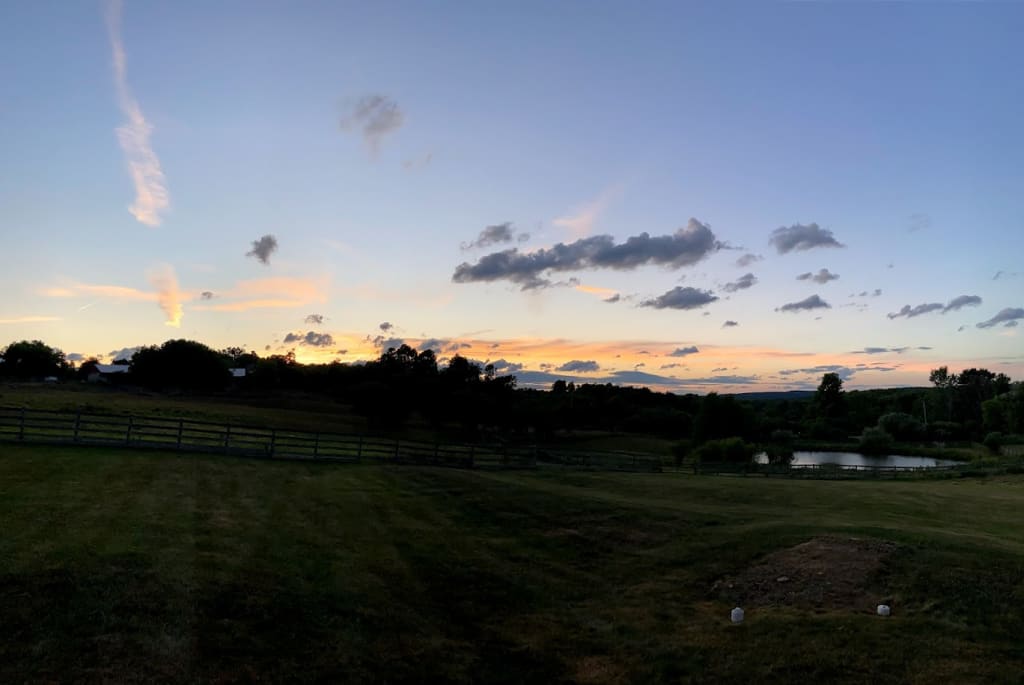
I reach out and grab the shiny silver handle of the tall glass door. It swings open immediately partly because of the push I gave it, but mostly because of the wind. Behind me I hear the blinds and curtains whip against the windows and walls as a cool breeze blows through the tiny house like a tunnel. I breathe in the fresh, crisp morning air and gaze out on the pig enclosure in front of me. There aren’t many pigs out in the morning, but by evening, dozens will cover the field; some eating, others bathing or playing. The tiny house is my two-week Covid-19 quarantine home.
After quarantine, I will begin interning in the sanctuary where the pigs live. I accepted this internship a week before Covid-19 swept through America. In rural New York, the virus doesn’t seem to scare many people, but isolation for two weeks is crucial to prevent potential spreading across the sanctuary staff. Two weeks alone in quarantine on the east coast countryside gives a person a lot to think about. I came here to meet animals, learn about our food system, and discover the best ways to educate others on how we can establish more wholesome diets. The more I think about why I am here, the more I wonder whether what I am doing is enough to make a difference.
Over a year and a half ago, I decided to follow a vegan lifestyle. I had been vegetarian already for a few years and quickly cut out other animal products. Cruelty-free and vegan cosmetics, soaps, and other bathroom essentials were added to my shopping list over time. Thrift shopping came next as I donated old clothes and purchased new ones from thrift stores, letting my sister mend and upcycle them. I purchased bottles and a recipe book for concocting my own cleaning products. Amazon supplied me with reusable paper towels, produce bags, storage bags, and makeup wipes. I checked things off my list of what I viewed as part of a “sustainable lifestyle.” Now, on the porch of my temporary tiny house, I wondered if those things
We all have an idea of what makes or breaks sustainability. If I eat meat but compost my vegetables, am I doing a good job? The truth is that sustainability is not cutting out paper products or eating local foods; it about lifestyle transformation. And it’s not easy! When store shelves are lined with paper towels, cheese, and bleach, it’s hard to go out of our way to find alternatives. So, I began thinking of ways I could truly make a difference in my household that are affordable and sustainable.
First on my list: castile soap. Castile soap is affordable (I got 16 oz. for less than $10). It is concentrated in a way that leaves you needing small amounts per use. It can be used for any household chore. I use it as soap in my shower and as laundry detergent. It can easily be found with all organic ingredients (like coconut and olive oil) that are sustainably grown. The wide variety of uses for the product helps eliminate the plastic bottle waste that comes from purchasing dozens of products. Having no chemical ingredients is a major boost because you can use it to create cleaning products that are not harmful to our Earth and leave no waste behind. This product makes for a sustainable life because it makes one big switch for a lot of common household products. Castile soap is the way to go on nearly all washing, cleaning, and scrubbing needs.
Second on my list: stop eating unsustainable foods. I’m not just telling you to cut out meat or dairy; I’m telling you that in order to have a sustainable life, you need to have a sustainable body fueled by sustainable foods. Meat, dairy, and eggs have time and time again proven to be detrimental to the environment and to our health. But what about those vegan meats, coffee, and avocados? They are not serving your sustainable goals either. More foods than we can imagine are causing environmental damage as forests are clear-cut and mono-cropping ruins soils around the world. Eating local doesn’t help as much as we think it does either as food miles are not as big of an issue as how the crops are grown. So how do we make our household food system sustainable? Of course, there is great disagreement over this as people hold on to long-time cultural and family traditions, but the proof is in the research (which you can easily find in peer-reviewed and academically accredited publications). Here is my sustainability hack for the kitchen: stop eating meat, dairy, and eggs, save vegetable scraps to make broth, then compost or bring the waste to a friend who composts, shop local when it is sustainable, and buy in-season produce whenever you can. Start small and work your way up to bigger food swaps. It takes time to find a diet that will sustain your body and the Earth. Don’t fret if you mess up, just try your best to nurture the Earth the way it does you.
Third: don’t use takeaway containers. If you love to eat out like I do, you may end up causing a lot of plastic and Styrofoam waste. During Covid-19 it has become increasingly difficult to use reusable containers like water bottles, bento boxes, and even shopping bags. So, what can you do? Opt to eat in the restaurant when you can or ask if you can bring your own containers. If neither are possible, consider whether or not the takeout is worth your plastic fork ending up in a whale’s stomach. The answer to that is probably not, and that you can cook your own meal that night. Meal prepping is a great solution to having ready-to-go meals on busy nights. If you’re making waffles, make a big batch and freeze them in reusable storage bags so you have breakfast for the entire week. The same applies to burritos, pastas, and so much more. One small shift in the way we view plastic containers can change how we live and cause a more sustainable and waste-free home.
When I stand out on that porch watching the pigs graze, I feel obligation to bring awareness of the simple and loving lives we can live. The pigs come when they’re called by their names and love cuddles and belly rubs. As the eighth day of quarantine passes, I realize that what I am doing for this Earth is a lot. But it’s not enough. We will never be able to do enough to repay the Earth for what it has done for us: provided us a home, air, water, food, and joy. What is enough is that I am trying my best. If you try your best, and I mean your true, honest, full-on best, then you are doing enough. If you can do more, do more. Now that is the best sustainability hack out there. My new pig friends will appreciate it and so will your body, mind, and home.
About the Creator
Keep reading
More stories from Cheyenne Reuter and writers in Lifehack and other communities.
The Secret High: How Euphoria Makes Life Feel Magical
Have you ever had a moment where the world suddenly felt lighter, your chest felt warm, and your heart raced for no reason at all? Maybe it was the first sip of coffee in the morning that was perfect, the sunlight spilling through your window, or a song that hit every note just right. That feeling—pure, almost electric joy—is euphoria. Not just happiness, but a rush that makes ordinary moments feel extraordinary.
By Alex Sterling 4 days ago in Lifehack
The BAFTA Awards
By now, in a stunning departure from recent years, most of the world is aware of what happened at the BAFTA film awards. Social Media Headlines will tell you the bare bones: that John Davidson, a Tourette's Syndrome advocate, shouted a racial slur at two Actors of Colour, Michael B Jordan and Delroy Lindo.
By Natasja Rose7 days ago in Psyche




Comments
There are no comments for this story
Be the first to respond and start the conversation.