
Disease Affects The Democratic Republic Of The Congo In A "Mysterious" Way What Are We Aware Of?
Although reports differ, some claim that 143 people have died.

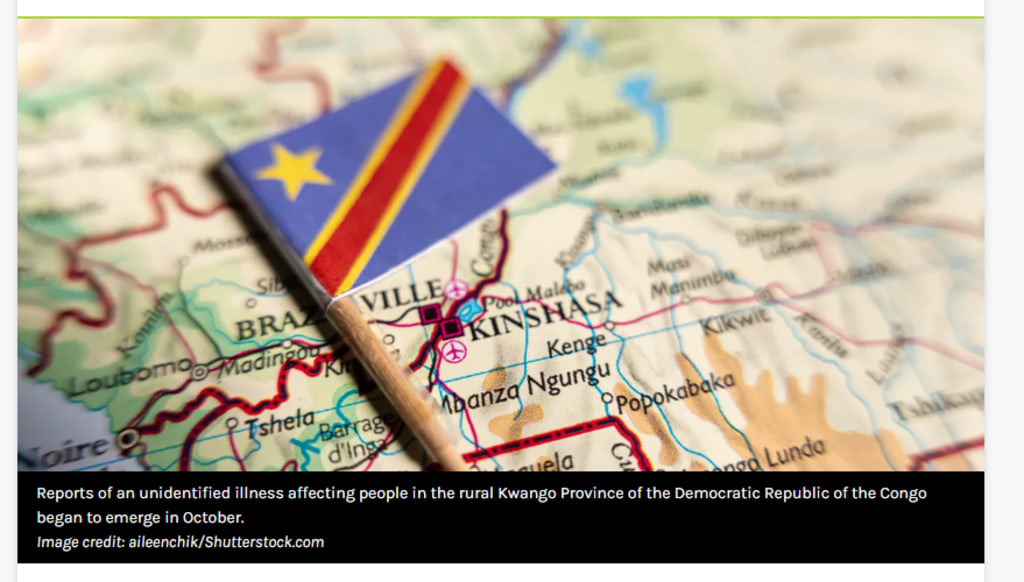
Since October 2024, more than 400 persons in the rural Democratic Republic of the Congo (DRC) province of Kwango have reportedly been afflicted by an unknown illness. Although specialists admit that it is difficult to gain a genuine sense of the issue's scope, some estimates have put the number of deaths to date above 140.
"The infection probably has a much lower mortality rate than [the] figures would suggest, given the difficulties in identifying mild infections in Central Africa," Professor Paul Hunter of the University of East Anglia told Science Media Centre.
Nevertheless, this new mystery illness is placing an unwanted burden on the health system in a nation already dealing with the public health emergency brought on by the ongoing mpox outbreak.
The current state of affairs
A World Health Organisation (WHO) report states that between October 24 and December 5, the Panzi health zone in Kwango Province officially documented 406 instances of the disease, the bulk of which were in youngsters. Malnutrition was also noted as a contributing factor in the most severe instances.
According to Professor Hunter, "the illness appears to be primarily a respiratory infection with symptoms including fever, headache, nasal congestion, cough, difficulty breathing, and anaemia."
A local quick reaction team was sent out following an emergency meeting on November 30. A WHO-supported national team was sent out shortly after. In order to stop more deaths, efforts are being made on the ground to monitor the spread and provide medical assistance.
There are substantial obstacles, though. The affected area is isolated and rural; it takes two days to get there from Kinshasa, the capital, via routes that are disrupted by the rainy season. The most vulnerable are probably losing out on treatments and preventative care, like vaccinations, because healthcare is not free in this area. Problems with supply have resulted in Common drugs and other essential medical supplies, such as blood for transfusions, may not be available in sufficient or consistent quantities.
Furthermore, in September 2024, it was determined that food security in Kwango Province had reached "crisis level." Roger Kamba, the Congolese Minister of Public Health, Hygiene, and Prevention, described how this area has among of the highest rates of child malnutrition in the nation during a news conference that was streamed on the social media site X.
The WHO states that "the overall risk level to the affected communities is assessed as high."
In addition to trying to stop the sickness from spreading, the current goal is to try to alleviate the local situation as much as possible. However, there is still a clear question: what ailment are we dealing with here?
What is the mystery ailment causing?
Kamba informed reporters, "It appears to be a respiratory illness." "Looks like it," I answered. Very little was known at the time of the news briefing because the government had only just received official notice of the epidemic a few days earlier.
Dr. Jake Dunning of the Pandemic Sciences Institute at the University of Oxford told Science Media Centre, "Based on the symptoms described and descriptions of who is being affected the most, I would say there are multiple, potential infectious causes for this unidentified illness cluster, and there are some possible non-infectious causes too."
"It is not helpful and can occasionally be harmful to speculate about the causes of unidentified illness events, which occur periodically, especially in African countries."
Dunning clarified that the international community should give the local government time to finish their work because epidemiological investigations take time.
One recent advancement has been made, though. WHO Director-General Dr. Tedros Ghebreyesus emphasised the possible role of malaria in at least some of the cases at a briefing on December 10.
Ten of the twelve original samples that were taken were positive for malaria, though it's possible that many diseases are at play. To identify the precise cause or causes, more samples will be gathered and examined, he stated.
Malaria is endemic in the area, and Kwango Province has a susceptible population due to high rates of malnutrition and inadequate access to preventative healthcare.
There are at least some early indications that the localised reaction is effective, but it will probably be some time before we have a better understanding of the causes of the unknown illness. According to the University of Minnesota CIDRAP, Dr. Mike Ryan commended DRC officials for their prompt reporting of the outbreak, while Dr. Abdi Mahamud of the WHO stated that there hasn't been a significant rise in cases or fatalities.
About the Creator
Keep reading
More stories from Francis Dami and writers in Lifehack and other communities.
"XEC": What Is It? Everything You Should Know About The Most Recent COVID-19 Variant
Though it hasn't yet taken the lead, a new COVID-19 variant has just entered the picture, and experts believe that XEC will be the next significant variant to keep an eye on.
By Francis Damiabout a year ago in Lifehack
If You’ve Always Done What You’ve Always Done
At the start of 2025, I started to post articles on my website under the category of ’52 Guiding Lights.' The goal was to share insights on sayings and idioms that aid daily life. I got up to number 16. The goal is to publish these as a management aid. However, we plan to release them in smaller batches, such as 12 at a time. That’s a year’s worth.
By Calvin Londona day ago in Lifehack
The Nutrient Gap No One Talks About When It Comes to Focus and Attention
Key Takeaways Taking the proper nutrients helps maintain optimal body function. The vagus nerve is a vital component in the connection between the brain and the gut. The right supplements, such as Neupril Pure Methylfolate, play a key role in helping clear brain fog.
By Tess DiNapoli5 days ago in Lifehack
The Devil's Cut
“Comrade, finally you’re awake.” The voice was smooth, sensual. A flickering incandescent bar was all that lit the white, sterile room. All Vladimir remembered was everything going black. He tried to move his arms and found them strapped to the gurney.
By Matthew J. Fromm5 days ago in Fiction



Comments (1)
Hey, just wanna let you know that this is more suitable to be posted in the Longevity community 😊