
Can you know by looking at the eyes? When will death happen
The risk of death, according to scientists, is linked to the difference between the biological age of the retina and the actual age of the individual, based on which death can be predicted.

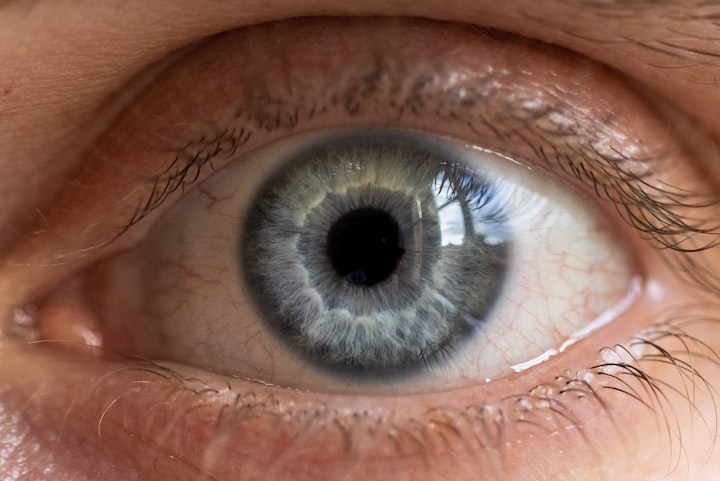
It is said that the human eyes are like a mirror, which can tell a lot. They can reveal many expressions like sadness, happiness, anger, love. But do you know that by looking at the eyes, it can also be known when a person will die? It is surprising, but it is also true.
Recently, researchers have developed a new algorithm based on Artificial Intelligence (AI), with the help of which a person can predict his death based on the scanning of his retina. Significantly, the back screen of the eye is called the retina. It is a layer of light-sensitive cells found in the eye. When light reaches this layer, with its help we are able to see.
The research done in this regard has been published in the British Journal of Ophthalmology. Scientists have claimed that the study of the retina can be known deeply about human health. The risk of death, according to scientists, is associated with the difference between the biological age of the retina and the age of the individual, based on which it can be estimated. In such a situation, researchers believe that this 'retinal age gap' can be used as a screening tool.
Studies show that the retina contains a whole network of microscopic vessels, which are very sensitive to changes in health. With the help of this one can get accurate information about blood flow in the body and brain health. Scientists say that it is true that with increasing age, the risk of diseases and death also increases.
However, it has also been observed that this risk may be different in people of the same age because the physical appearance of every person is not the same. According to him, biological age has an important role in this. Which can give far more accurate clues about health in the present as well as in the future.
It is worth noting that as people age or diseases start to dominate, due to which chemical changes start taking place in the DNA of organisms. If seen, this change in our cells is related to our biological age.
What came out of the study?
In the past, researchers have used tissue, cells, and imaging-based indicators to determine biological age, but these techniques are either expensive or time-consuming. Along with this, issues like ethics are also associated with them. In such a situation, the researchers associated with this research have taken the help of deep learning techniques.
According to him, with the help of this, the age of the retina can be detected accurately. Along with this, it has also been informed that with the help of the difference (retinal age gap) between the retina and the actual age of a person, an increased risk of death can be detected.
In their study, the researchers analyzed 80,169 retinal images from 46,969 adults aged 40 to 69, taken from a UK biobank. Of these, 11,052 people who had 19,200 pictures of the retina of the right-hand eye were relatively healthy people. Their deep learning and AI-based analysis showed that there is a strong relationship between the age of the retina and the actual age of the person. Its accuracy was about three and a half years.
Of this, the retinal age gap of the remaining 35,917 people was studied for the next 11 years. Of these, 1871 people died during this period. Of these, 17 % died of heart disease, 54.5% from cancer, and the remaining 28.5% due to other causes including dementia.
The analysis showed that there was an association between a 67 percent higher risk of death and a retinal age gap, compared with varying degrees of risk for cancer and other cardiovascular diseases. Not only this, but research has also shown that every single year increase in the retinal age gap was associated with a 2 percent increase in the risk of death from any cause.
Although researchers have also accepted that nothing can be said about why this happens. But it has become clear that the retinal age gap can be helpful in predicting an increased risk of death. The findings suggest that retinal age may be an important biomarker of aging, which may facilitate the identification of diseases.
About the Creator
Jayveer Vala
I write.
Keep reading
More stories from Jayveer Vala and writers in Lifehack and other communities.
What IF You Stopped Blinking (Minute by Minute)
Blinking- by the time I finish this sentence, you'll have blinked at least once. It's something we do without thinking, and good thing too because we do it so often. But what if you stopped blinking forever? The consequences can be shocking. In one hour you're going to blink between 900 and 1200 times. In a single day, you'll blink between 14,400 and 19,200 times. In a week that's 100,800 to 134,400 times. And in a year it's a whopping 5.2 million and 7.1 million blinks, giving your eyelids a real workout. Every time you blink your brain is taking a micro rest to process information.
By Jayveer Vala3 years ago in Lifehack
I Stopped Trying to Impress Women—And This One Shift Made Them Notice Me Instantly
For years, I thought attracting women was all about effort—saying the right lines, dressing perfectly, and trying to be as impressive as possible. I believed that if I could just present the best version of myself, everything would fall into place.
By Lukáš Hrdlička7 days ago in Lifehack


Comments
There are no comments for this story
Be the first to respond and start the conversation.