
Business Requires Brains , How a Clever Marketing Trick Fooled Thousands
The deceptive campaign of a skincare company and how blind sharing on social media helped boost its sales
Running a successful business is not just about having a great product — it requires strategy, creativity, and most importantly, brains. A fascinating and somewhat concerning example of this recently came to light in the world of pharmaceutical marketing.
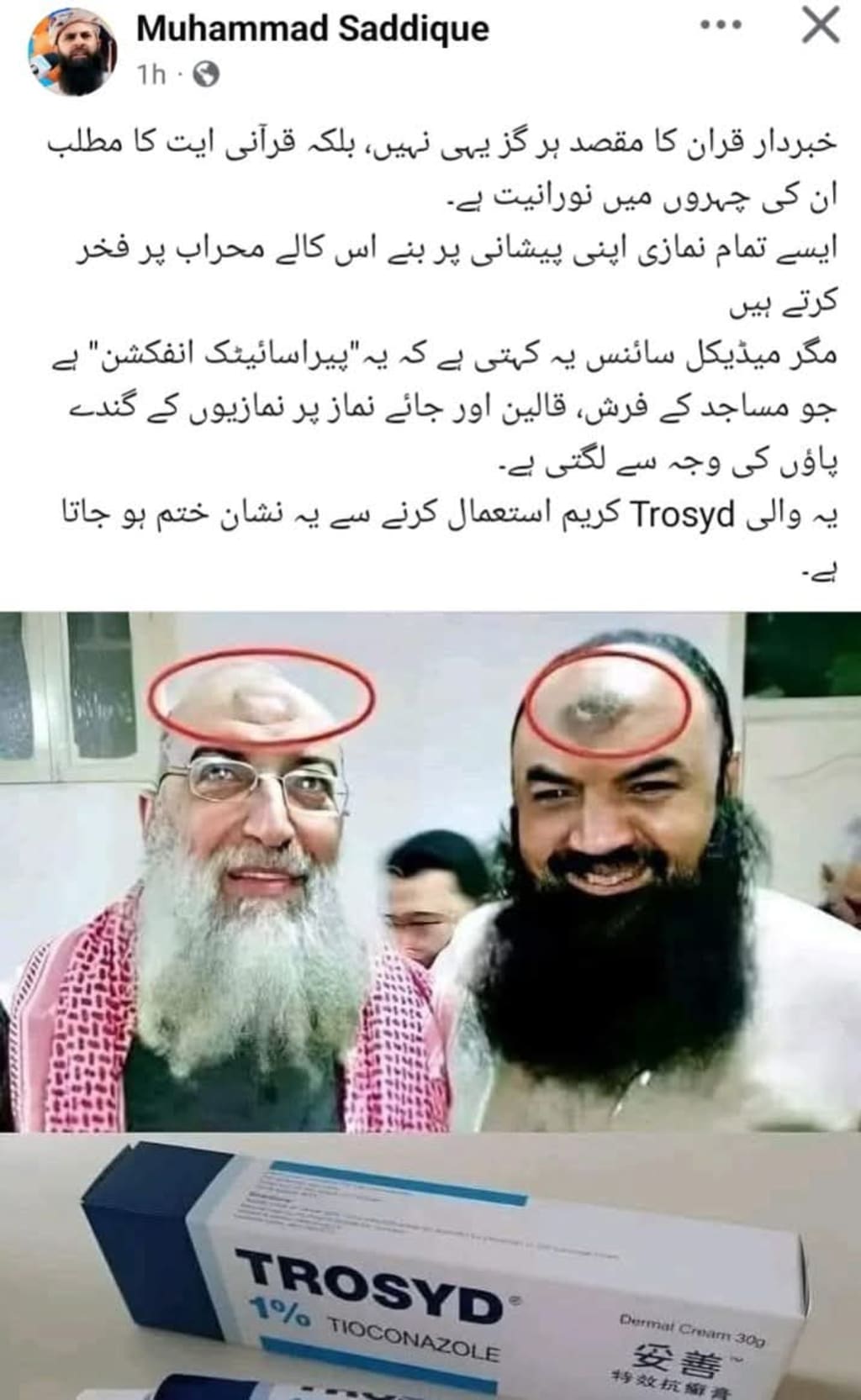
A certain skincare company launched a sales campaign that cleverly played with public perception and used social media as its main tool. Their target: to increase the sales of a specific cream product. Their tactic: convince people that a common religious mark — the dark spot on the forehead of those who pray regularly — was actually caused by a hygiene problem.
Yes, you read that right.
This company propagated the idea that the dark marks on the foreheads of devout individuals were not a sign of their piety or frequent bowing in prayer, but rather the result of bacteria and dirt from the unclean feet of fellow worshippers pressing against their foreheads during congregational prayers.
This claim spread like wildfire, especially across social media platforms where people often share posts without verifying their authenticity. The notion struck a chord with many, primarily because it seemed to combine hygiene, religion, and modern skincare all in one package. As a result, the company’s cream — allegedly designed to "clean" and "prevent" such marks — saw a massive surge in sales.
But here's the catch: there is no scientific evidence to support this claim.
A little research on medical websites, forums, and publications — or a conversation with any qualified dermatologist — quickly reveals that there is no proven medical basis for this theory. The darkening of the forehead, medically known as prayer mark hyperpigmentation, is mostly caused by repeated friction and pressure on the same spot during acts of prostration, especially when done over a long period. It’s a harmless condition and not caused by any form of bacterial contamination from someone’s feet.
So, what really happened here?
This was a calculated marketing move. The company played on religious sentiment, coupled it with a fabricated medical concern, and introduced a “solution” — their product — to fix it. From a business perspective, it was a smart move. From a moral and ethical standpoint, however, it’s quite questionable.
And who helped the most in spreading this misinformation?
It wasn’t the company alone. It was everyday social media users — the “copy-paste warriors” — who blindly shared the campaign’s message without taking a moment to verify its legitimacy. Their intention might have been good; perhaps they thought they were helping people become more hygienically aware. But in reality, they became unknowing agents of a deceptive marketing scheme.
This is not an isolated case. Many companies around the world use similar techniques — manipulate emotions, twist facts, and then flood digital platforms with catchy, half-true messages. When users don’t stop to think, question, or investigate, these messages gain traction and become "truth" in the public mind.
Final Thought
This example serves as a wake-up call for all of us. Business success does indeed require brains — and clearly, this company used theirs. But as consumers and responsible social media users, we must use ours too.
Don’t fall for clever marketing. Don’t believe every viral post. And certainly, don’t share medical claims unless they are verified by authentic and scientific sources.
And finally, as a gentle reminder to the religious community: the presence of a prayer mark on someone’s forehead is neither a confirmed sign of piety nor a health issue that needs treatment. Let’s not allow marketing gimmicks to redefine our beliefs.
About the Creator
Keep reading
More stories from 🇲 🇮 🇳 🇩 🇺 🇳 🇫 🇴 🇱 🇩 🇪 🇩 and writers in Lifehack and other communities.
Life Beneath the Waves: A Glimpse Inside a Nuclear Submarine
Right now, while around 650,000 to 700,000 people are flying thousands of feet above the Earth in airplanes, thousands of others are deep below the ocean’s surface in submarines. A nuclear submarine is one of the most expensive weapons in the world. Its greatest strength lies in its silence. It spends most of its life underwater, hidden from sight. Yet, inside this powerful weapon, the most delicate element is its crew. So, let’s take a glimpse into the life of those who live inside this metal capsule.
By 🇲 🇮 🇳 🇩 🇺 🇳 🇫 🇴 🇱 🇩 🇪 🇩 6 months ago in Fiction
BPC-157 + TB-500: The Peptide Duo for Advanced Healing
The Peptide Therapy Duo Everyone’s Talking About If you’re struggling with slow recovery, nagging injuries, or ongoing inflammation, you may have heard about peptide therapy—especially the combination of BPC-157 and TB-500. This powerful duo is gaining attention in the wellness and recovery world for its potential to help the body heal naturally.
By Hazel Jackson6 days ago in Lifehack
Being Human Is Heavy
No one tells you that being human comes with a weight you cannot put down. Not when you’re born, not when you learn to walk, not even when you learn to love. It arrives quietly, accumulating over years, stacking itself in invisible layers until one day you wake up tired for no clear reason. You blame sleep. You blame work. You blame age. But the truth is simpler and harder: being human is heavy.
By LUNA EDITHa day ago in Lifehack



Comments
There are no comments for this story
Be the first to respond and start the conversation.