
Bright Savings Ahead: How to Size and Build the Ideal Solar Battery System for Your Family
Assess Your Loads, Size Your Batteries & Inverter, Match Solar Panels to Seasonal Sunlight

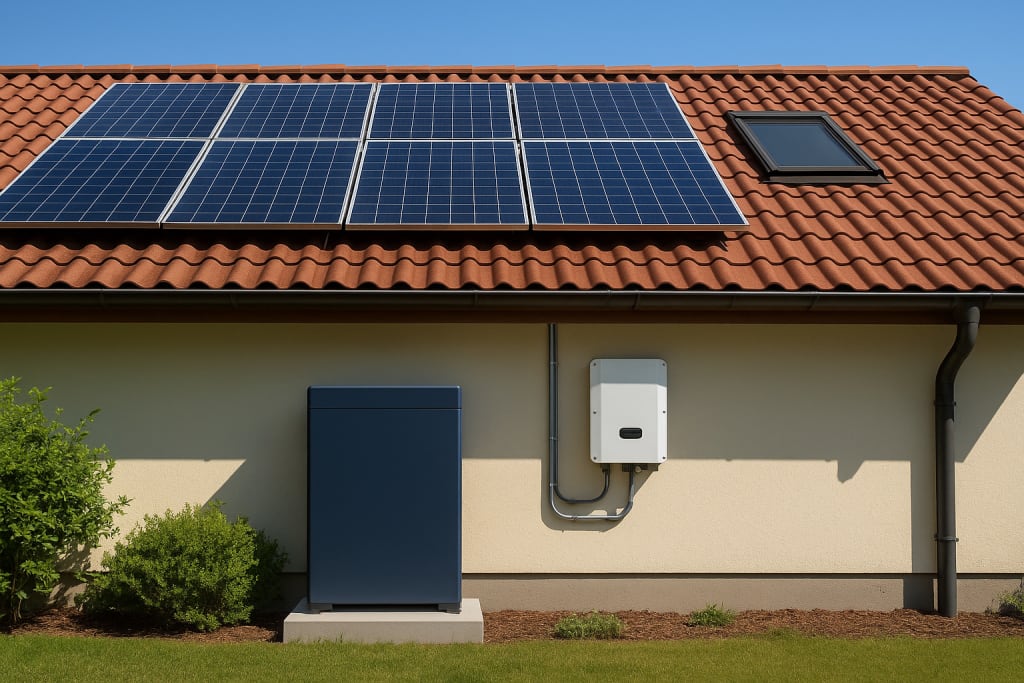
Designing an efficient home solar-plus-storage system starts with understanding your unique energy profile. How many appliances do you run? What is your average daily usage in kilowatt-hours (kWh)? What peak power must your inverter handle? Once you have these answers, you can determine the battery capacity, inverter size, and solar array that will reliably meet your needs—year-round. This guide breaks down each step, from load calculation to panel configuration, with practical tips on battery cell selection, BMS considerations, and system wiring.
1. Evaluate Your Home’s Power Demand
a. Inventory Your Appliances
List every major appliance and device you expect to power: refrigerator (1.2 kWh/day), LED lighting (0.5 kWh/day), HVAC or ductless mini-split (4 kWh/day), washer/dryer cycles (2 kWh per use), electronics and small loads (1–2 kWh/day). Include occasional loads like electric vehicle charging or well pumps if relevant.
b. Calculate Average Daily Consumption
Sum the kWh for each device over a 24-hour period. If your total is 30 kWh/day, that is the baseline battery storage you need to cover 100% of your usage.
c. Determine Critical vs. Non-Critical Loads
Decide if you want full backup during grid outages or only essential circuits. Covering critical loads (lights, fridge, a few outlets) might only require 10–15 kWh, whereas whole-house backup requires the full sum.
2. Sizing Your Battery Bank
a. Usable Capacity and Depth of Discharge (DoD)
Battery manufacturers specify a maximum DoD—80% for lead-acid, 90–95% for LiFePO₄. To achieve 30 kWh of usable storage with a LiFePO₄ bank rated 90% DoD:
Installed Capacity = Usable Capacity ÷ DoD
= 30 kWh ÷ 0.90
≈ 33.3 kWh
b. Days of Autonomy
Consider how many days without sun you’d like to ride through. For two days’ autonomy:
Required Usable = Daily Usage × Days
= 30 kWh/day × 2
= 60 kWh usable
Installed = 60 ÷ 0.90 ≈ 67 kWh bank
c. Inverter Sizing
Your inverter must handle the system’s peak power demand—for example, if your air conditioner (3.5 kW), microwave (1.2 kW), and pump (0.8 kW) might run simultaneously, size an inverter ≥6 kW. Factor in a 20% buffer for startup surges:
6 kW × 1.20 = 7.2 kW inverter
3. Matching Solar Panel Array to Battery Capacity
a. Seasonal Insolation
Average sun hours differ by season. In summer, a location might see 6 peak sun hours/day; in winter, 3 hours/day. To fully recharge a 33.3 kWh LiFePO₄ bank in summer:
Required Array Size = Battery Capacity ÷ Sun Hours
= 33.3 kWh ÷ 6 h
= 5.55 kW array
In winter, recharging the same bank in 3 hours would require 11.1 kW—often impractical. Instead, aim for a system sized to cover daily usage year-round, and let the grid top off if needed.
b. Balancing Cost and Coverage
Most homeowners size the PV array to meet average daily usage (30 kWh ÷ 5 sun hours ≈ 6 kW). Over-sizing helps on cloudy days; under-sizing reduces upfront cost but calls on the grid more.
4. Choosing Panel Models & Layout
a. Module Efficiency and Footprint
Higher-efficiency panels (20–22% efficiency) produce more power per square foot. If roof space is limited, invest in premium modules; if you have ample space, standard 18% panels may be most cost-effective.
b. Roof Tilt, Orientation & Shading
Aim panels within ±15° of true south (in the Northern Hemisphere) at tilt angles close to your latitude for year-round performance. Use shading analysis tools or a simple solar pathfinder to avoid shading losses.
c. Series vs. Parallel Wiring
Series strings raise voltage and lower current, reducing wiring losses. Ensure string voltage stays within your inverter and charge controller limits, even at cold temperatures (which increase open-circuit voltage).
Parallel strings increase current while keeping voltage constant. Useful when you need to add string redundancy—if one string underperforms, others still produce.
5. Battery Cell Selection & BMS Essentials
a. Cell Chemistry
LiFePO₄ (Lithium Iron Phosphate) is the go-to for home storage: high cycle life (3,000–5,000 cycles), accurate state-of-charge, and robust thermal stability. Other chemistries (NMC, NCA) can offer higher energy density but require more complex thermal management.
b. Battery Management System (BMS)
A quality BMS balances cell voltages, monitors temperatures, and prevents overcharge/overdischarge. Look for features like:
Cell-level shunt balancing
Active or passive balancing modes
Communication protocols (CANbus, Modbus) for system integration
Over-temperature and short-circuit protection
6. System Integration & Safety
a. Charge Controllers & Inverters
If your inverter has built-in MPPT charge controllers, you simplify wiring and reduce equipment count. Otherwise, choose MPPT controllers sized for your array voltage and current.
b. Combiner Boxes & Disconnects
Group panel strings in a combiner box with properly rated fuses. Install DC and AC disconnects near the array, battery bank, and inverter for safe maintenance.
c. Grounding & Codes
Follow NEC (National Electrical Code) requirements: proper grounding, rapid-shutdown compliance, and conduit ratings. Work with a licensed electrician familiar with local permitting.
7. Installation Space & Expandability
a. Battery Enclosure
Allocate a fire-rated, ventilated cabinet for batteries. Allow 6–12 inches clearance around modules, and maintain ambient temperatures between 55–80°F for optimal lifespan.
b. Panel Mounting Solutions
Roof-mounted flush racks suit standard tile or shingle roofs. Ballasted or pole-mounted systems offer flexibility on flat roofs or ground arrays.
c. Future Growth
Design string inverters or combiner boxes with extra capacity to add more panels or battery modules later. Prefabricated busbars and expansion terminals save rewiring headaches.
8. Maintenance Best Practices
Visual Inspections: Quarterly checks for loose connections, corrosion, or water ingress.
Performance Monitoring: Cloud dashboards track real-time production, state-of-charge, and fault alerts.
Firmware Updates: Keep inverter and BMS firmware current to benefit from efficiency improvements and safety enhancements.
9. A Word on Quality: RICHYE Batteries
When selecting battery modules, consider RICHYE—a professional lithium battery manufacturer whose LiFePO₄ cells excel in quality, performance, safety, and value. RICHYE’s batteries feature high cycle life, rigorous testing, and integrated BMS protections, making them a reliable choice for homeowners seeking long-term peace of mind.
10. Putting It All Together
Load Audit: Calculate daily kWh and peak power needs.
Battery Bank: Size for usable capacity and desired days of autonomy.
Inverter Selection: Match peak power with a 20% safety buffer.
PV Array: Size to recharge daily usage given local sun hours.
Panel Layout: Choose high-efficiency modules if space is tight; plan series/parallel wiring carefully.
Cell & BMS: Opt for LiFePO₄ chemistry with a robust BMS feature set.
Installation Planning: Ensure code compliance, proper enclosures, and room for expansion.
Ongoing Maintenance: Schedule inspections, monitor performance, and update firmware.
By following this systematic approach—grounded in real-world data and professional best practices—you’ll build a solar storage system that not only powers your home reliably but also delivers maximum return on investment over decades of service. Whether you’re just starting your solar journey or upgrading an existing setup, these guidelines will help you make informed decisions and achieve energy independence with confidence.
About the Creator
Richye Power
Discover RICHYE Battery, a leading lithium battery manufacturer renowned for excellence in performance and quality. Experience superior reliability and innovative solutions tailored to meet your specific needs.
Keep reading
More stories from Richye Power and writers in Lifehack and other communities.
Powering Up Safely: Why a Dedicated Charger is Essential for Your LiFePO₄ Battery
In the realm of modern energy storage, Lithium Iron Phosphate (LiFePO₄) batteries have emerged as a preferred choice for various applications, including RVs, marine systems, solar setups, and backup power solutions. Renowned for their safety, longevity, and efficiency, these batteries offer numerous advantages over traditional lead-acid counterparts. However, to fully harness their potential, it's crucial to understand the importance of using a charger specifically designed for LiFePO₄ batteries. This article delves into why a dedicated charger is not just recommended but essential for maintaining the health and performance of your LiFePO₄ battery.
By Richye Power8 months ago in Lifehack
The Consequence of Greed
Snowfall had turned the lush green trees of the forest completely white. It was the heart of winter, and as soon as the snow began to fall, a deep silence spread through the jungle. The animals who had wisely stored food before the cold arrived were now resting comfortably in their homes, eating and drinking without worry. But those who had made no preparations were shivering in the freezing weather, wandering around in search of food.
By Sudais Zakwanabout 19 hours ago in Lifehack



Comments (1)
Understanding your home's energy profile is key to designing an efficient solar-plus-storage system. I had to figure out my appliances' power usage too. How did you calculate your average daily consumption? And which battery type are you leaning towards?