
Brain Medicine
Understanding the Role of Medications in Treating Neurological and Psychiatric Disorders

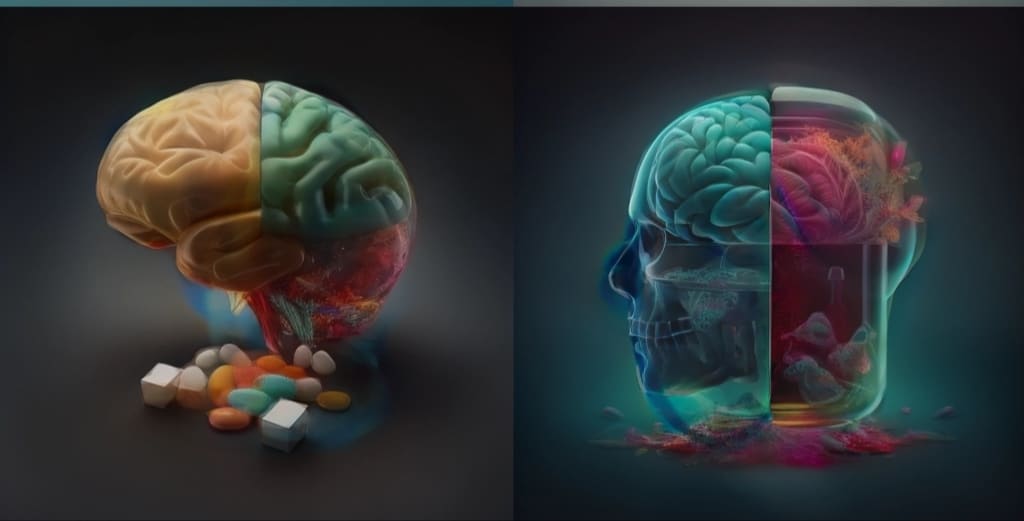
" medicine" can refer to a wide range of medications and treatments that are used to treat various neurological conditions affecting the brain. Here are some of the most common types of brain medicine and their uses:
1)Antidepressants:
Antidepressants are medications used to treat depression and other mood disorders by regulating neurotransmitters in the brain, such as serotonin, norepinephrine, and dopamine. These medications work by increasing the availability of these neurotransmitters, which are involved in regulating mood, emotions, and sleep.
There are several types of antidepressants, including:
Selective serotonin reuptake inhibitors (SSRIs): SSRIs are the most commonly prescribed type of antidepressant. They work by blocking the reabsorption of serotonin in the brain, increasing its availability and improving mood.
Serotonin and norepinephrine reuptake inhibitors (SNRIs): SNRIs work by blocking the reabsorption of both serotonin and norepinephrine in the brain, improving mood and reducing anxiety.
Tricyclic antidepressants (TCAs): TCAs were one of the first types of antidepressants developed. They work by blocking the reabsorption of serotonin and norepinephrine, and also affect other neurotransmitters in the brain.
Monoamine oxidase inhibitors (MAOIs): MAOIs work by blocking the action of an enzyme that breaks down serotonin, norepinephrine, and dopamine in the brain. They are less commonly prescribed due to their potential for dangerous interactions with certain foods and medications.
Antidepressants can take several weeks to start working, and may have side effects such as nausea, dizziness, and changes in appetite or sleep patterns. It's important to talk to a healthcare professional before starting any new medication, and to closely monitor any changes in mood or behaviour while taking antidepressants.
2)Antipsychotics:
Antipsychotics are medications used to treat psychotic disorders such as schizophrenia, bipolar disorder, and severe depression with psychosis. These medications work by blocking the action of dopamine in the brain, which can help to reduce hallucinations, delusions, and other symptoms of psychosis.
There are two main types of antipsychotics: typical (first-generation) antipsychotics and atypical (second-generation) antipsychotics. Some common examples of each type include:
Typical antipsychotics:
Chlorpromazine (Thorazine)
Haloperidol (Haldol)
Fluphenazine (Prolixin)
Perphenazine (Trilafon)
A typical antipsychotics:
Aripiprazole (Abilify)
Olanzapine (Zyprexa)
Risperidone (Risperdal)
Quetiapine (Seroquel)
Atypical antipsychotics are generally preferred over typical antipsychotics due to their lower risk of movement disorders such as tardive dyskinesia, which can be a side effect of long-term use of typical antipsychotics.
It's important to note that antipsychotics can have significant side effects, including weight gain, sedation, and increased risk of diabetes and other metabolic disorders. They should be taken under the guidance and supervision of a healthcare professional, and any side effects should be monitored closely.
3)Mood stabilized:
Mood stabilizers are medications used to treat bipolar disorder, a mental health condition characterized by periods of depression and episodes of mania or hypomania. These medications help to stabilize mood and prevent swings between these extreme states.
There are several types of mood stabilizers, including:
Lithium: Lithium is a medication that has been used for decades as a first-line treatment for bipolar disorder. It works by modulating the levels of neurotransmitters in the brain, including serotonin and norepinephrine.
Anticonvulsants: Several anticonvulsant medications, which are typically used to treat seizures, can also be effective as mood stabilizers. These include medications such as valproic acid (Depakote) and lamotrigine (Lamictal).
Atypical antipsychotics: Some atypical antipsychotic medications, such as aripiprazole (Abilify) and olanzapine (Zyprexa), can also be effective as mood stabilizers.
Mood stabilizers can have side effects, including weight gain, tremors, and drowsiness. Blood tests may be necessary to monitor levels of the medication in the body and prevent toxicity. It's important to work closely with a healthcare professional to find the right medication and dosage for each individual, and to closely monitor any changes in mood or behavior while taking mood stabilizers.
4)Stimulants:
Stimulants are medications that increase alertness, attention, and energy levels. They are commonly used to treat attention deficit hyperactivity disorder (ADHD) and narcolepsy, a sleep disorder characterized by excessive daytime sleepiness.
Stimulants work by increasing the levels of certain neurotransmitters in the brain, such as dopamine and norepinephrine. Some common stimulant medications include:
Methylphenidate (Ritalin): This medication is commonly prescribed to treat ADHD in children and adults. It can improve attention and reduce impulsivity and hyperactivity.
Amphetamines (Adderall, Dexedrine): These medications are also used to treat ADHD and narcolepsy. They can improve focus, alertness, and mood.
Modafinil (Provigil): This medication is used to treat narcolepsy and other sleep disorders. It can help to reduce daytime sleepiness and improve alertness and cognitive function.
While stimulants can be effective in treating these conditions, they can also have side effects, including insomnia, anxiety, and loss of appetite. In some cases, they can also be addictive. It's important to work closely with a healthcare professional to find the right medication and dosage for each individual, and to monitor any side effects or changes in behaviour while taking stimulants.
5)Anti-epileptic drugs:
Anti-epileptic drugs (AEDs) are medications used to treat seizures and epilepsy, a neurological disorder characterized by recurrent seizures. AEDs work by reducing the activity of neurons in the brain, which can help to prevent seizures.
There are many different AEDs available, and the choice of medication will depend on the type of epilepsy and the individual's specific needs. Some common AEDs include:
Carbamazepine (Tegretol): This medication is commonly used to treat focal seizures and generalized tonic-clonic seizures.
Valproic acid (Depakote): This medication is used to treat a wide range of seizure types, including absence seizures, myoclonic seizures, and generalized tonic-clonic seizures.
Lamotrigine (Lamictal): This medication is used to treat focal seizures and generalized seizures, including absence seizures and tonic-clonic seizures.
AEDs can have side effects, including drowsiness, dizziness, and nausea. Some AEDs may also interact with other medications, so it's important to work closely with a healthcare professional to find the right medication and dosage for each individual. Blood tests may also be necessary to monitor levels of the medication in the body and prevent toxicity.
6) Alzheimer's medications :
Alzheimer's medications are medications used to treat symptoms of Alzheimer's disease, a progressive neurological disorder that affects memory, thinking, and behavior. These medications work by increasing levels of certain neurotransmitters in the brain, such as acetylcholine, which are important for memory and cognitive function.
There are several classes of Alzheimer's medications available, including:
Cholinesterase inhibitors: These medications work by blocking the breakdown of acetylcholine in the brain, which can help to improve memory and cognitive function. Some common cholinesterase inhibitors include donepezil (Aricept), rivastigmine (Exelon), and galantamine (Razadyne).
NMDA receptor antagonists: These medications work by blocking the activity of glutamate, a neurotransmitter that can contribute to the death of brain cells in Alzheimer's disease. Memantine (Namenda) is a common NMDA receptor antagonist used to treat moderate to severe Alzheimer's disease.
While these medications can be effective in treating symptoms of Alzheimer's disease, they are not a cure and do not stop the progression of the disease. They may also have side effects, such as nausea, vomiting, and diarrhea. It's important to work closely with a healthcare professional to find the right medication and dosage for each individual and to monitor any side effects or changes in behaviour while taking Alzheimer's medications.
It's important to note that brain medicine should always be taken under the guidance and supervision of a healthcare professional, as some medications can have serious side effects and interactions with other medications.
About the Creator
Keep reading
More stories from writers in Lifehack and other communities.
I Lost Them While They Were Still Alive
They didn't die on my hands. I lost them to silence. There was no funeral, no final farewell, and no significant occurrence to signal to me that this was the end. Days turned into weeks, weeks turned into months, and conversations became memories that I thought I could revisit at any time. I was swamped. Busy chasing stability. occupied with trying to get "better." Busy convincing myself that there would always be time later.
By Noor Ul wahab4 days ago in Lifehack
Prisoner of Spasms
A Silent Sentence Pain is not always loud. Sometimes it does not scream—it whispers, repeatedly, mercilessly. For millions of people around the world, spasms are not just medical symptoms; they are life sentences. Invisible shackles that tighten without warning, turning ordinary moments into battles for control. To be a Prisoner of Spasms is to live inside a body that rebels against its own owner. It is waking up unsure whether today you will walk freely or negotiate every step. It is smiling in public while privately counting the seconds between waves of pain. This is not just a story about muscles contracting. It is about dignity, fear, resilience, and the unseen war between the body and the mind. Understanding Spasms: More Than Just a Medical Term A spasm is commonly defined as a sudden, involuntary contraction of a muscle or group of muscles. On paper, it sounds clinical and simple. In reality, it is chaotic, unpredictable, and often cruel. Spasms can occur due to: Neurological disorders Spinal cord injuries Multiple sclerosis Cerebral palsy Chronic stress and trauma Electrolyte imbalances Medication side effects But no definition truly captures what it feels like. A spasm can strike like lightning—fast, sharp, and unforgiving. Or it can linger, turning minutes into hours of stiffness, burning, and helplessness. For those who experience them daily, life becomes a continuous calculation: What will trigger it? When will it stop? Will it happen in public? The Body as a Cell Imagine being locked in a prison where the walls are your own muscles. Your intentions are clear—you want to move, rest, sleep, or simply exist peacefully. But your body refuses to cooperate. Muscles tighten without permission. Limbs jerk or freeze. Pain hijacks your focus. This is the cruel paradox: Your body is supposed to protect you, yet it becomes your jailer. For many sufferers, the worst part is not even the pain—it is the loss of control. Independence slowly erodes. Tasks once taken for granted—buttoning a shirt, holding a cup, climbing stairs—become achievements or impossibilities. Mental Health: The Hidden Sentence Physical pain is only half the punishment. Chronic spasms often drag mental health into the cell as well. Anxiety grows from unpredictability. Depression follows loss of independence. Shame creeps in when others stare or misunderstand. Many prisoners of spasms report: Constant fear of public episodes Social withdrawal Sleep deprivation Emotional numbness Suicidal thoughts And yet, because spasms are often invisible, the suffering is dismissed. “You look fine.” “It can’t be that bad.” “Just relax.” These phrases hurt more than the spasms themselves. The Loneliness of Invisible Pain Pain that cannot be seen is pain that is rarely believed. A person writhing in spasms may appear calm from the outside. No bleeding. No bandages. No wheelchair—at least not always. This invisibility creates isolation. Friends drift away. Employers lose patience. Society rewards productivity, not endurance. The prisoner learns to suffer quietly. Triggers: Living on a Minefield Spasms do not need an invitation. But certain triggers open the door wider: Stress and emotional overload Sudden temperature changes Fatigue Dehydration Loud noises or bright lights Even happiness or excitement Living with spasms means walking on a mental minefield. Every decision is filtered through fear of consequences. Can I go out today? Can I sit here too long? What if it starts now? Freedom becomes conditional. Medical Treatment: Relief or Compromise? Modern medicine offers options, but not miracles. Common treatments include: Muscle relaxants Anti-spasticity drugs Physical therapy Botox injections Nerve blocks Surgical interventions While these can reduce intensity, they often come with side effects: drowsiness, weakness, memory fog, emotional blunting. Many patients face an impossible choice: Less pain, less life — or more pain, more awareness. The Financial Cost of Being a Prisoner Chronic illness is expensive. Doctor visits, medications, therapy sessions, mobility aids—all add up. Many prisoners of spasms cannot work full-time, or at all. Disability benefits, where available, are often insufficient. Poverty becomes another cell. Pain limits earning. Lack of money limits treatment. The cycle tightens. Resilience: The Quiet Rebellion Yet, even in confinement, resistance exists. Resilience does not always look heroic. Sometimes it looks like getting out of bed. Sometimes it looks like laughing through pain. Sometimes it looks like surviving another day without giving up. Many prisoners of spasms develop: Deep empathy Emotional intelligence Creative outlets (writing, art, music) Spiritual strength They learn to negotiate with pain instead of defeating it. The Role of Support: Keys to the Cell One person cannot unlock this prison alone. Support systems matter: Family who listens without minimizing Friends who stay, even when plans are cancelled Doctors who treat patients, not symptoms Communities that believe invisible pain Validation does not cure spasms—but it eases the sentence. Society’s Responsibility: Seeing the Unseen We live in a world designed for able bodies. Spasms disrupt that design. Accessibility is not charity—it is justice. Flexible work hours, medical empathy, public awareness, and inclusive policies can turn confinement into coexistence. The question is not “Why can’t they cope?” The question is “Why do we make it so hard to live?” Identity Beyond the Pain One of the greatest fears of any prisoner is losing identity. When spasms dominate life, a person risks becoming “the condition” instead of the human. But pain does not erase personality, dreams, or worth. A prisoner of spasms is still: A thinker A lover A creator A survivor The body may betray—but the soul resists definition. Hope: Not a Cure, but a Companion Hope does not promise freedom. Hope promises endurance. It lives in small victories: A pain-free hour A kind conversation A body that cooperates today Hope is not loud. It sits quietly beside pain and says, “You are still here.” Conclusion: Redefining Freedom To be a Prisoner of Spasms is to understand a different definition of freedom. Freedom is not the absence of pain—it is the presence of meaning despite it. Until science advances, until society learns, until empathy becomes instinct, millions will remain confined in their own bodies. But even in captivity, the human spirit stretches beyond muscle, beyond nerves, beyond pain. And sometimes, that is enough to survive.
By Zahid Hussainabout an hour ago in Lifehack


Comments
There are no comments for this story
Be the first to respond and start the conversation.